

In July 2025, Disney+ and ITV’s ITVX announced a groundbreaking partnership that would have been “inconceivable 12 months ago,” according to Disney’s EMEA boss Karl Holmes. The deal allows both platforms to share curated content libraries: Disney+ subscribers can now watch ITV’s acclaimed “Mr. Bates vs The Post Office” and “Love Island,” while ITVX viewers gain access to “The Bear,” “Andor,” and “Only Murders in the Building.“
This isn’t just a one-off experiment. Following similar deals between Netflix and France’s TF1 and Amazon Prime Video with France Télévisions, the streaming industry appears to be entering a new era where former competitors are becoming collaborators. But why are streaming giants suddenly willing to share their most valuable asset: exclusive content? And what are the potential consequences?
Why Streaming Services Are Embracing Content Sharing
The primary driver behind these partnerships is the recognition that different platforms have fundamentally different audiences. Disney’s Holmes explained that the Disney-ITV deal works precisely because “we don’t have the same demographic as ITVX.” Disney+ skews heavily toward viewers under 34, while ITVX’s heartland is viewers over 45 and 55. This demographic complementarity means each platform can expose its content to audiences that would never have discovered it otherwise.
For Disney, this represents “gold dust”: access to older, more traditional viewers who might typically dismiss Disney+ as just for “kids and families.” Meanwhile, ITV gains exposure to younger, digitally native audiences who rarely engage with traditional British television content. This cross-pollination strategy mirrors how the music industry has long operated, where sync licensing helps find new audiences across different media platforms and demographics for artists.
The streaming landscape has become brutally oversaturated
With 75% of viewers struggling to find something to watch despite having access to thousands of titles, and the average viewer subscribing to four different streaming services, platforms are facing a discovery crisis. Content sharing offers a solution: instead of being lost in the algorithmic shuffle of a single platform, high-quality shows can find new life by appearing in front of entirely different audiences.
Creating original content is expensive and risky. Netflix alone spends over $15 billion annually on content, with no guarantee that shows will find their audience. Content sharing allows platforms to expand their libraries without the massive upfront investment required for original productions. For smaller or regional players like ITV, partnerships with global giants provide access to premium international content that would be financially impossible to license exclusively.
Hub Entertainment Research founder Jon Giegengack notes that “there’s so much content and so many providers out there that people need some simpler, more efficient way to use them all.” Content sharing is emerging as a response to subscription fatigue: the growing consumer reluctance to pay for multiple streaming services. By offering tastes of competitor content, platforms can potentially reduce churn while providing the variety that keeps subscribers engaged.
The Risk of Devaluing Content
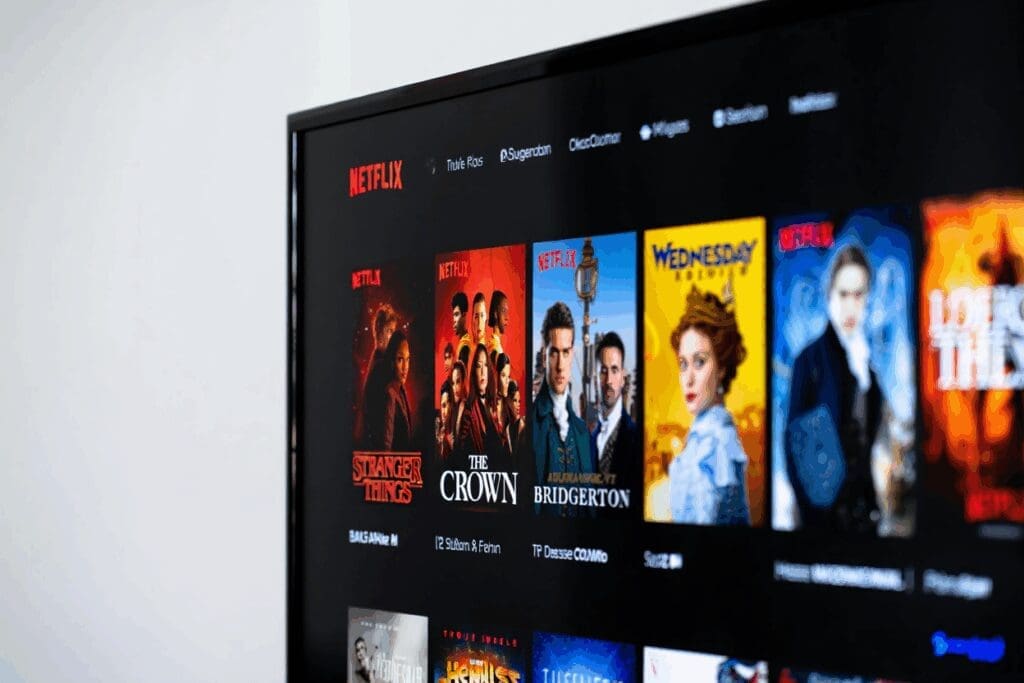
The streaming industry was built on the promise of exclusive content. Netflix’s success with “House of Cards” and “Stranger Things” proved that original, platform-exclusive content could drive subscriptions, but as content sharing becomes commonplace, the exclusivity premium that justified higher subscription prices begins to erode.
When premium shows appear across multiple platforms, consumers may question why they’re paying for several services that increasingly offer similar content. This risk is particularly acute for smaller platforms whose primary value proposition is access to specific content libraries.
Content sharing creates complex questions about revenue allocation and creator compensation. When a Disney+ original appears on ITVX, how are advertising revenues split? How do residual payments work when content crosses platform boundaries? These partnerships often involve non-disclosure agreements about financial terms, suggesting the industry is still figuring out sustainable revenue models.
Platform Identity Crisis and Brand Dilution
Successful streaming platforms have traditionally built strong brand identities around their content. Netflix means global, binge-worthy series. Disney+ means family-friendly entertainment and blockbuster franchises. HBO Max (now Max) means prestige adult content.
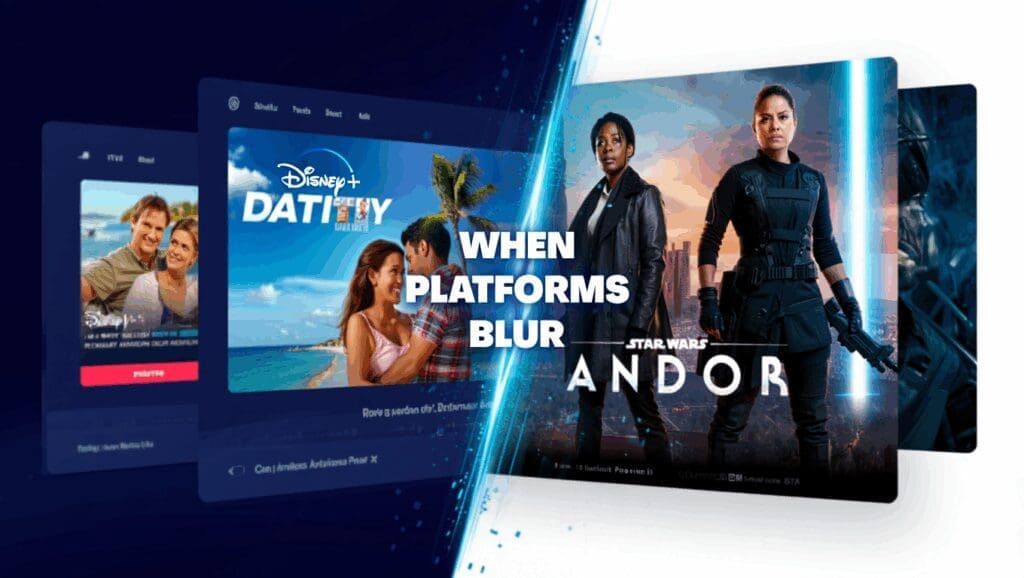
Content sharing threatens these carefully cultivated brand identities. When Disney+ hosts reality dating shows like “Love Island” or when ITVX features superhero content like “Andor,” the lines between platforms blur. This brand dilution could make it harder for consumers to understand what each platform offers and why they should subscribe.
As platforms become addicted to the audience scale that content sharing provides, they may become less willing to invest in risky, innovative original content. Why spend $100 million on an uncertain original series when you can license proven hits from competitors for a fraction of the cost? This could create a creative stagnation where platforms prioritise safe, proven content over the kind of boundary-pushing originals that initially distinguished streaming from traditional television.
Market Consolidation Concerns
The most concerning long-term risk is that content sharing could accelerate market consolidation. Netflix’s deal with TF1 has been described as positioning the streaming giant as a “gateway for third-party streaming,” similar to how Amazon and Apple have become content aggregators.
This creates a scenario where a few dominant platforms become the primary distribution channels for content, while smaller platforms become content suppliers rather than direct competitors. Such consolidation could ultimately reduce innovation, increase prices, and limit consumer choice.
The complexity extends to creators and production companies, who must navigate increasingly complicated licensing deals where content value is distributed across multiple platforms rather than concentrated in a single, high-value exclusive arrangement. This fragmentation of value could make it harder for creators to secure adequate compensation for their work, creating challenges similar to those faced by content creators across all entertainment sectors when managing multi-platform distribution strategies.
The Future of Video Streaming Wars
The Disney-ITV deal represents a pivotal moment in video streaming’s evolution. While these partnerships offer immediate benefits: expanded reach, cost efficiency, and improved content discovery, they also signal an industry grappling with fundamental sustainability challenges.
The success of early content-sharing experiments will likely determine whether the streaming industry evolves toward a more collaborative, aggregation-focused model or whether platforms will pull back to focus on exclusive, differentiated content strategies. What’s certain is that the “streaming wars” as we’ve known them are evolving into something entirely different, and the ultimate winners and losers are far from decided.
For consumers, content sharing may provide short-term benefits through increased variety and potentially lower costs, but the long-term implications for content quality, platform innovation, and market diversity remain largely unknown. The Disney-ITV partnership may be heralded as an innovative collaboration, but it could also be the first step toward a fundamentally different, and potentially less dynamic, streaming landscape.
The industry now faces a critical choice: embrace collaboration at the risk of commoditising content, or return to the exclusivity model that drove streaming’s initial growth. The decisions made in the coming months will likely shape the entertainment landscape for years to come.