
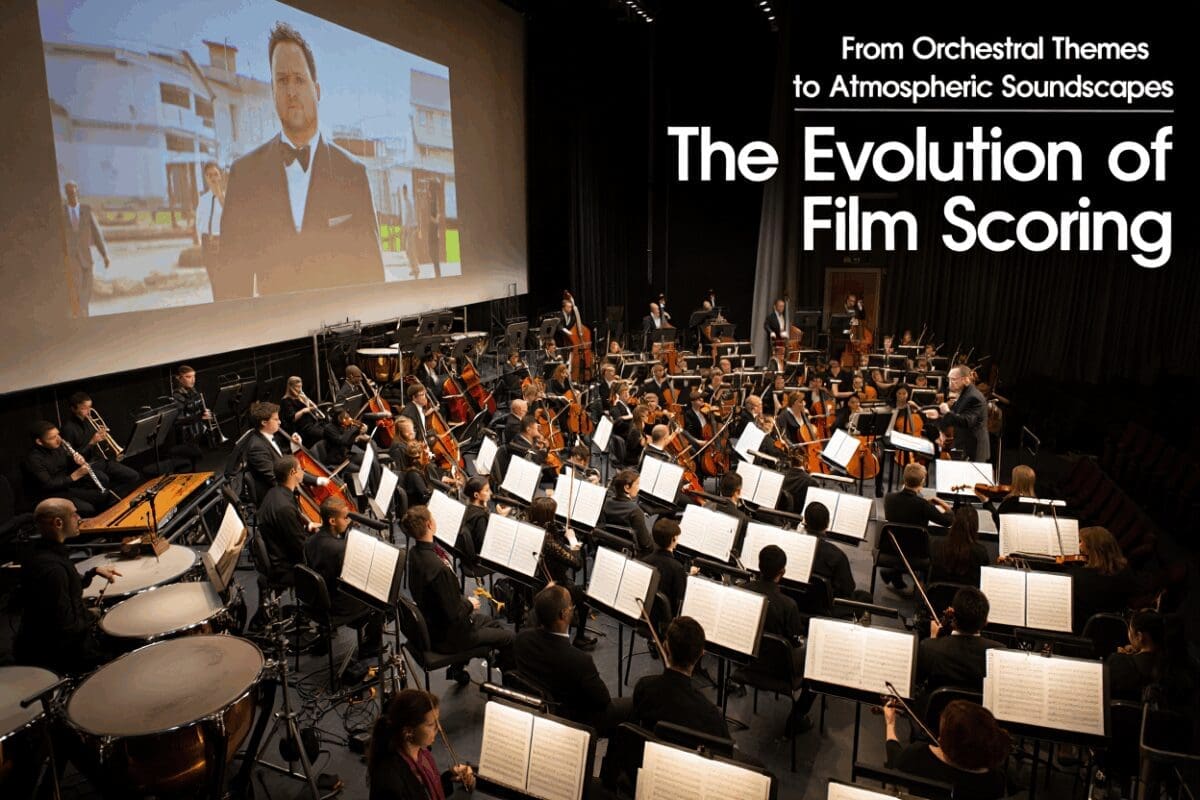

Howard Shore’s epic score for The Lord of the Rings trilogy has once again claimed the top spot in Classic FM’s Movie Music Hall of Fame for 2025, marking the third consecutive year that this monumental work has captured the nation’s heart. With over 10,000 votes cast, Shore’s sweeping orchestral masterpiece continues to resonate with audiences more than two decades after its initial release. But what makes this traditional, theme-heavy score so enduringly popular in an era where film music has dramatically shifted toward darker, more atmospheric soundscapes?
The answer lies in understanding how film scoring has evolved from the melody-driven narratives of Hollywood’s Golden Age to today’s texture-based emotional immersion – and why certain scores transcend these trends to achieve timeless appeal.
Table of contents
The Golden Foundation: When Melodies Ruled Cinema
Film scoring as we know it began in earnest during Hollywood’s Golden Age, roughly spanning from the late 1920s to the early 1960s. Composers during this period came primarily from backgrounds in concert music and almost exclusively wrote orchestral pieces. Max Steiner, regarded as “The Father of Film Music,” established the foundation with his 1933 score for King Kong, making extensive use of leitmotif – the technique of assigning specific musical themes to individual characters or events.
This era produced the template that would define film music for decades: lush orchestral arrangements with memorable melodies that could stand alone as concert pieces. Composers like Erich Korngold created sweeping themes that not only supported the narrative but became cultural touchstones, influencing generations of composers, including John Williams, whose Star Wars score would later revive this golden age approach in 1977.
During these formative decades, film scores served as musical storytellers, guiding audiences through emotional journeys with clear harmonic progressions and distinctive themes. The music was designed to be noticed, remembered, and hummed long after leaving the theatre.
The Electronic Revolution: Breaking Traditional Boundaries
The 1980s marked the first major paradigm shift in film scoring. Quantum leaps forward in digital technology – especially sampling and computer-based sequencing – led to the proliferation of synthesiser-heavy scores. This wasn’t just a change in instrumentation; it represented a fundamental shift in how composers approached storytelling through sound.
Landmark electronic scores emerged that would redefine entire genres. John Carpenter’s score for Escape from New York heightened the film’s dystopian atmosphere with haunting synth melodies. Vangelis’s Blade Runner soundtrack blended electronic elements with orchestral sophistication, establishing a new paradigm for science fiction scoring. Brad Fiedel’s pulsating synth-driven score for The Terminator reinforced the film’s relentless tension while becoming one of the most recognisable soundtracks in action cinema.
These scores demonstrated that film music could create atmosphere and emotion without relying on traditional orchestral arrangements or hummable melodies. Instead, they built immersive sound worlds that placed audiences directly into the psychological and physical spaces of the films. For modern composers looking to break into film scoring, understanding these electronic pioneers is crucial – and effective Music Promotion can help showcase innovative soundscapes to industry professionals.
The Minimalist Movement: Less Became More
The 1990s and early 2000s witnessed the emergence of minimalist approaches that would fundamentally alter film scoring philosophy. Early experiments began with avant-garde collaborations like Philip Glass’s revolutionary score for Koyaanisqatsi, where repetitive, evolving musical patterns created hypnotic soundscapes that matched the film’s visual rhythms.
By the turn of the millennium, minimalist techniques began infiltrating mainstream cinema. Composers like Thomas Newman (American Beauty), Michael Nyman (The Piano), and Clint Mansell (Requiem for a Dream) demonstrated how minimalist approaches could effectively underscore emotional narratives while avoiding manipulative sentimentality.
Rather than developing themes through traditional harmonic progression, these composers employed additive processes – gradually building complexity by adding notes, instruments, or rhythmic layers. This approach created emotional spaces rather than directed musical journeys, allowing audiences to project their own feelings onto the sonic canvas.
The Contemporary Atmospheric Era: Texture Over Melody
The real turning point came in 2010 when Trent Reznor from Nine Inch Nails and composer Atticus Ross won the Academy Award for their score to The Social Network. This sparse, heavily electronic soundscape owed as much to ambient music as it did to traditional orchestral film scoring, validating and inspiring musicians worldwide who had felt excluded from the traditionally conservative world of film composition.
Reznor and Ross’s victory cracked open a door that had been firmly held by established orchestral composers. The 2010s became what many consider a golden age of film music, characterised by unprecedented diversity in compositional approaches. Electronic and experimental musicians who had previously been relegated to independent or foreign cinema suddenly found themselves scoring major Hollywood productions. Today’s composers understand that strategic Spotify Promotion and targeted Radio Promotion can help build the audience recognition that opens doors to film scoring opportunities.
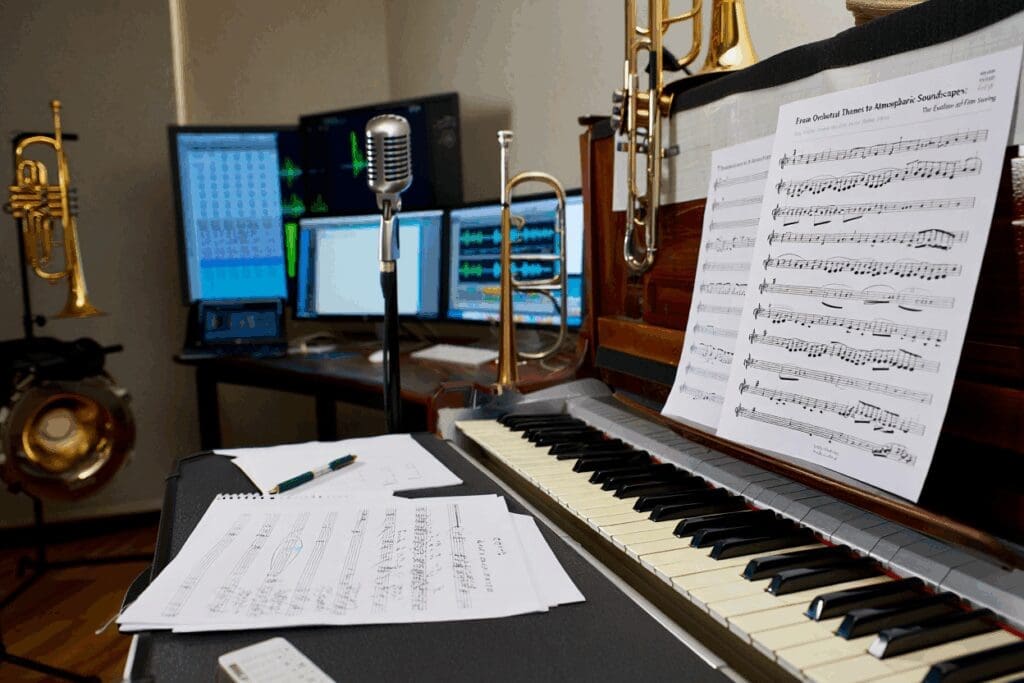
Modern atmospheric scoring embraces several key characteristics that distinguish it from traditional approaches. Contemporary composers often work directly in digital audio workstations, visualising music through technological interfaces that allow for precise control over repetitive patterns and gradual transformations. They focus on creating textural soundscapes where electronic elements are stretched and suspended, creating what theorists call “sonic suspension in sound.”
Horror cinema has particularly embraced these minimalist techniques to generate sustained anxiety. The effectiveness lies in creating expectation through repetition, then subverting that expectation through subtle variation. Colin Stetson’s score for Hereditary exemplifies this approach, using woodwind patterns and vocal techniques that repeat with slight variations, building almost imperceptibly toward climactic moments.
The Diversification Revolution
The success of experimental approaches opened floodgates for composers from diverse musical backgrounds. Jóhann Jóhannsson brought atmospheric textures to films like Arrival, using repetitive structures that mirrored the film’s themes of communication and time. Mica Levi introduced radical experimental techniques to mainstream cinema with Under the Skin. Hildur Guðnadóttir became the first woman to win the Best Original Score Oscar in nearly two decades with her innovative work on Joker.
This diversification reflects broader changes in filmmaking technology and audience expectations. Modern composers can create complex soundscapes from home studios that would have required full orchestras in previous eras. The democratisation of music production tools has led to more experimental and personalised approaches to film scoring. However, breaking into the film industry still requires strategic positioning – effective Music PR and comprehensive Music Marketing strategies remain essential for composers seeking to transition from independent work to major productions.

The Enduring Power of The Lord of the Rings
So why does Howard Shore’s Lord of the Rings score continue to top popularity charts in this era of atmospheric minimalism? The answer reveals something profound about the relationship between film music and human emotion.
Shore’s score succeeds because it masterfully combines the best of both worlds: the memorable thematic development of Hollywood’s Golden Age with the textural sophistication of contemporary scoring. The music creates an intricate tapestry of themes and motifs that evoke the rich mythology of Middle-earth while employing modern orchestration techniques that build immersive soundscapes.
Unlike purely atmospheric scores that prioritise mood over melody, Shore’s work offers audiences something to hold onto – distinctive themes they can remember, hum, and emotionally connect with long after the films end. Yet it also provides the textural depth and cultural authenticity that modern audiences expect, incorporating everything from Celtic influences to ethereal choral passages.
The continued popularity of The Lord of the Rings score proves that while film music has evolved dramatically, there remains an enduring human need for memorable melodies and emotional directness. Shore’s music offers the rare combination of sophistication and accessibility – showing that the future of film scoring lies in finding innovative ways to unite traditional and contemporary approaches. Whether you’re creating orchestral epics or atmospheric soundscapes, building a successful music career requires the right support system. Join Music Gateway today to connect with industry professionals, collaborate with fellow composers, and take your film scoring ambitions to the next level.