
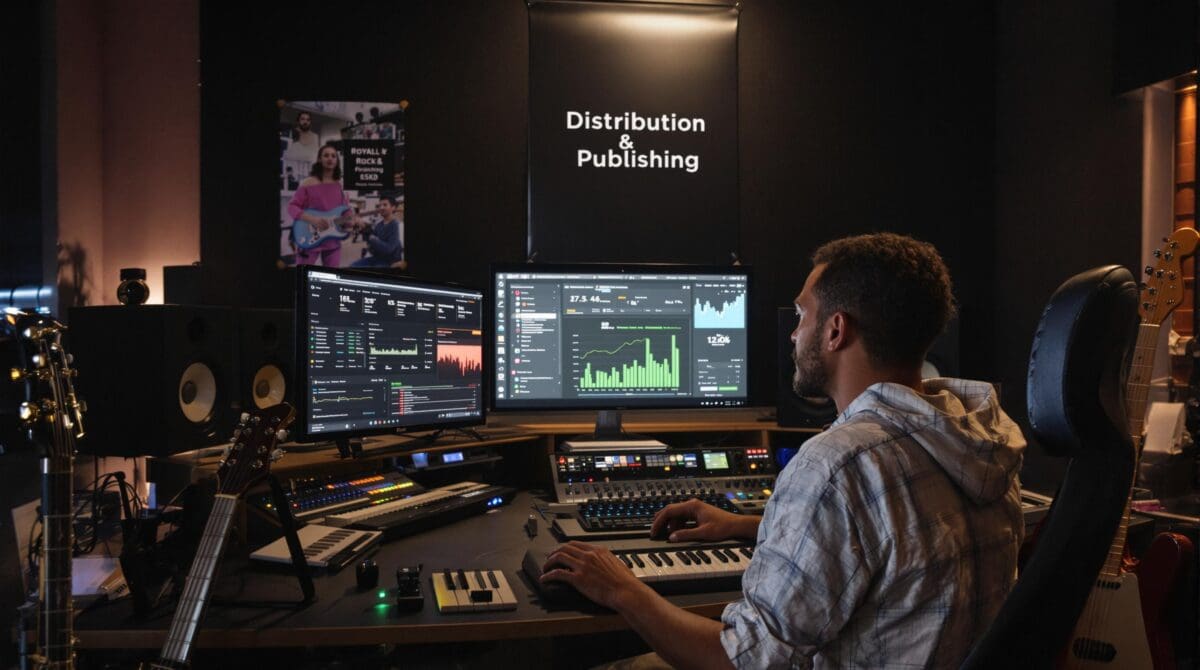

Every musician chases the buzz of hearing their track echo across streaming platforms and radio waves. Yet, shockingly, most artists miss out on up to 40 per cent of the royalties they could earn by misunderstanding the difference between music distribution and publishing. It might sound dull, but the real magic—and money—lies not in choosing one or the other, but in weaving both into your strategy right from the start.
Table of Contents
- Understanding music distribution and publishing
- How each impacts royalties and rights
- Choosing the right path as an artist
- Common misconceptions and pro tips
Quick Summary
| Takeaway | Explanation |
|---|---|
| Understand distribution vs. publishing | Know that distribution is about sound recordings, while publishing manages songwriting rights and royalties. |
| Revenue comes from multiple streams | Distribution generates income through plays and sales; publishing earns from performance and mechanical royalties, offering diverse income opportunities. |
| Strategize your artist path | Balance between distribution for visibility and publishing for protection and income is vital for independent artists. |
| Documentation is crucial | Keep detailed records of your music, usage, and collaborations to safeguard against revenue loss. |
| Be aware of industry misconceptions | Realise that success is not guaranteed by distribution alone, and publishing is essential for all creators, regardless of fame. |
Understanding Music Distribution and Publishing
The world of music can feel like a labyrinthine maze for emerging artists, with complex pathways of distribution and publishing that seem designed to confuse even the most determined musician. Yet understanding these critical domains can transform your musical journey from a pot noodle dinner dream to a potential professional reality.
The Core Definitions: What Sets Them Apart
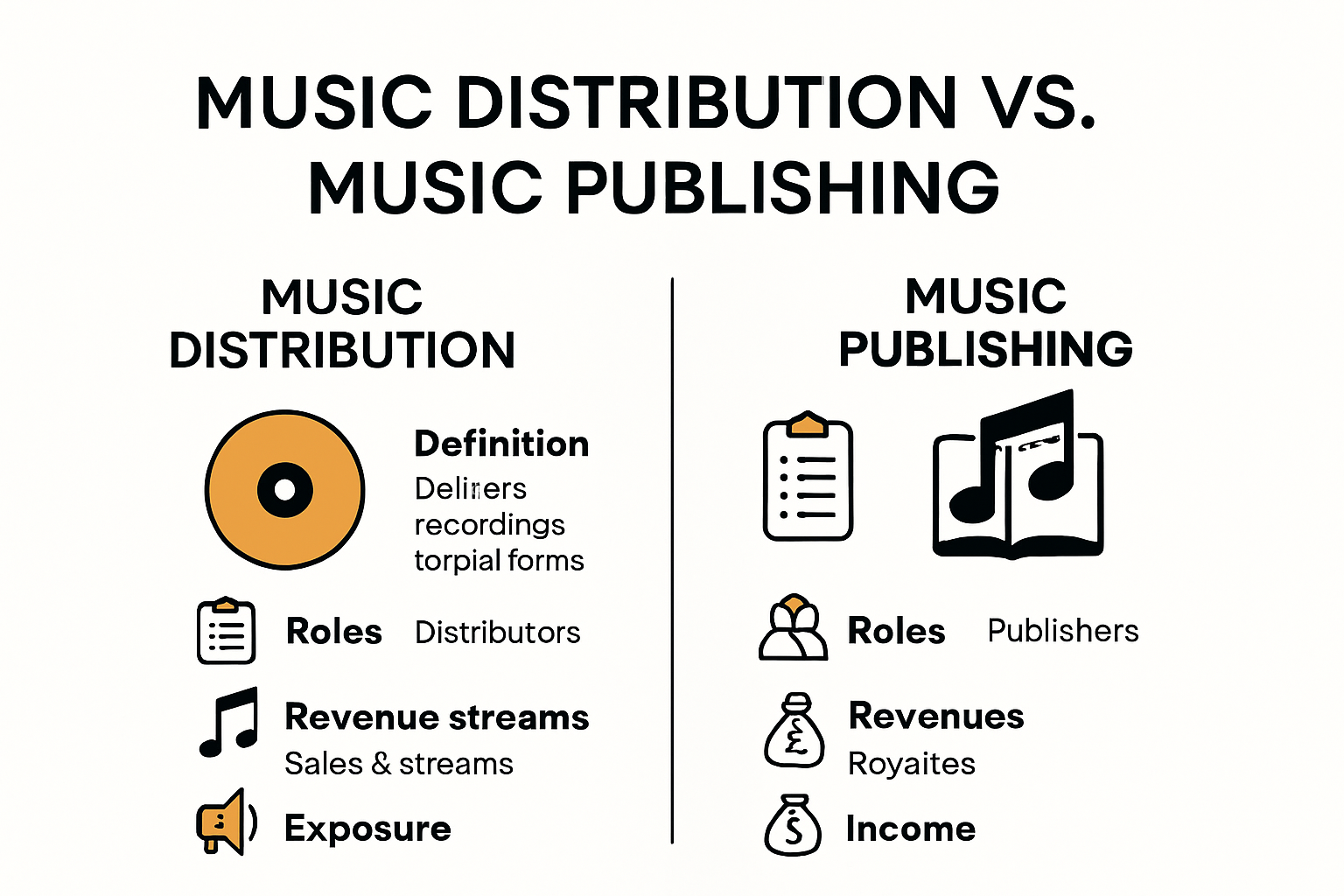
Music distribution and publishing might sound like interchangeable terms, but they’re as different as a chart-topping banger and a pub open mic night. Music distribution is all about getting your actual sound recordings out into the world. Think of it like a magical digital mixtape delivery service that takes your carefully crafted tracks and places them on streaming platforms like Spotify, Apple Music, and others. Your distribution strategy determines how listeners will discover and consume your music.
On the flip side, music publishing is the behind-the-scenes powerhouse managing the intellectual property of your compositions. This isn’t about the recording itself, but the underlying musical composition – the melody, lyrics, and musical arrangement that make your track unique. Publishing focuses on protecting your songwriting rights, collecting royalties, and ensuring you get paid when your music is used in various contexts.
Revenue Streams and Legal Protections
The financial mechanics of distribution and publishing reveal their distinct roles. Distribution typically generates revenue through streaming plays, digital downloads, and physical sales. A comprehensive guide to music distribution can help artists navigate these complex revenue channels.
Publishing, however, generates income through different mechanisms: performance royalties when your song is played live or broadcast, mechanical royalties from recorded reproductions, and synchronisation fees when your music is used in films, TV shows, advertisements, or video games. This means a single song can generate multiple revenue streams depending on how it’s used.
For independent artists, understanding these nuances isn’t just academic – it’s about protecting your creative work and ensuring you’re fairly compensated. While distribution gets your music heard, publishing ensures you’re recognised and rewarded for your artistic contribution.
The music industry in 2025
Demands that artists be savvy about these distinctions. Whether you’re a bedroom producer or an aspiring chart-topper, knowing the difference between distribution and publishing can be the knife fight with a flamethrower that sets you apart in a competitive landscape.
Ready to take your music career seriously? Join Music Gateway and start transforming your musical dreams into reality.
To highlight the key differences between music distribution and publishing, here’s a comparison table to help you quickly distinguish their main roles, revenue streams, and protections:
| Aspect | Music Distribution | Music Publishing |
|---|---|---|
| What is managed | Sound recordings | Songwriting rights (melody, lyrics, composition) |
| Main purpose | Deliver tracks to streaming/sales platforms | Protect and monetise compositions |
| Revenue comes from | Streams, downloads, physical sales | Performance royalties, mechanical, sync fees |
| Who gets paid | Recording artist, label, distributor | Songwriter, composer, publisher |
| Legal protection covers | Sound recording rights | Composition (intellectual property) rights |
| Examples | Spotify, Apple Music, iTunes | PRS, ASCAP, licensing for film/TV/ads |
How Each Impacts Royalties and Rights
When it comes to music royalties and rights, independent artists often find themselves feeling like they’re trying to solve a Rubik’s Cube blindfolded. The intricate dance between distribution and publishing creates a complex ecosystem where every spin could potentially strike gold or leave you with empty pockets.
Royalty Breakdown: Who Gets Paid and How
Music distribution royalties primarily flow from streaming platforms and digital sales. When your track gets a play on Spotify or sells on iTunes, the revenue is split between the recording artist, record label, and distributor. Typically, artists receive around 10-15% of the streaming revenue, with the platform and distributor taking their respective cuts. Learn more about maximising your music distribution strategy to ensure you’re not leaving money on the table.
Publishing royalties, however, tell a different story. These are paid to songwriters and composers for the intellectual property of their compositions. When your song is performed live, broadcast on radio, used in a film, or covered by another artist, publishing royalties kick in.
This means a single song can generate multiple revenue streams: performance royalties, mechanical royalties, and synchronisation fees.

Navigating the Rights Landscape
The rights protection mechanism differs significantly between distribution and publishing. Distribution rights focus on the sound recording itself – the specific performance and recording of a musical work. These rights are typically managed by record labels or digital distributors who control how and where the recording can be used.
Publishing rights, conversely, protect the underlying composition. This means the melody, lyrics, and musical arrangement are safeguarded. A publishing company or administrator works to ensure you receive payment whenever your composition is used, regardless of who performs the recording. They track usage, collect royalties from various sources, and sometimes even help pitch your songs to other artists or media opportunities.
For an independent artist in 2025,
Understanding these nuanced differences is crucial. It’s not just about getting your music out there – it’s about ensuring you’re fairly compensated for your creative work. Think of distribution as the vehicle that transports your music, while publishing is the GPS that ensures you’re navigating the most profitable route.
The modern music industry demands artists be both creative and strategic. By comprehending how distribution and publishing impact your royalties and rights, you transform from a mere musician to a savvy music entrepreneur. It’s like skipping the nightclub queue and walking straight to the VIP section of your music career.
Ready to take control of your musical destiny? Join Music Gateway and start turning your artistic passion into a sustainable career.
To clarify the different types of royalties and who receives them across distribution and publishing, see this summary table:
| Royalty Type | Source/Trigger | Who Gets Paid | Relates to |
|---|---|---|---|
| Streaming/Sales Royalties | Plays/sales on platforms (Spotify, iTunes, etc.) | Recording artist, label | Distribution |
| Performance Royalties | Live play, radio broadcast, public performance | Songwriter, publisher | Publishing |
| Mechanical Royalties | Reproduction of recorded music (CDs, downloads) | Songwriter, publisher | Publishing |
| Synchronisation (Sync) Fees | Use in TV, films, ads, games | Songwriter, publisher | Publishing |
Choosing the Right Path as an Artist
Navigating the music industry feels like a high-stakes poker game where the chips are your creative dreams and the table is constantly shifting. For independent artists in 2025, understanding whether to prioritise distribution, publishing, or both can mean the difference between striking gold or playing to an empty pub on a rainy Tuesday night.
Strategic Considerations for Independent Artists
Choosing between distribution and publishing isn’t about picking one over the other – it’s about strategic alignment with your musical goals. If you’re a performer primarily interested in getting your recordings heard, music distribution becomes your primary focus. This means working with digital platforms to ensure your tracks reach potential fans across streaming services. Discover how to launch your music career effectively and make informed decisions about your musical journey.
Songwriters and composers, however, might find more value in publishing routes. Publishing protects your intellectual property, ensures you’re compensated for compositional usage, and opens doors to potential licensing opportunities. Imagine your song being used in a BBC drama or picked up by an international artist – that’s the power of robust publishing representation.
Building Your Music Industry Strategy
For most artists, a hybrid approach works best. Combining distribution and publishing strategies creates a comprehensive approach to monetising your musical talents. Think of distribution as your public-facing performance, while publishing works behind the scenes to protect and maximise your creative assets.
Consider the financial implications carefully. Distribution typically generates revenue through streaming and digital sales, offering immediate but often modest returns. Publishing, conversely, creates long-term value through multiple revenue streams like performance royalties, sync licensing, and mechanical rights. A savvy artist understands that these aren’t competing paths but complementary strategies.
The modern music landscape demands versatility. You’re not just a musician – you’re an entrepreneur managing a complex creative business. Understanding the nuanced differences between distribution and publishing allows you to make informed decisions that transform your artistic passion into a sustainable career.
Independent artists in 2025 need more than just talent. You need strategic thinking, business acumen, and a willingness to understand the complex machinery behind music monetisation. Whether you’re a bedroom producer or an aspiring chart-topper, knowledge is your most powerful instrument.
Ready to take control of your musical destiny? Join Music Gateway and start turning your artistic passion into a professional journey.
Common Misconceptions and Pro Tips
In the wild world of music industry myths, independent artists often find themselves swimming in a sea of misinformation that could sink their careers faster than a lead balloon. Understanding the truth about music distribution and publishing can be the lifeline that keeps your musical dreams afloat.
Busting the Biggest Industry Myths
Let’s slice through the noise with some brutal honesty. The most dangerous misconception is that distribution automatically means success. Uploading your track to Spotify isn’t a golden ticket to stardom – it’s merely opening the door. Many artists believe simply being on a streaming platform guarantees listeners, but the reality is far more complex. Learn the insider strategies for music promotion that go beyond basic distribution.
Another massive myth? That publishing is only for massive chart-topping artists. Absolute rubbish. Every single composition has potential value, regardless of whether you’re a bedroom producer or a stadium-filling rockstar. Publishing protects your intellectual property and ensures you’re compensated for your creative work, even if your current audience could fit in a small pub.
Pro Tips for Navigating the Music Industry Maze
Pro tip number one: Documentation is your best mate. Keep meticulous records of every track, every collaboration, and every potential usage of your music. Your future self will thank you when royalty checks start rolling in. Many artists treat paperwork like a root canal, but in the music industry, it’s your financial protection.
Understand that distribution and publishing are not competing forces but complementary strategies. Your distribution gets the music out, while publishing ensures you’re financially recognised. It’s like having a brilliant performance and a sharp agent working simultaneously. One without the other leaves money and opportunities on the table.
For independent artists in 2025, versatility is key. Don’t put all your eggs in one basket. Explore multiple revenue streams – sync licensing, live performances, digital platforms, and strategic publishing can transform your music from a passion project to a sustainable career.
The modern music landscape is a battlefield where knowledge is your most powerful weapon. Understanding the nuanced differences between distribution and publishing isn’t just smart – it’s survival. You’re not just creating music, you’re building a brand, protecting your intellectual property, and crafting a potential long-term career.
Remember, every major artist started exactly where you are now: uncertain, hungry, and ready to prove themselves. The difference between those who make it and those who don’t often comes down to understanding the business side of music as thoroughly as the creative side.
Ready to take your music career from potential to professional? Join Music Gateway and start transforming your artistic dreams into a strategic musical journey.
Frequently Asked Questions
What is the difference between music distribution and music publishing?
Music distribution is focused on getting sound recordings onto platforms like Spotify and Apple Music, while music publishing manages songwriting rights and ensures composers are compensated for their work through royalties.
How do music distribution and publishing impact my royalties?
Distribution generates income through streaming plays and sales, while publishing earns royalties through performance, mechanical rights, and sync fees. Understanding both can help maximise your revenue.
Why is it important for independent artists to understand distribution and publishing?
Independent artists need to navigate the complexities of both distribution and publishing to ensure they are fairly compensated and their creative work is protected. A balance of both strategies is vital for long-term success.
Can I work with both a distributor and a publisher?
Yes, many independent artists choose to work with both a music distributor to reach audiences and a music publisher to protect their rights and monetise their compositions effectively.
Transform Music Complexity into Creative Opportunity
Struggling with the maze of music distribution and publishing? You are not alone. Countless independent artists lose out on earnings and exposure because they lack clarity about split royalties, intellectual property, and how to get their tracks noticed. The pressure to balance getting your music heard while protecting your songwriting rights can feel overwhelming, leaving many unsure of where to invest their efforts.
Music Gateway removes these barriers by offering a clear path to professional growth. With comprehensive support, you can distribute your songs to global platforms while ensuring your compositions are properly managed. Explore our dedicated music promotion tools that make playlist submissions, digital advertising, and sync licensing accessible to all. Whether you need to boost your presence or secure your creative rights, the Music Gateway platform combines everything in one easy-to-use space. Do not let confusion stall your momentum. Start your journey now and gain the confidence to grow your career with the tools the industry trusts.
Recommended
- How To Sell Music | Мusic Gateway
- Difference Between EP And Album | Music Gateway
- Universal Music Publishing Group | Мusic Gateway
- Independent Artist Marketing | Music Gateway
- How to Reference a Song: The Ultimate Guide to Accurate Music Citations
- Music Distribution Agreements & Terms
- How Music Distribution Works: A Clear Guide for Artists