


Record revenues, sold-out stadiums, and a gig every 137 seconds. So why are the small venues where it all starts still shutting their doors?
Right, let’s talk about the elephant in the room – or rather, the empty room where a brilliant little venue used to be before it got turned into luxury flats nobody can afford.
The UK live music scene just had an absolute belter of a year. Fans spent six point six eight billion pounds in 2024, up nearly ten percent from the year before. There was literally a gig happening somewhere in the UK every one hundred and thirty-seven seconds. Taylor Swift’s Eras Tour alone pumped an estimated one billion quid into the economy. Brilliant news, right?
Well… partly.
While arenas and stadiums are absolutely coining it in, grassroots venues and local pubs – the actual places where tomorrow’s headliners learn not to trip over the mic cable – are still shutting their doors at a properly alarming rate. We’re talking about the venues where Coldplay played to twelve people and a dog, where Oasis charged three quid on the door, where Ed Sheeran got booed off by confused punters expecting a covers band.
These small stages are where raw talent becomes tomorrow’s main stage act. Lose them, and we lose the beating heart of live music. No pressure, then.
Ready to get your music heard? Discover Music Gateway’s promotion services and connect with venues, promoters, and industry professionals who can help launch your career.
Table of contents
- The Numbers Tell Two Very Different Stories
- The Pub Crisis: Where Community Music Is Dying
- The Human Cost: What We’re Actually Losing
- The Employment Paradox: More Jobs, Less Security
- The Festival Fallout: Why Your Favourite Event Didn’t Return
- The Genre Gap: Who’s Winning and Who’s Losing
- What’s Being Done (And Why It’s Not Enough)
- What You Can Actually Do About This
- Why This Matters More Than You Think
- The Bigger Picture: An Industry in Transition
- The Call to Arms: Don’t Wait, Act Now
The Numbers Tell Two Very Different Stories
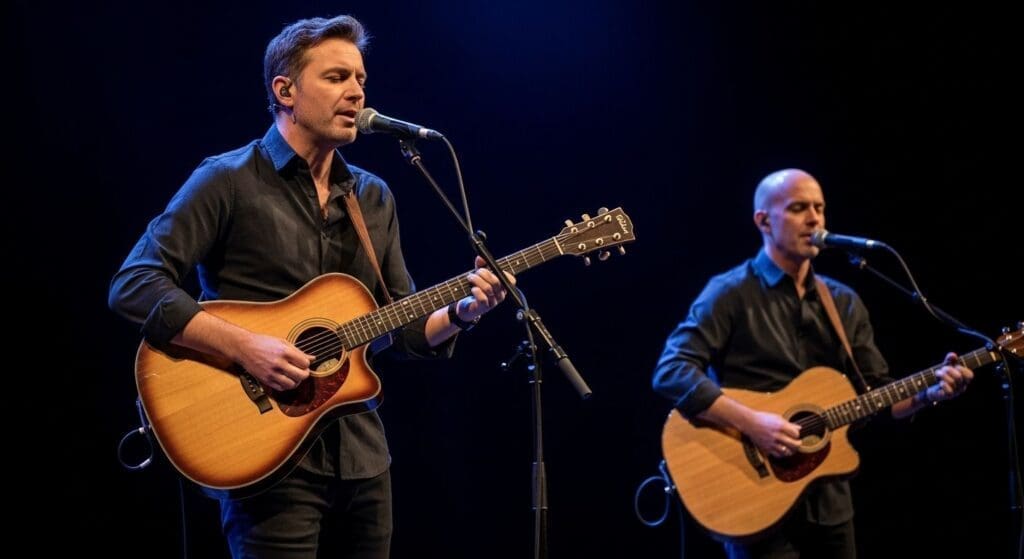
Let’s break down this paradox, because the contrast is genuinely wild.
The Good News (If You’re Playing Wembley)
Consumer spending on live music hit a record six point six eight billion pounds in 2024, marking a nine point five percent increase year-on-year and sitting comfortably two billion quid above pre-pandemic levels. Concert revenue jumped twelve point two percent, accounting for three-quarters of all live music spending.
Twenty-three point five million music tourists – both domestic and international – flocked to UK concerts and festivals. London alone attracted nearly thirty percent of all expenditure, with Manchester and Glasgow strengthening their positions as proper music cities. The sector now employs over 234,000 people, which sounds brilliant until you realise that nearly eighty percent of those jobs are casual or freelance. More on that delightful statistic later.
Pop dominated spending with over thirty-two percent of the market, largely thanks to stadium tours from the likes of Taylor Swift, Charli XCX, and Dua Lipa. The Oasis reunion announcement alone triggered ticketing demand on an almost unprecedented scale – though let’s not talk about how that actually went, shall we?
The Not-So-Good News (If You’re Everyone Else)
Now here’s where it gets grim. While the big venues are thriving, grassroots music venues are bleeding out. Twenty-five venues closed in 2024 alone. Over forty percent of grassroots venues operated at a loss last year, with the average profit margin sitting at a pathetic zero point four eight percent. For context, a healthy profit margin is around ten percent. Zero point four eight percent is basically “one bad month away from bankruptcy” territory.
When you factor in just the live music side of things (excluding the bar takings that keep most venues afloat), the average grassroots music venue incurred a yearly loss of nearly two hundred thousand pounds. That’s not sustainable. That’s not even close to sustainable.
Festivals didn’t fare much better. Seventy-eight festivals shut down in 2024, with festival spending increasing by only one point nine percent – well below the UK’s inflation rate. Rising costs for labour, energy, and everything else meant ticket prices had to go up, which meant fewer people could afford to go, which meant… well, you get the picture. It’s a vicious cycle that’s killing the very events that give emerging artists their biggest platform.
The Pub Crisis: Where Community Music Is Dying

It’s not just dedicated music venues taking the hit. Pubs – the traditional backbone of British grassroots music – are vanishing at an alarming rate.
Four hundred and twelve pubs closed in England and Wales in 2024, that’s over thirty-four a month disappearing from communities. London saw fifty-five venues call last orders for the final time, followed by the West Midlands with fifty-three closures. And it’s not slowing down – projections suggest half of all UK pubs, clubs, and bars could be closed by 2030.
Nightclubs are getting absolutely battered. The UK lost four hundred and eighty nightclubs between 2020 and 2024, with sixty-five closing in 2024 alone. That’s an average of ten club closures a month, or two shutting their doors permanently every week. Yorkshire lost forty-five percent of its nightclub venues. The South West lost half. Wales dropped from sixty-six venues to just thirty-nine.
And here’s the thing that really stings: these aren’t just places to get pissed and watch a band on a Wednesday. They’re community hubs, cultural spaces, and – crucially for anyone reading this who makes music – they’re where careers begin.
Why It’s Happening: The Perfect Storm of Terrible
Rising costs are the obvious villain. Energy prices have gone through the roof. Rent increases are averaging thirty-seven percent for many venues. Staff costs keep climbing. Business rates relief is being cut. National Insurance contributions for employers just went up. Water bills are estimated to increase by forty-two percent for businesses over the next five years.
Meanwhile, consumer behaviour has fundamentally shifted. Nearly half of Brits restricted their visits to hospitality venues during the 2024 Christmas period, with a third preferring to have their parties at home. Post-Covid habits have stuck, particularly among younger people who spent formative years in lockdown and never quite got back into the habit of going out regularly.
People are also choosing differently. When you can only afford one gig a month, you’re probably going to pick Taylor Swift at Wembley over an emerging indie band at your local pub. It’s understandable, but it’s killing the grassroots scene that makes those Wembley shows possible in the first place.
Tours have shrunk from an average of twenty-two dates back in 1994 to just eleven in 2024. If you live in Leicester, Edinburgh, Bath, Hull, Windsor, or Stoke, you’re no longer on most touring circuits. That’s massive chunks of the country cut off from live music, which creates a vicious cycle – fewer venues mean fewer tour stops, fewer tour stops mean less incentive to keep venues open.
Looking to book your next tour? Connect with venues and promoters through Music Gateway and build your touring network across the UK and beyond.
The Human Cost: What We’re Actually Losing
Let’s get real about what’s at stake here. This isn’t just about statistics and business rates (though those are properly depressing). This is about the actual ecosystem that creates the music you love.
Where Legends Are Made
Coldplay’s first gig was at a poky Camden pub called the Laurel Tree in January 1998. Can you imagine a world without Coldplay? Actually, don’t answer that – some of you will say yes, and that’s not the point.
Liam and Noel Gallagher once played to a couple of hundred people at the Joiners in Southampton for three quid on the door. Ed Sheeran, Oasis, and Radiohead all cut their teeth at Moles nightclub in Bath – which went into insolvency in 2023 due to rising operational costs. Taylor Swift’s first English show was in a students’ union bar at King’s College London back in 2009.
The Dublin Castle in Camden hosted Amy Winehouse and Blur before they were household names. The Charlotte in Leicester (now a Tesco, naturally) played host to Arctic Monkeys, Muse, The Killers, Kasabian, and basically every indie band you’ve ever pretended to like at a house party.
These venues aren’t just historical footnotes. They’re active, essential training grounds where artists learn their craft, build their audience, and figure out whether they can actually do this for a living. Without them, we don’t get the next generation of talent. We get a music scene dominated by whoever can afford expensive recording studios and social media marketing campaigns.
The Community Impact
Grassroots venues aren’t just about discovering the next Ed Sheeran. They’re community spaces that bring people together, support local economies, and provide cultural touchstones for their areas.
These venues staged over 162,000 live music events in 2024, seen by nearly twenty million people, contributing over half a billion pounds directly to the UK economy. They employed thousands of people (albeit mostly on casual contracts, which is a whole other problem).
When a local venue closes, it’s not just musicians who suffer. It’s the sound engineers, the bar staff, the security teams, the local takeaways that feed the post-gig crowds, the taxi drivers who ferry people home. It’s the teenagers who save up for months to see their favourite band and end up finding their new favourite band as the support act. It’s the sense of community that comes from having somewhere to go that isn’t a chain pub or a Wetherspoons.
The Employment Paradox: More Jobs, Less Security
Here’s another delightful contradiction: the live music sector employed 234,000 people in 2024, a two point two percent increase year-on-year. Brilliant, right? More jobs in music!
Except seventy-eight point eight percent of those roles are casual, freelance, or agency positions. That’s up significantly from 2019, reflecting a deliberate shift away from permanent positions. Venues and promoters are recruiting temporary staff because costs of employing permanent workers have become unsustainable.
What this means in practice: you might have a job in music, but you probably don’t have holiday pay, sick leave, a pension, or any real job security. One week you’re working five gigs, the next week there’s nothing. And with venues closing at the rate they are, those casual positions are getting harder to find.
The industry keeps posting record profits at the top end while the people actually making it happen – the artists, the crew, the venue staff – are cobbling together multiple gigs just to pay rent. It’s absolutely taking the piss, if we’re being honest.
The Festival Fallout: Why Your Favourite Event Didn’t Return
Festivals are facing their own existential crisis. Only seventy-eight festivals permanently closed in 2024, but that masks a bigger problem: festival spending growth has essentially flatlined at one point nine percent, well below inflation.
Organisers are getting squeezed from every direction. Labour costs have skyrocketed. Energy bills have gone through the roof. Insurance premiums have increased dramatically. Local authorities are charging more for permits and services. And ticket buyers – already dealing with cost-of-living pressures – are increasingly choosing one or two big concerts over multi-day festival experiences.
The economics just don’t work anymore for many independent festivals. Even when they sell well, profit margins are razor-thin. One rainy year, one cancelled headliner, one unexpected cost overrun, and you’re bankrupt. It’s why so many established festivals are either folding or getting bought up by larger corporations – which generally isn’t great for the grassroots, community-focused vibe that made them special in the first place.
Planning to play festivals? Build your press kit and promotional materials with Music Gateway’s tools to stand out when applying for festival slots.
The Genre Gap: Who’s Winning and Who’s Losing
Pop music accounted for thirty-two point one percent of spending at the top 2,000 concerts in 2024 – more than indie and rock combined. That’s largely driven by massive stadium tours that casual fans will pay premium prices to attend.
Indie came in at fourteen point seven percent, rock at thirteen point four percent. Electronic, alt-rock, folk, and classical all carved out meaningful shares, while Latin artists gained traction across multiple genres.
But here’s the thing: those percentages represent spending at successful, established events. They don’t capture the thousands of grassroots gigs happening in pubs and small venues where genre diversity actually thrives. Pop dominates because it scales to arenas. Alternative genres need those small venues to survive and develop.
When grassroots venues close, it’s not pop that suffers – there will always be demand for massive arena shows. It’s the weird, wonderful, niche, and experimental stuff that loses its platform. The jazz nights, the folk sessions, the punk showcases, the electronic club nights that run at a loss because someone passionate about the music subsidises them.
Lose the small venues, and you lose musical diversity. You end up with a monoculture dominated by whatever scales to stadiums, which is genuinely depressing if you like music that’s, you know, interesting.
What’s Being Done (And Why It’s Not Enough)
Right, let’s talk solutions, because this isn’t all doom and gloom. People are trying to fix this mess, even if progress feels glacially slow.
The LIVE Trust and Ticket Levy
The LIVE Trust proposes a one pound ticket levy on arena and stadium shows with capacities over 5,000. The money would flow directly to grassroots venues, promoters, and artists. The Royal Albert Hall recently became the first major venue to back the movement, which is encouraging.
Individual artists are also stepping up. Sam Fender and Enter Shikari have both implemented voluntary levies on their tickets, with proceeds going to the Music Venue Trust. Coldplay recently announced they’ll donate ten percent of ticket revenues from their London and Hull shows to the trust. Nice one, lads.
But here’s the problem: voluntary schemes only work if everyone participates. For every artist donating money back to grassroots venues, there are dozens more who aren’t. And the biggest arena tours – the ones that could make the most difference – are often run by massive corporations who have precisely zero incentive to voluntarily reduce their profits.
Government Funding (Remember That?)
The government announced thirty million pounds over three years for a Music Growth Package, which we covered in our previous blog post. That funding will support touring, performance, mentoring, and export opportunities for emerging talent, plus provide uplift for the grassroots sector.
It’s a start. It’s better than nothing. But thirty million pounds spread across three years, distributed among thousands of venues and artists, isn’t going to solve the fundamental economic problems facing small venues. It’s a plaster on a gunshot wound.
Tax Relief and Business Rates
The industry keeps calling for targeted tax relief – specifically VAT cuts on tickets and extended business rates relief. These measures would genuinely help by reducing the cost burden on venues trying to stay afloat.
The government has been… let’s say “receptive” to these proposals in the sense that they acknowledge the problem exists and make sympathetic noises. Actually implementing meaningful tax relief? That’s apparently much harder, what with all the other demands on the Treasury.
Ready to go professional with your music career? Join Music Gateway today and access industry connections, opportunities, and resources designed to help emerging artists succeed.
What You Can Actually Do About This
Enough with the depressing statistics. Let’s talk about what you – yes, you, the person reading this – can actually do to help keep grassroots music alive.
Go to Gigs (Obviously)
This is the big one. If you want small venues to survive, you need to actually go to them. Not just when your favourite band is playing, but for random Tuesday nights when there’s a local band you’ve never heard of.
Buy tickets in advance rather than on the door – it helps venues plan and proves there’s demand. Bring mates. Buy drinks (the bar takings are often what keeps venues afloat). Buy merch from the bands. Tip the sound engineer if they’ve done a good job.
And crucially: go see emerging artists before they blow up. Don’t wait for the next big tour – go see the next big thing while they’re still playing to fifty people in your local pub. That’s where the magic happens.
Support Your Local Venue
Find out what your nearest grassroots venue is and become a regular. Follow them on social media. Share their events. Leave positive reviews. If they have a membership scheme or crowdfunding campaign, contribute if you can.
Many venues run on razor-thin margins and rely on a core group of regulars to stay viable. Be one of those regulars. Yes, even on rainy Wednesdays when you’d rather stay home and watch Netflix. Especially on rainy Wednesdays.
Be Thoughtful About Where You Spend Your Music Money
Look, nobody’s saying you shouldn’t go see Taylor Swift at Wembley if that’s what floats your boat. Stadium shows are brilliant experiences. But consider balancing those big-ticket events with support for smaller acts and venues.
Instead of buying another festival ticket, maybe hit up three or four local gigs instead. Instead of streaming the same megastar on repeat, dig into Bandcamp and find emerging artists you can actually support directly. Put your money where it makes a real difference to working musicians and struggling venues.
Spread the Word
If you see a brilliant band at a tiny venue, tell everyone. Share it on social media. Write about it. Drag your mates along next time. Word of mouth is still one of the most powerful tools for building an audience, and it costs you nothing.
Leave reviews for venues and artists. Engage with their content online. Create buzz. The algorithm might favour massive corporate acts with huge marketing budgets, but grassroots music thrives on genuine enthusiasm from real people.
Support Policy Changes
Write to your MP about extending business rates relief for small venues. Support campaigns by Music Venue Trust and LIVE. Sign petitions. Make noise. Politicians respond to public pressure, and if they think their constituents care about protecting grassroots music, they’re more likely to actually do something about it.
The government has shown it’s willing to invest in creative industries – witness that thirty million quid we mentioned earlier. They just need constant reminding that grassroots venues are the foundation of the entire ecosystem and deserve proper, sustained support.
Want to understand the business side of music? Explore Music Gateway’s resources for artists navigating the industry, from contracts to royalties to building a sustainable career.
Why This Matters More Than You Think
Here’s the thing that often gets lost in discussions about venue closures and funding crises: this isn’t just about music. It’s about culture, community, and what kind of society we want to live in.
Grassroots venues are where subcultures develop, where communities form around shared passions, where young people figure out who they are and what they care about. They’re spaces that aren’t corporate, commercialised, or sanitised. They’re messy, loud, occasionally chaotic, and absolutely essential.
When we lose these spaces, we don’t just lose the next potential hitmaker. We lose the venue where kids from working-class backgrounds can see people like them succeeding at something. We lose the pub where different generations mix and share music they love. We lose the club night that gives LGBTQ+ folks a safe space to be themselves. We lose the open mic where nervous teenagers work up the courage to perform for the first time.
We lose the places where culture actually happens, as opposed to being packaged and sold back to us by corporations.
The Bigger Picture: An Industry in Transition
The paradox we’re living through – record revenues at the top, closures at the bottom – reflects broader changes in how music works as an industry and a culture.
Streaming has democratised access to music but devalued it economically. Social media lets artists build audiences directly but requires constant content creation that many find exhausting. The cost-of-living crisis means people have less disposable income for cultural activities. Brexit has made touring Europe harder and more expensive for UK artists. AI is threatening to disrupt everything from songwriting to production.
The grassroots venue crisis is just one symptom of an industry being pulled in multiple directions by technological, economic, and social forces. There’s no single simple solution because there’s no single simple problem.
But here’s what we do know: the foundation of the entire music ecosystem is live performance. It’s where artists develop their craft, build their audience, and generate income that actually sustains them. Streaming pennies aren’t paying anyone’s rent. Merch sales and live performance are.
If we let grassroots venues die, we’re not just losing nostalgic spaces where Oasis once played. We’re destroying the economic and creative infrastructure that makes professional music careers possible for anyone who isn’t already wealthy or well-connected.
The Call to Arms: Don’t Wait, Act Now
So here’s the call to arms, the same one we opened with but hopefully now you understand why it actually matters:
Go to gigs. Buy tickets. Support your local pub, venue, or promoter. Don’t wait for the next big tour – go see the next big thing before the world catches on.
Bring mates who’ve never been to a grassroots gig and show them what they’re missing. Buy the band’s merch even if you don’t really need another t-shirt. Tell the sound engineer they did a good job. Follow the venue on social media and share their events.
Be the regular who makes small venues viable. Be the person who discovers amazing bands before anyone else and won’t shut up about them. Be the generation that didn’t let the heart of live music die because they were too busy streaming Spotify playlists at home.
Because without the grassroots, there is no scene. Without the grotty little pubs and clubs where everyone starts, we don’t get the arena tours we all love. Without the sticky floors and questionable acoustics and £5 entry fees, we don’t get the music that soundtracks our lives.
The live music scene is booming at the top, but it’s bleeding at the bottom. And the only way to stop that bleeding is to actually show up, pay attention, and support the venues and artists who need it most.
Time to support the grassroots scene that made your favourite artists possible. Start with Music Gateway – connect with emerging musicians, discover new talent, and be part of building the future of UK music.
The UK live music sector contributed £6.68 billion to the economy in 2024, with a gig happening every 137 seconds. But 25 grassroots venues still closed, joining the hundreds of pubs and clubs lost in recent years. The choice is simple: support small venues now, or watch them disappear forever. Which side of history do you want to be on?