

Musicians pour their soul into every note and lyric, but in the swirl of streaming and TikTok clips, protecting that creative spark is harder than ever. Believe it or not, the second you scribble a melody or record a rough demo, copyright protection kicks in automatically. Most people assume you have to file piles of paperwork just to defend your music, but the truth is your rights start the moment your song comes to life.
Table of Contents
- What Is Copyright And How Does It Relate To Music?
- Why Copyright Matters For Musicians And The Music Industry
- How Copyright Works: From Creation To Protection
- Key Concepts In Copyright For Musicians: Rights And Limitations
- Real-World Context: Copyright Challenges And Industry Practices
Quick Summary
| Takeaway | Explanation |
|---|---|
| Copyright protects original musical creations | Copyright safeguards both musical compositions and sound recordings from unauthorized use. |
| Registration enhances legal protection | Although copyright is automatic, formally registering your work provides additional legal advantages and proof of ownership. |
| Copyright generates income through multiple channels | Musicians can monetise their work via royalties, licensing fees, and sync opportunities, supporting financial sustainability. |
| Understanding rights is crucial for artists | Musicians must know their exclusive rights, such as reproduction and distribution, to effectively control and profit from their work. |
| Adaptation is necessary in the digital era | Navigating digital copyright challenges requires staying informed about licensing practices and emerging technologies like blockchain. |
What is Copyright and How Does It Relate to Music?
Copyright is a legal protection that safeguards the creative works of musicians, composers, and performers. It’s essentially a magical shield that prevents others from using your musical creation without permission. Think of it like having an invisible security guard protecting your artistic baby.
Understanding Musical Copyright Basics
In music, copyright covers two primary elements: the musical composition (the actual song structure including melody, lyrics, and harmony) and the sound recording (the specific performance or recording of that composition).
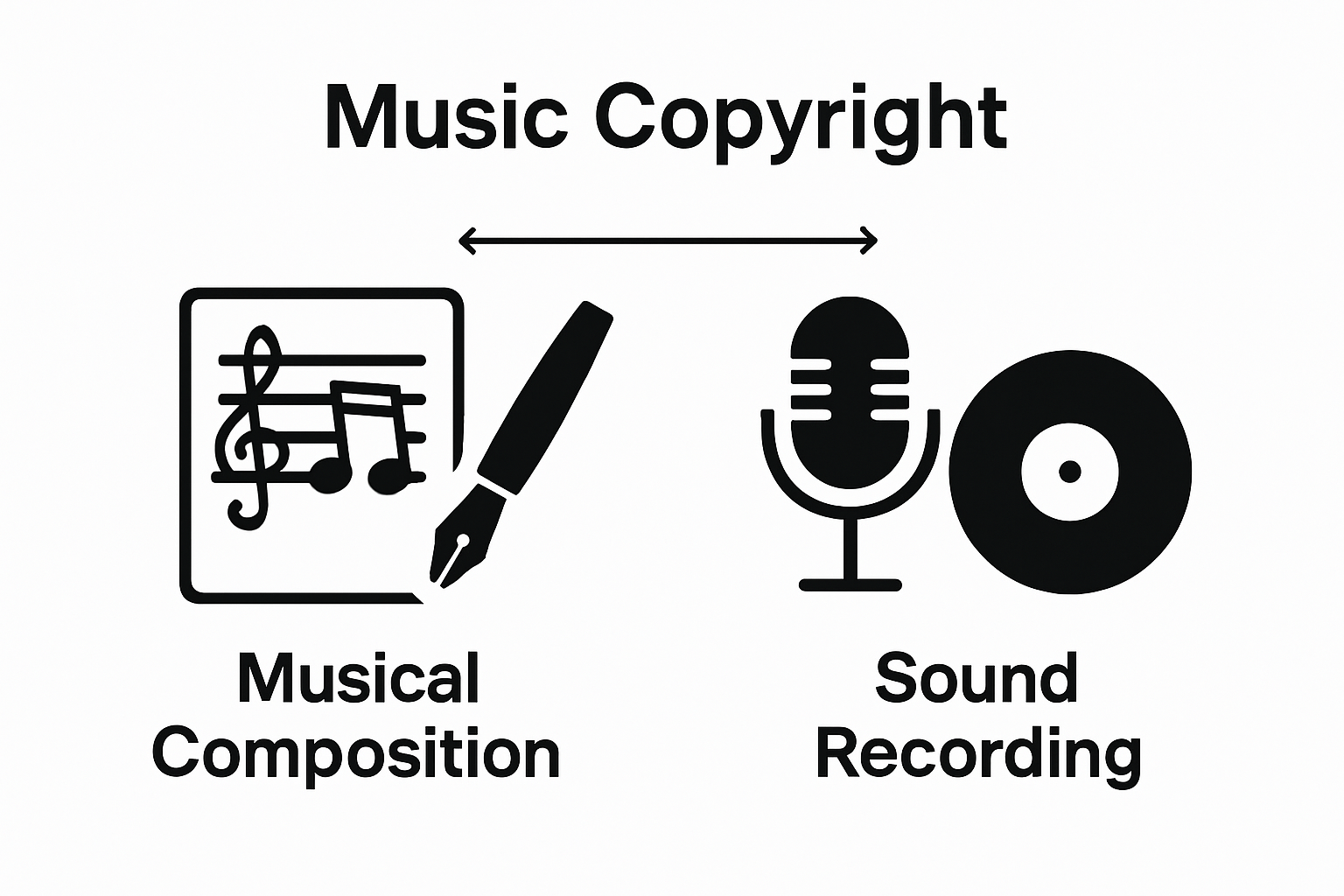 This means when you create a track, you automatically generate two separate copyrightable works.
Key aspects of musical copyright include:
- Exclusive rights to reproduce the work
- Control over public performance
- Permission for distribution
- Ability to create derivative works
Why Copyright Matters for Musicians
Copyright isn’t just legal mumbo jumbo. It’s your financial lifeline and creative protection. Without copyright, anyone could swipe your carefully crafted track, use it commercially, and leave you with nothing but a pot noodle dinner and bruised artistic pride.
By registering your copyright, you’re essentially creating a legal document that says, “This is my musical DNA, and nobody gets to mess with it without my say-so.” It transforms your creative expression from a vulnerable artistic piece into a protected asset that can generate income through Music Licensing and royalty streams.
Whether you’re a bedroom producer or a gigging musician, understanding copyright is crucial. It’s your professional armour in the wild west of the music industry. Want to protect your musical genius? Join Music Gateway and start safeguarding your sonic creations today!
Why Copyright Matters for Musicians and the Music Industry

In the digital age, copyright isn’t just a legal formality; it’s the financial backbone of musical creativity. Without robust copyright protections, musicians risk losing control and compensation for their artistic work, transforming their passion into a potential economic minefield.
Financial Protection and Revenue Streams
Copyright empowers musicians to monetise their creativity through multiple revenue channels. Every time your track gets played on the radio, streamed online, or used in a commercial, copyright laws ensure you receive fair financial compensation. It’s like having a silent business manager working 24/7 to protect your musical investments.
Key financial benefits of copyright include:
- Royalty payments from public performances
- Licensing fees for commercial usage
- Protection against unauthorized reproductions
- Potential income from sync licensing
Legal Shield for Creative Expression
Copyright provides more than monetary benefits. It’s a legal fortress defending your artistic integrity. Imagine spending months crafting a musical masterpiece, only to discover someone else is profiting from your work without permission. Copyright prevents this nightmare scenario by giving you exclusive rights to control how your music is used, shared, and distributed.
Interested in deeper insights about protecting your musical assets? Check out our comprehensive Music Licensing guide to understand how you can strategically leverage your copyrights.
Moreover, copyright isn’t just about preventing theft. It’s about creating a sustainable ecosystem where musicians can innovate without fear. By establishing clear ownership and usage rights, copyright encourages creativity, enables collaboration, and ensures artists receive recognition for their unique contributions.
Whether you’re an indie musician or part of a professional ensemble, understanding copyright is crucial. It transforms your music from a vulnerable piece of art into a protected, potentially lucrative asset. Ready to take control of your musical journey? Join Music Gateway and start safeguarding your sonic creations today!
How Copyright Works: From Creation to Protection
Copyright is like an invisible cloak of protection that wraps around your musical creation the moment it springs to life. Unlike some legal processes that require complex paperwork, musical copyright kicks into gear automatically when you create an original piece of work.
The Moment of Musical Creation
The beauty of copyright is its simplicity. The instant you record your melody, write down your lyrics, or capture your musical idea in a tangible form, copyright protection begins. This means whether you’re scribbling chords in a notebook or recording a rough demo on your smartphone, your work is legally protected.
Key moments of copyright activation include:
- Writing song lyrics
- Recording a musical composition
- Creating a sound recording
- Sketching musical notation
Registration and Formal Protection
While copyright exists automatically, formal registration provides additional legal advantages. Think of registration like taking out an insurance policy for your musical work. It creates a public record of your copyright, establishes a legal timestamp, and provides crucial evidence if you ever need to defend your intellectual property.
For musicians looking to maximize their legal protection, our Music Licensing guide offers comprehensive insights into navigating the registration process.
The registration process typically involves submitting your work to the appropriate copyright office, providing details about the composition, and paying a modest fee. This step transforms your automatic copyright into a documented, legally robust protection mechanism.

Remember, copyright isn’t just about preventing theft. It’s about creating a professional ecosystem where musicians can confidently share, perform, and monetise their creative expressions. Whether you’re a bedroom producer or a professional songwriter, understanding how copyright works is your first step towards protecting your musical legacy.
Ready to take control of your musical rights? Join Music Gateway and start safeguarding your sonic creations today!
Key Concepts in Copyright for Musicians: Rights and Limitations
Copyright for musicians is like a complex musical composition with multiple intricate layers. Understanding these layers helps you navigate the legal landscape and protect your creative output more effectively.
Exclusive Rights of Musical Copyright

Copyright grants musicians a powerful set of exclusive rights that act as a legal fortress around their creative work. These rights enable you to control how your music is used, shared, and monetised. Think of it as having a VIP pass to your own musical kingdom.
Key exclusive rights include:
- Reproduction of the musical work
- Distribution of physical and digital copies
- Public performance rights
- Creation of derivative works
- Digital transmission and streaming control
Understanding Copyright Limitations
While copyright provides extensive protection, it’s not an absolute shield. There are specific scenarios where others can use your work without direct permission, known as fair use. These limitations prevent copyright from becoming an overly restrictive barrier to creativity and cultural exchange.
Fair use typically covers scenarios such as:
- Educational purposes
- Critical commentary
- Parody and satire
- Short excerpts for review
- Non-commercial research
Interested in diving deeper into the nuanced world of music rights? Check out our comprehensive Music Licensing guide to understand the intricate balance between protection and creative freedom.
It’s crucial to recognise that copyright is a dynamic concept. The digital age has transformed how musicians create, share, and monetise their work. What might have been a clear-cut copyright issue a decade ago could now involve complex considerations around streaming, sampling, and global digital distribution.
Whether you’re an independent artist or part of a professional ensemble, understanding these key copyright concepts is your passport to protecting your musical legacy. Knowledge is power, and in the music industry, legal knowledge can be the difference between protecting your art and losing control of your creative vision.
The table below summarises the key exclusive rights and fair use limitations of musical copyright, providing a clear distinction between what musicians can control and where exceptions may apply.
| Aspect | Description |
|---|---|
| Reproduction Right | Allows the creator to make copies of their musical work |
| Distribution Right | Controls physical and digital distribution of the work |
| Public Performance Right | Permits or prohibits live or broadcast performance |
| Derivative Works Right | Right to adapt or transform the musical creation |
| Digital Transmission Control | Authority over streaming and digital transmission |
| Fair Use Limitation | Certain uses (e.g., education, criticism, parody) without permission |
| Non-commercial Research Use | Allows use for research without direct commercial benefit |
Ready to take control of your musical rights? Join Music Gateway and start safeguarding your sonic creations today!
Real-World Context: Copyright Challenges and Industry Practices
The music industry is a complex ecosystem where copyright laws often feel like a high-stakes chess game. Musicians navigate an increasingly digital landscape where protecting creative work requires both legal savvy and strategic thinking.
Digital Age Complexities
The digital revolution has dramatically transformed copyright challenges, making traditional protection mechanisms look like vintage vinyl in a streaming world. Platforms like Spotify, YouTube, and TikTok have created unprecedented opportunities for music distribution while simultaneously introducing intricate copyright minefields.
Key digital copyright challenges include:
- Viral music sampling without proper licensing
- Global streaming rights management
- Algorithmic content distribution
- Unauthorized digital reproductions
- Cross-border intellectual property disputes
Emerging Industry Practices
Musicians and industry professionals are developing innovative approaches to protect and monetise musical intellectual property. These evolving practices recognize that copyright is no longer just about preventing unauthorized use but creating sustainable revenue streams.
Modern copyright strategies involve:
- Creating comprehensive digital licensing agreements
- Implementing blockchain technology for tracking
- Developing transparent royalty distribution systems
Interested in understanding how modern musicians are adapting? Explore our comprehensive Music Licensing guide for cutting-edge insights into navigating these complex waters.
The music industry’s copyright landscape is continuously shifting. What worked five years ago might be obsolete today. Independent artists and major labels alike must remain agile, constantly updating their understanding of intellectual property rights and digital distribution mechanisms.
Successful navigation of these challenges requires a blend of legal knowledge, technological understanding, and creative strategy.
This table presents a concise overview of common digital copyright challenges and modern industry practices that musicians encounter and adopt in today’s evolving ecosystem.
| Digital Challenge or Practice | Explanation |
|---|---|
| Viral Sampling Without Licensing | Unauthorised use of music clips spread via social platforms |
| Global Streaming Rights Management | Navigating worldwide licensing and compensation complexities |
| Algorithmic Content Distribution | Platforms automating music recommendations and reach |
| Blockchain Tracking | Using blockchain to ensure transparent rights management |
| Transparent Royalty Systems | Enhanced systems to ensure accurate, fair royalty payments |
| Comprehensive Digital Licensing | Detailed agreements covering multiple digital use cases |
| Cross-border Intellectual Property | Protection and disputes across different legal jurisdictions |
Ready to take control of your musical rights in this dynamic landscape? Join Music Gateway and start safeguarding your sonic creations with professional expertise!
Protect Your Music and Amplify Your Success
Understanding copyright is not just about legal protection. It is about ensuring you have complete control over your music and how it is used in the industry. The article explores the difficulties independent artists face with copyright issues, from protecting musical creations to unlocking real revenue through licensing and royalties. Whether you are concerned about unauthorised use or are aiming to transform your work into a sustainable career, clear knowledge of your rights is crucial.
Take the next confident step towards safeguarding your creative legacy and expanding your reach. Music Gateway gives you powerful tools to register, manage, and promote your catalogue with industry-standard support—without barriers or gatekeepers. Explore our platform to discover how we make music promotion straightforward and accessible for every artist. Find out how our sync licensing and promotional services turn your copyright into real opportunity. Do not wait to make your music count. Visit Music Gateway today and start shaping your future in music.
Frequently Asked Questions
What is copyright in music?
Copyright in music refers to the legal protection that safeguards the creative works of musicians, composers, and performers. It covers both the musical composition and the sound recording, ensuring that creators have control over how their work is used and distributed.
How is copyright activated for a musical work?
Copyright is automatically activated the moment a musician creates a tangible piece of work, such as recording a song, writing lyrics, or sketching musical notation. This means that no formal registration is required for basic copyright protection.
Why should musicians register their copyright?
While copyright protection exists automatically, formal registration provides additional legal advantages, such as establishing public record and creating a timestamp for your work. This can be crucial if you need to defend your ownership in the event of a dispute.
What are the main rights granted by copyright to musicians?
Copyright grants several exclusive rights to musicians, including reproduction of their work, distribution of copies, rights for public performance, the ability to create derivative works, and control over digital streaming and transmission.