

Cracking the music industry feels like learning a whole new language and there are hundreds of terms that can make or break your career. Think contracts, royalties, publishing rights, and then some. But here comes a shocker. More than 60 percent of aspiring artists sign contracts without fully understanding the basics, risking their creative control and future earnings.
Most people focus on the glamour and headlines, yet the real power lies with those who know these fundamental terms inside and out. Ready to find out why the glossary is as vital as your guitar?
Table of Contents
- Key Music Industry Terms Explained
- Understanding Contracts And Royalties
- The Role Of Industry Professionals
- Common Marketing And Distribution Terms
Quick Summary
| Takeaway | Explanation |
|---|---|
| Understand key music terms | Familiarising yourself with terms like royalties and master rights is crucial for navigating the industry. |
| Protect your musical creations | Read contracts carefully and seek legal advice to safeguard your rights and interests as an artist. |
| Utilise digital distribution wisely | Ensure your music is available on multiple platforms to maximise reach and revenue potential. |
| Engage in effective marketing | Develop a strong online presence and use strategic promotion techniques to connect with your audience. |
| Learn from industry professionals | Build relationships with A&R reps, managers, and producers who can help develop and promote your music. |
Key Music Industry Terms Explained
Alright, music maestros and sonic adventurers, let’s crack open the mysterious world of music industry terminology. Think of this as your trusty decoder ring for the weird and wonderful language that swirls around recording studios, record labels, and those legendary green rooms.
Understanding the Business Basics
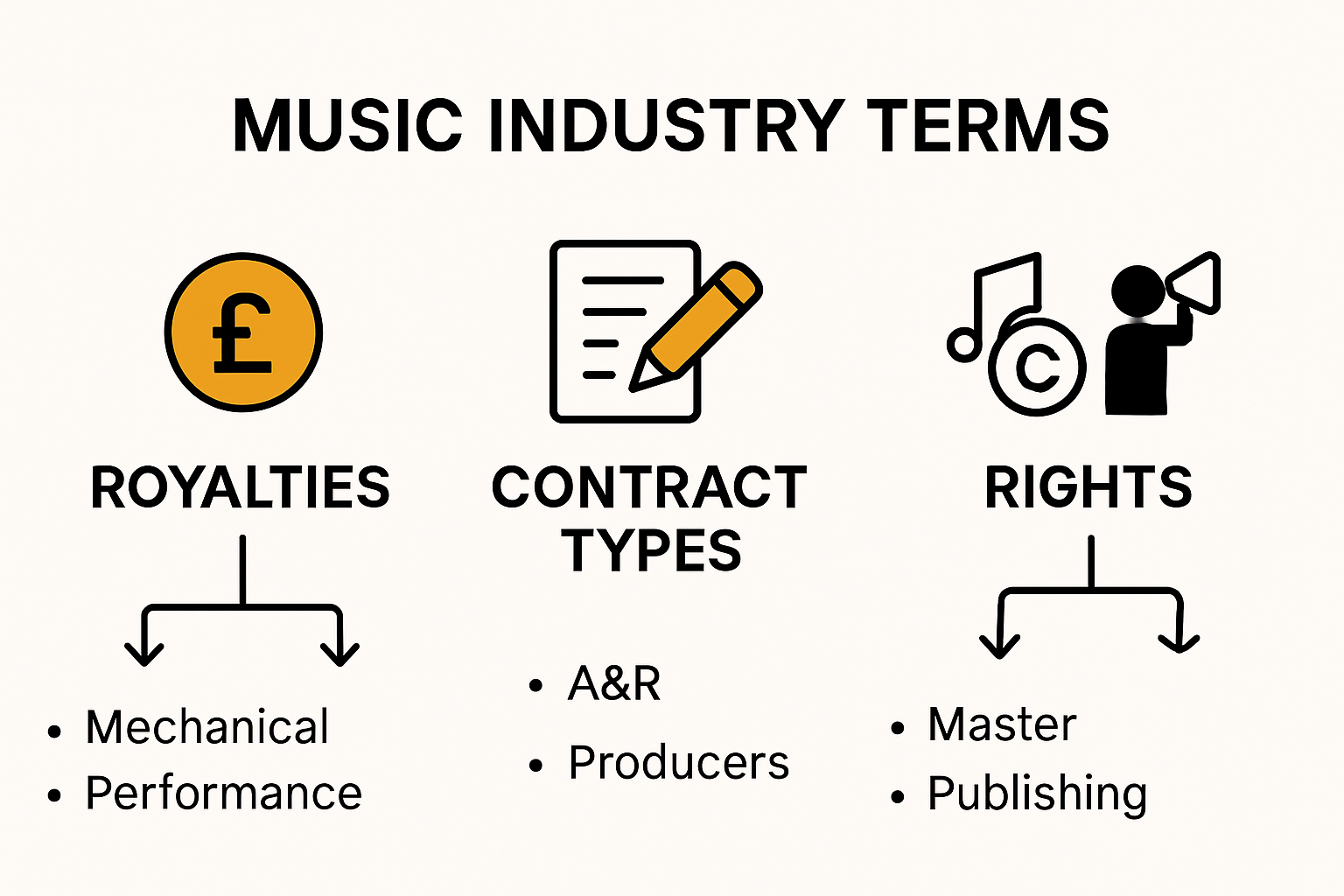
Before you start thinking this is going to be a mind-numbing glossary that’ll send you into a Jaffa Cake-fuelled coma, breathe easy. These terms are your secret weapons in navigating the labyrinthine music business. Royalties might sound like something from a medieval kingdom, but they’re actually the cold, hard cash musicians earn when their music gets played. Every time your track hits a radio station, streams online, or gets used in a cheeky advert, those royalties start rolling in.
Here’s a summary table outlining the different types of royalties and rights mentioned, helping you quickly differentiate each and understand their key features:
| Term | What It Covers | Who Typically Owns It | How Revenue Is Generated |
|---|---|---|---|
| Royalties | Earnings from music use/play | Artist, label, or publisher | Track plays, streaming, radio, advertising |
| Publishing Rights | Ownership of a song’s composition | Songwriter, publisher | Song use in any media/performance |
| Master Rights | Ownership of a specific sound recording | Record label, artist, or both | Use of the actual recording (not just song) |
| Mechanical Royalties | Payment for music reproduction (CDs, streaming) | Artist, publisher | Sales, digital download, streaming |
| Performance Royalties | Payment for music performed or broadcast | Artist, publisher | Radio, TV, live performance |
| Sync Licensing | Rights to use music in media (film, adverts) | Rightsholder of master & publishing | Licensing deals for film/TV/ads/games |
Let’s talk Publishing Rights – not as boring as it sounds, I promise. This is essentially the legal ownership of a song’s composition. If you’ve written a banger that’s catchier than a pot noodle on a Friday night, these rights determine who gets paid when someone uses your musical genius. Think of it like intellectual property for your sonic creations.
The Performance and Music Distribution Landscape
Now we’re getting into the juicy bits. Master Rights refer to the actual recording of a song – the specific version you’ve sweated over in some dimly lit studio. These are different from publishing rights and can be owned by record labels, independent artists, or a combination of both. It’s like the difference between a recipe (publishing) and the actual cake you’ve baked (master recording).
When it comes to getting your music out there, Distribution is your new best mate. This isn’t just uploading to Spotify and hoping for the best. Professional distribution means getting your tracks onto multiple platforms, ensuring you’re maximising potential listeners and revenue streams. Platforms like Music Distribution can help independent artists navigate this complex world.
For those dreaming of hearing their track on the radio or seeing it featured on a killer playlist, understanding Sync Licensing is crucial. This is when your music gets used in films, TV shows, adverts, or video games. It’s basically the musical equivalent of winning the lottery – one successful sync can transform an unknown artist into the talk of the town.
Let’s not forget A&R (Artists and Repertoire) – the talent scouts of the music world. These are the mysterious figures who discover new artists, help develop their sound, and potentially sign them to record labels. They’re like musical talent detectives, always on the hunt for the next big sound.
A cheeky pro tip? If you’re serious about understanding these terms and turning your musical dreams into reality, consider joining Music Gateway. We’re not just another platform – we’re your backstage pass to understanding and conquering the music industry.
Remember, knowing these terms isn’t about sounding pretentious at the pub. It’s about understanding the game, protecting your art, and making sure you’re not getting a raw deal. So grab a cuppa, digest these terms, and get ready to speak the language of music like a proper professional.
Understanding Contracts and Royalties
Alright, you musical mavericks, let’s dive into the world of contracts and royalties – the paperwork that can either make your musical dreams soar or leave you crying into your lukewarm tea. Think of this as your crash course in not getting royally screwed over by the music industry.
The Basics of Music Contracts
Music contracts are like relationship agreements, except instead of promising to take out the bins, you’re promising your musical talents to someone who might just help you become the next big thing. Recording Contracts are the holy grail for many artists – a formal agreement between a musician and a record label that outlines everything from how many albums you’ll produce to how your music will be distributed.
But here’s the cheeky reality check. Not all contracts are created equal. Some will have you signing away more rights than you’d give up on a first date. A typical contract might cover recording costs, advance payments, royalty percentages, and those sneaky little clauses that determine who owns your musical soul (spoiler alert: sometimes it’s not you).
Navigating the Royalty Minefield
Royalties are the bread and butter of a musician’s income. Mechanical Royalties are what you earn when your music is reproduced – think physical CDs, digital downloads, or streaming. Every time someone plays your track on Spotify, a tiny bit of cash trickles into your bank account. It’s like having a money tree, except the tree is your musical genius and the leaves are microscopic pound notes.
Performance Royalties are another beast entirely. These are earned when your music is performed live or broadcast on radio, TV, or other public platforms. If your track gets played on BBC Radio or used in a cheeky advert, you’re looking at performance royalty gold. Organizations like PRS for Music in the UK help track and collect these royalties, ensuring you’re not leaving money on the table.
When it comes to protecting your musical interests, knowledge is power. Music PR can be your secret weapon in understanding these complex agreements. It’s not just about getting your music out there – it’s about ensuring you’re fairly compensated for your artistic brilliance.
Protecting Your Musical Interests
Before you sign anything, channel your inner detective. Read every single line of that contract like you’re decoding the Da Vinci Code. Look out for terms about Copyright Transfer, which can mean giving up ownership of your musical creation. Some contracts might demand exclusive rights to your music, effectively putting your artistic freedom in a straight jacket.
A pro tip from the trenches: always get a legal eagle to review your contract. A music lawyer can spot the clauses that might turn your musical dream into a nightmare faster than you can say “record deal”. They’ll help you understand the fine print and negotiate terms that don’t make you want to throw your guitar out the window.
If you’re feeling overwhelmed, don’t panic. Music Gateway can help independent artists like yourself navigate these treacherous waters. We’re not just a platform – we’re your musical compass in the wild world of contracts and royalties.
Remember, a good contract isn’t about restriction – it’s about creating a fair playing field where your musical talent can shine. So grab a strong cuppa, put on your negotiation hat, and get ready to turn those contracts into your ticket to musical success.
The Role of Industry Professionals
Right, let’s pull back the curtain on the weird and wonderful world of music industry professionals. These aren’t just random blokes hanging about recording studios – they’re the unsung heroes who transform raw musical talent into chart-topping bangers.
The Talent Makers
A&R Representatives are basically the talent scouts of the music world. Think of them as musical matchmakers who hunt down fresh talent like bloodhounds on a mission. These professionals aren’t just looking for someone who can strum a guitar and look pretty – they’re searching for artists with that magical combination of raw talent, marketability, and the kind of star quality that makes people stop scrolling and start listening.
These music detectives do more than just discover talent. They’re involved in artist development, helping musicians refine their sound, choose the right songs, and craft an image that’ll make record labels sit up and take notice. It’s like having a professional fairy godparent who knows exactly how to polish your musical rough diamond into a sparkling gem.
Behind the Scenes Magic
Producers are the wizards of the music world. They’re not just pressing record and hoping for the best – they’re sonic architects who can transform a rough demo into a polished track that’ll have people dancing in clubs from Manchester to London. A good producer understands the subtle art of sound engineering, knowing exactly how to balance vocals, tweak instrumentals, and create that magical sonic landscape that makes a song unforgettable.
Then we’ve got Managers, the strategic masterminds who handle everything from booking gigs to negotiating contracts. These are the people who’ll be fighting your corner when record labels try to pull a fast one. A brilliant manager is part diplomat, part strategist, and part cheerleader – they’re essentially your musical guardian angel who ensures you’re not just making great music, but actually getting paid for it.
The Business of Music
Music Publishers are the legal eagles of the music world. They’re responsible for protecting your musical intellectual property, ensuring you get paid every time your track gets played on radio, used in a TV show, or streamed online. Think of them as the bouncers of your musical career, making sure nobody steals your creative work without paying up.
If you’re serious about navigating this complex ecosystem, Music Marketing can be your secret weapon. Understanding these professionals isn’t just about knowing what they do – it’s about building relationships that can transform your musical dreams into reality.
For independent artists looking to level up their game, Music Gateway offers the kind of professional connections and resources that can turn a bedroom musician into a proper industry player. We’re not just a platform – we’re your backstage pass to the music industry.
Remember, these industry professionals aren’t just jobs – they’re crucial roles that help transform raw musical talent into global sensations. So next time you’re jamming out to your favourite track, spare a thought for the army of professionals who made that magic happen. They’re the unsung heroes turning musical dreams into chart-topping realities, one track at a time.
To help you navigate the roles of key industry professionals discussed above, here’s a summary table outlining their main responsibilities and how they help you as an artist:
| Professional | Main Role | How They Support Artists |
|---|---|---|
| A&R Representative | Scouting and developing new talent | Discover, mentor, shape your sound |
| Producer | Overseeing music production and sound | Refine tracks, create polished sound |
| Manager | Handling business and strategy | Book gigs, negotiate, manage career |
| Music Publisher | Protecting and monetising compositions | Secure royalties, manage copyrights |
Now go forth, grab a cuppa, and start understanding the complex but brilliant world of music industry professionals. Your musical journey starts here.
Common Marketing and Distribution Terms
Alright, music mavericks, buckle up for a whirlwind tour of marketing and distribution terminology that’ll transform you from a bewildered bedroom musician to a savvy industry operator. These aren’t just fancy words to drop at the pub – they’re your roadmap to musical domination.
Digital Distribution Decoded
Streaming Metrics are the lifeblood of modern music distribution. Forget counting vinyl sales – now we’re talking about streams, listener engagement, and those magical algorithmic playlists that can turn an unknown artist into an overnight sensation. Platforms track everything from total plays to listener retention, giving you a microscopic view of how your music is performing.
Let’s talk UPC and ISRC Codes – the secret identity documents of your musical tracks. UPC (Universal Product Code) is like a digital fingerprint for your entire release, while ISRC (International Standard Recording Code) is specific to individual tracks. These aren’t just random numbers – they’re crucial for tracking royalties, ensuring you get paid every time your music gets played.
Marketing Mastery
Playlist Pitching has become an art form in itself. It’s not just about making a killer track anymore – you need to understand how to get your music in front of the right digital curators. Platforms like Spotify Promotion can help independent artists navigate this complex landscape, connecting you with playlist makers who can amplify your reach.
Social Media Marketing for musicians is a whole different beast. It’s not just about posting selfies with your guitar – it’s about creating a narrative, engaging with fans, and building a community around your music. Think of your social channels as a direct line to your audience, a way to turn casual listeners into die-hard fans who’ll follow your musical journey.
Strategic Promotion Techniques
Understanding Pre-Save Campaigns can be your secret weapon. These digital marketing strategies encourage fans to save your upcoming release on streaming platforms before it drops, which can boost your initial algorithmic performance. It’s like creating a digital queue of excited fans ready to hit play the moment your track launches.
For those serious about levelling up their music career, Music Promotion offers targeted strategies that go beyond traditional marketing. We’re talking about comprehensive approaches that help independent artists break through the noise and get noticed.
Radio promotion remains a critical component of music distribution. Radio Promotion can help you navigate the complex world of radio play, ensuring your tracks get heard by the right audiences at the right time.
Remember, these terms aren’t just industry jargon – they’re the tools that can help transform your musical passion into a sustainable career. Each metric, each strategy is a potential pathway to reaching more listeners, generating more revenue, and turning your musical dreams into reality.
If you’re feeling overwhelmed, don’t panic. Music Gateway is designed to be your comprehensive guide through this complex landscape. We’re not just a platform – we’re your musical compass in the wild world of marketing and distribution.
So grab a strong cuppa, put on your marketing hat, and get ready to decode the mysterious world of music distribution. Your audience is out there – now it’s time to find them.

Frequently Asked Questions
What are the key music industry terms every rising artist should know?
Understanding terms like royalties, publishing rights, master rights, and mechanical royalties is crucial for navigating the music business successfully.
How can I protect my musical interests when signing contracts?
Always read contracts thoroughly, watch for copyright transfer clauses, and consider consulting a music lawyer to ensure your rights and interests are protected.
What is sync licensing and why is it important for artists?
Sync licensing involves using your music in media, such as films or advertisements. It’s significant because it can generate substantial income and increase your exposure.
How can I effectively market my music in the digital age?
Utilising social media, engaging in playlist pitching, and running pre-save campaigns are effective strategies to promote your music and connect with your audience.
Unlock the Full Potential of Your Music Career with Industry Expertise
Learning the language of the music business is only the first step. If you have found yourself lost in the maze of contracts, royalties, and publishing rights, you are not alone. Many independent artists struggle to translate knowledge into real opportunities, missing out on crucial revenue streams or getting trapped by unclear agreements. The article highlighted how understanding key terms like sync licensing, digital distribution, and playlist pitching can make or break your progress, and that is where the real challenge begins.
Step into a world where industry knowledge becomes practical support. At Music Gateway, you gain access to transparent and results-driven services that handle everything from music promotion and playlist submissions to sync licensing for TV, film, and beyond. Stop letting complicated processes or gatekeeping hold you back. Start your journey now and let our platform guide your next move. Visit Music Gateway today to transform what you know into real, measurable growth.