


The music industry is changing at a speed never seen before, and new technologies are rewriting the rules for artists across the globe. Most people expect the biggest shift to come from chart-topping hits or celebrity antics, but the real disruption is much quieter. Streaming platforms now account for over 80 percent of global music revenue, yet it is the rise of micro-genres powered by smart algorithms and AI collaboration that is truly reshaping how music is created and discovered in 2025.
Table of Contents
- What Are The Key Music Industry Trends In 2025?
- Why Music Industry Trends Matter For Independent Artists
- How Emerging Technologies Shape Music In 2025
- Understanding Consumer Behaviour In The Evolving Music Landscape
- The Role Of Collaboration And Community In Music Success
Quick Summary
| Takeaway | Explanation |
|---|---|
| Understand streaming algorithms | Artists must adapt their strategies to align with AI-driven music recommendations on streaming platforms. |
| Embrace AI as a creative partner | Use AI tools for music creation, but maintain human emotional expression to stand out. |
| Build participatory communities | Engage audiences as active participants in your music journey for deeper connections and support. |
| Leverage data analytics for growth | Utilize audience insights to inform marketing strategies and maximise reach on digital platforms. |
| Adapt to technological shifts | Stay informed about emerging technologies to remain competitive and innovative in your music career. |
What Are the Key Music Industry Trends in 2025?
The music industry is undergoing a radical transformation in 2025, driven by technological advancements, shifting consumer behaviours, and innovative digital platforms. Artists who understand and adapt to these emerging trends will position themselves for success in an increasingly competitive landscape.
Digital Ecosystem and Streaming Evolution
Streaming platforms are no longer just distribution channels but complex ecosystems of music discovery and artist development. AI-powered recommendation algorithms are becoming increasingly sophisticated, creating personalised musical journeys for listeners. Platforms are investing heavily in understanding listener preferences, which means artists must develop strategies that align with these algorithmic preferences.
Key developments in streaming include:
- Increased focus on micro-genres and niche musical styles
- Enhanced artist data analytics providing deeper insights into listener behaviour
- More interactive and immersive streaming experiences
For artists looking to thrive, understanding these algorithmic nuances is crucial.
Learn more about music marketing strategies that can help you navigate this complex digital landscape.
Artificial Intelligence and Music Creation
Artificial intelligence is rapidly transforming music production, composition, and collaboration. Machine learning algorithms can now generate musical compositions, assist in mixing and mastering, and even predict potential hit tracks. This technological revolution presents both opportunities and challenges for musicians.
The AI integration in music includes:
- AI-assisted composition tools
- Automated mixing and mastering services
- Predictive analytics for track performance
While AI offers incredible potential, successful artists will be those who use these tools creatively rather than viewing them as replacements for human creativity. The most compelling music will continue to emerge from genuine emotional expression and unique artistic vision.
As the music industry continues to evolve, adaptability and technological literacy will be crucial for artists seeking sustainable careers. By embracing these trends and remaining innovative, musicians can transform potential challenges into extraordinary opportunities for growth and artistic expression.
Why Music Industry Trends Matter for Independent Artists
In the rapidly evolving music landscape, independent artists cannot afford to remain static. Understanding and adapting to emerging industry trends is not just advantageous, it’s essential for survival and success. Those who proactively engage with these shifts will create opportunities where others see obstacles.
Strategic Positioning and Career Development
Music industry trends provide a strategic roadmap for independent artists, offering insights into audience preferences, technological innovations, and potential revenue streams. By staying informed, musicians can make calculated decisions about their artistic direction, marketing strategies, and professional growth.
Key strategic advantages include:
- Identifying emerging platforms for music distribution
- Understanding shifting listener consumption patterns
- Recognising potential collaboration and monetisation opportunities
Learn more about navigating the music industry and positioning yourself effectively in this dynamic environment.
Financial Sustainability and Competitive Edge
Trends directly impact an artist’s financial potential. The democratisation of music production and distribution means that independent artists can now compete with established labels. Understanding algorithmic recommendations, streaming platform nuances, and digital marketing techniques can transform a passionate musician into a sustainable business.
Crucial financial considerations include:
Maximising revenue through diverse digital platforms
Developing targeted marketing strategies
Leveraging data analytics for audience growth
The modern independent artist must think like an entrepreneur, viewing their musical journey as a flexible, adaptable business model. By embracing industry trends, musicians can create personalised pathways to success, breaking free from traditional industry constraints and establishing their unique professional narrative.

Ultimately, trends are not just external forces but opportunities for creative and professional transformation. Those who approach these shifts with curiosity, strategic thinking, and adaptability will not just survive but thrive in the ever-changing music ecosystem.
How Emerging Technologies Shape Music in 2025
The music industry stands at a technological crossroads, where innovation is transforming every aspect of musical creation, distribution, and consumption. Emerging technologies are not just tools but fundamental reshaping mechanisms that are redefining the artistic landscape for musicians worldwide.
Blockchain and Decentralised Music Ecosystems
Blockchain technology is revolutionising how musicians manage intellectual property, royalties, and direct fan interactions. By creating transparent, immutable records of musical ownership and transactions, blockchain enables artists to have unprecedented control over their creative output and revenue streams.
Key blockchain developments include:
- Direct artist-to-fan monetisation platforms
- Transparent and instantaneous royalty tracking
- Secure, verifiable music rights management
Explore the latest in blockchain music technologies and understand how these innovations are empowering independent artists.
Artificial Intelligence in Musical Creation
Artificial intelligence is evolving from a mere technological novelty to a sophisticated collaborative tool for musicians. Machine learning algorithms can now assist in composition, provide advanced sound design capabilities, and even generate complex musical arrangements that complement human creativity.
AI integration in music production encompasses:
Generative composition tools
Intelligent mixing and mastering technologies
Personalised sound design algorithms
While some musicians initially feared AI as a potential replacement, forward-thinking artists are discovering it as a powerful creative partner that can expand musical possibilities beyond traditional boundaries.
The convergence of human creativity and technological innovation represents the most exciting frontier in music.
Below is a table comparing how emerging technologies are reshaping different aspects of the music industry for artists in 2025.
| Technology | Key Functions | Artist Benefits | Industry Impact |
|---|---|---|---|
| Streaming Algorithms | Personalised recommendations | Enhanced music discovery, targeted audience growth | Dominance of micro-genres, deeper insights |
| Artificial Intelligence | Composition, mixing, mastering, predictions | Creative assistance, workflow efficiency | Expands creative possibilities |
| Blockchain | Rights management, royalty tracking | Transparent payment, direct fan engagement | Decentralises control, empowers artists |
| Data Analytics | Audience behaviour analysis | Inform marketing strategies, optimise release timing | Informs platform and artist decisions |
| Digital Collaboration Platforms | Remote joint music production | Access to global talent, diverse collaborations | Breaks geographic and genre barriers |
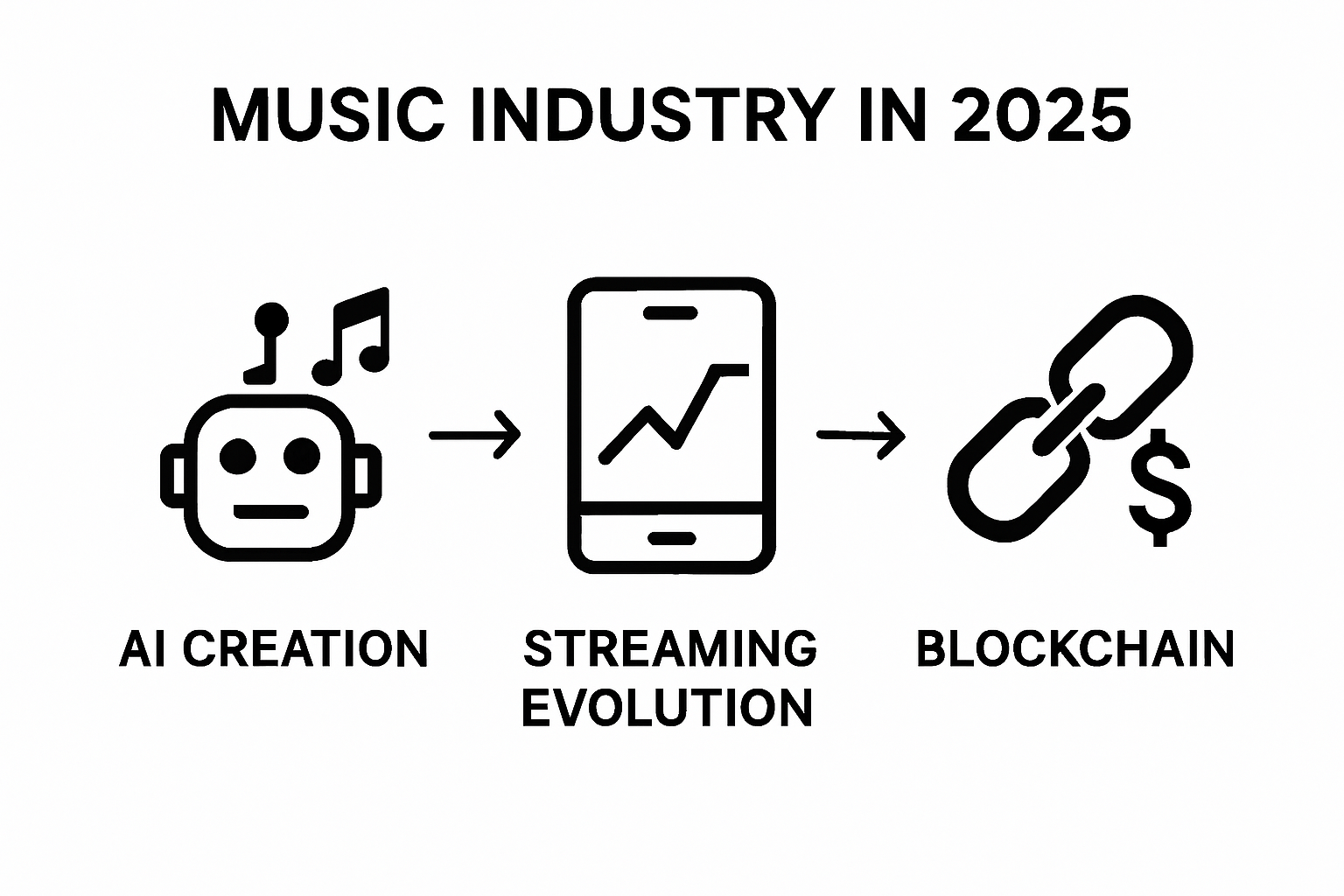 Artists who embrace these emerging technologies will not merely adapt but will lead the next wave of musical expression, creating experiences that were previously unimaginable.
Understanding Consumer Behaviour in the Evolving Music Landscape
The music consumption landscape is undergoing a profound transformation, driven by technological advancements, generational shifts, and increasingly personalised digital experiences. Understanding these complex consumer behaviour patterns is crucial for artists seeking to connect meaningfully with their audience in 2025.
Personalisation and Algorithmic Preferences
Modern music consumers expect highly tailored experiences that reflect their unique tastes and emotional states. Streaming platforms have revolutionised music discovery by leveraging sophisticated algorithms that analyse listening patterns, mood, time of day, and even geographic location to curate personalised playlists.
Key aspects of personalised music consumption include:
- Micro-targeted playlist curation
- Emotional and contextual music recommendations
- Seamless cross-platform listening experiences
Discover advanced audience targeting strategies that can help you understand and engage your listeners more effectively.
Generation Z and Participatory Music Culture
Generation Z represents a fundamental shift in music consumption, viewing music not just as entertainment but as a form of personal identity and social connection. They engage with music through interactive platforms, collaborative playlists, and direct artist interactions that blur traditional boundaries between creator and consumer.
Significant consumer behaviour trends include:
- Preference for authenticity and social consciousness
- Demand for immersive, multi-platform musical experiences
- Active participation in artist communities and fan ecosystems
Successful artists in 2025 will recognise that audience engagement extends far beyond passive listening. They will create ecosystems that invite fans to be co-creators, validators, and integral parts of their musical journey.
The future of music consumption is not about broadcasting but about building genuine, interactive relationships.
This table outlines key trends in music consumer behaviour in 2025 and their implications for artists.
| Consumer Trend | Description | Implications for Artists |
|---|---|---|
| Personalisation and Algorithmic Preferences | Listeners demand tailored experiences through advanced AI | Artists must optimise for recommendation algorithms |
| Micro-Genres and Niche Interests | Rise of specialised listening tastes and communities | Opportunity to target and engage dedicated audience segments |
| Participatory Music Culture (Gen Z) | Fans actively co-create and influence music culture | Importance of community engagement and fan collaboration |
| Multi-Platform and Immersive Experience | Demand for seamless listening across devices and platforms | Necessity to maintain a consistent presence across digital spaces |
| Preference for Authenticity and Social Values | Seeking genuine, value-driven connections with artists | Artists should communicate authentically and support shared causes |
The Role of Collaboration and Community in Music Success

In 2025, success in the music industry is no longer defined by individual brilliance but by the ability to build meaningful connections, collaborate effectively, and nurture vibrant artistic communities. Musicians who understand this fundamental shift will transform their careers from solitary creative pursuits to dynamic, interconnected experiences.
Digital Collaboration and Networked Creativity
Technology has dramatically reshaped collaborative opportunities, enabling musicians to transcend geographical boundaries and create music through sophisticated digital platforms. Virtual studios, real-time collaboration tools, and global networking environments have democratised music production, allowing artists to work seamlessly across continents and genres.
Key collaborative technologies include:
- Cross-continental music production platforms
- AI-assisted collaboration tools
- Global musician networking ecosystems
Learn about featured artist opportunities that can expand your collaborative potential and connect you with innovative musicians worldwide.
Community-Driven Music Economies
Modern music communities are evolving from passive fan bases to active, participatory ecosystems. Artists are increasingly relying on fan engagement, crowdfunding, and direct support models that transform listeners from consumers into stakeholders. These community-driven approaches provide financial sustainability and create deep, meaningful connections between musicians and their audiences.
Community engagement strategies encompass:
Direct fan funding and patronage models
Interactive digital fan experiences
Transparent artist development journeys
Successful musicians in 2025 will view their audiences not as distant admirers but as integral collaborators in their artistic journey. By creating inclusive, participatory environments, artists can build loyal communities that provide emotional and financial support beyond traditional music consumption models.
The future of music is fundamentally collaborative, interconnected, and community-driven. Artists who embrace this paradigm will not just create music but cultivate entire ecosystems of creativity, support, and mutual growth.
Empower Your Music Journey with Music Gateway
Are you feeling overwhelmed by the fast-changing trends and technology within the music industry for 2025? Navigating AI-driven platforms, mastering digital distribution, and growing your audience without the support of a major label can feel daunting. As discussed in the article, today’s independent artist faces challenges such as gaining visibility in crowded streaming environments, adapting to new technologies, and driving direct fan engagement. Music Gateway is designed to meet these specific challenges by offering tools that simplify playlist submissions, digital marketing, and audience insights—all tailored to help you thrive amidst evolving industry demands.
Take control of your future in music. Discover how Music Gateway’s promotion solutions can help you reach new listeners and capitalise on upcoming trends. For artists ready to move from uncertainty to growth, start your journey today and see how our comprehensive support can transform your music career. With resources for music marketing and clear pathways to industry opportunities, now is the moment to turn industry disruption into your advantage.
Frequently Asked Questions
What are the key music industry trends artists should know about in 2025?
Key trends include the evolution of streaming platforms, the rise of artificial intelligence in music creation, the impact of blockchain technology, and the importance of understanding consumer behaviour, especially among Generation Z.
How is artificial intelligence changing music production?
Artificial intelligence is transforming music production by providing tools for composition, mixing, and mastering. AI can generate music, assist in the production process, and help artists identify potential hit tracks, making it a powerful tool for creative collaboration.
Why should independent artists pay attention to emerging music industry trends?
Independent artists need to understand these trends to effectively navigate the evolving landscape. Staying informed allows them to identify new platforms for distribution, adapt marketing strategies, and leverage new technologies to connect with audiences and maximise revenue.
How can musicians build community around their music in 2025?
Musicians can build community by engaging with fans through interactive platforms, fostering collaborative environments, and utilising crowd-funding methods. Creating participatory experiences allows fans to become integral parts of an artist’s journey, transforming them from passive listeners into active supporters.