

Music licensing sounds like something dreamt up by lawyers to make life harder for musicians, right? Most artists would rather pick up a guitar than a contract. Yet music licensing is the difference between giving your song away for nothing and getting paid every time it appears in a film, advert or streaming playlist. Forget the myths about red tape. The truth is that music licensing is actually the artist’s ticket to transforming their passion into reliable income and recognition.
Table of Contents
- What Is Music Licensing? A Simple Definition
- Why Music Licensing Matters For Artists And Creators
- How Music Licensing Works: Key Concepts Explained
- Types Of Music Licenses And Their Applications
- Real-World Examples Of Music Licensing In Action
Quick Summary
| Takeaway | Explanation |
|---|---|
| Music licensing protects artists’ rights. | Licensing ensures that creators retain control over how their music is used, preventing unauthorized exploitation. |
| Different licenses suit different usages. | Types such as synchronization and performance licenses cater to various scenarios, each with specific financial opportunities. |
| Licensing provides revenue streams. | Proper licensing allows artists to earn money from their work when it’s used in media or performance settings. |
| Performance rights organisations are essential. | These organisations track usage and ensure musicians receive royalties from public performances and digital streams. |
| Understanding licensing enhances your career. | Knowing music licensing mechanisms can transform your passion for music into sustainable income opportunities. |
What is Music Licensing? A Simple Definition

Music licensing might sound like a complex, bureaucratic concept that would make your eyes glaze over faster than a pot noodle getting nuked in the microwave. But hold onto your headphones, because understanding music licensing is crucial for any artist wanting to protect their sonic creations and potentially earn some well-deserved quid.
The Fundamental Concept
At its core, music licensing is the legal permission granted by a copyright holder allowing someone else to use their musical work under specific conditions. Think of it like giving a mate temporary access to your prized vinyl collection, but with official paperwork and financial compensation.
Key aspects of music licensing include:
- Protecting Creative Rights: Ensuring artists maintain control over how their music is used
- Financial Compensation: Enabling creators to earn revenue from their work
- Legal Framework: Establishing clear guidelines for music usage across various platforms
How Music Licensing Actually Works
Imagine you’ve created a banger track that some film producer, podcast creator, or advertising agency wants to use. Music licensing is the magical process that allows them to legally incorporate your tune while ensuring you get paid. Different types of licenses exist for different uses – from synchronisation licenses for film and TV to performance licenses for live events.
The beauty of music licensing is that it transforms your musical creation from a personal passion into a potential revenue stream. Whether you’re a bedroom producer or a signed artist, understanding these mechanisms can help you monetise your musical genius.
Ready to dive deeper into protecting your musical masterpieces? Check out our Music Promotion services and start turning your tracks into treasures. Join Music Gateway today and unlock a world of opportunities for your music!
Why Music Licensing Matters for Artists and Creators

Let’s cut through the noise and get real about why music licensing isn’t just some boring paperwork nightmare, but an absolute game-changer for musicians trying to turn their passion into actual pounds in their pocket. You’ve spent countless nights perfecting your sound, surviving on pot noodles and caffeine dreams – so why should your music be treated like a free Jaffa Cake at a pub?
Protecting Your Musical Livelihood
Music licensing is your financial bodyguard. It ensures that when someone wants to use your track in a podcast, advert, film, or game, you’re not just giving away your sonic child for free. Proper licensing means getting paid for your creative genius. Imagine your track becoming the soundtrack for a blockbuster film or a viral advert – without licensing, you’d be watching those royalties sail past like a ghost ship.
Key reasons licensing matters:
- Revenue Generation: Transform your music from a passion project into a potential income stream
- Legal Protection: Prevent unauthorized use of your musical work
- Professional Credibility: Demonstrate you’re a serious artist who values their craft
The Real-World Impact of Licensing
Consider our guide on sync licensing as your roadmap to understanding how artists can leverage their musical rights. Every time your track gets played, streamed, or used in media, licensing ensures you’re not just another starving artist, but a professional who knows their worth.
From independent musicians to signed artists, music licensing levels the playing field. It’s not about being a rockstar with delusions of streaming grandeur – it’s about creating a sustainable career where your creativity is respected and rewarded.
The following table outlines the main benefits artists gain from proper music licensing, supporting a clearer understanding of why it is essential for creators.
| Benefit | Description |
|---|---|
| Revenue Generation | Enables artists to monetize their music through various legal uses |
| Legal Protection | Safeguards musical works from unauthorised exploitation |
| Professional Credibility | Demonstrates that creators value and manage their intellectual property rights |
| Sustainable Career Building | Supports long-term income opportunities and recognition across the industry |

Ready to turn your musical dreams into a proper career? Join Music Gateway and start navigating the world of music licensing like a pro!
How Music Licensing Works: Key Concepts Explained
Music licensing is like a complex dance between creativity and commerce, where every step needs to be carefully choreographed to ensure artists get their rightful slice of the musical pie. Forget everything you thought was complicated about understanding music rights – we’re about to break this down with the precision of a DJ mixing tracks.
Types of Music Licenses
Not all music licenses are created equal. Think of them like different flavours of your favourite crisp – each serving a unique purpose. Licensing isn’t a one-size-fits-all scenario, but a nuanced system designed to protect and compensate musical creators.
Key license types include:
- Synchronisation License: Allows music to be combined with visual media (films, adverts, YouTube videos)
- Mechanical License: Permits reproduction and distribution of sound recordings
- Performance License: Covers public performances of musical works
- Master Use License: Grants permission to use a specific recording
How Royalties and Permissions Work
Imagine you’ve created a banger track that a podcast wants to use. The licensing process determines how much you’ll get paid and under what conditions. Learn more about music distribution to understand how these intricate systems connect creators with opportunities.
Royalty structures can feel like navigating a weird bloke’s complicated pub rules. Some licenses generate upfront fees, while others create ongoing revenue streams based on usage. Performance rights organisations play a crucial role, tracking and collecting payments whenever your music is played publicly.
The beautiful thing about music licensing is how it transforms your sonic creation from a personal passion into a potential revenue stream. Whether you’re a bedroom producer or a signed artist, understanding these mechanisms can help you monetise your musical genius.
Ready to turn your musical dreams into a proper career? Join Music Gateway and start navigating the world of music licensing like a pro!
Types of Music Licenses and Their Applications
Imagine music licensing as a complex musical menu where each dish represents a different way your sonic creation can be served up in the world. Not all licenses are created equal, and understanding their nuanced flavours is crucial for any artist looking to protect and monetise their musical genius.
Core Music License Categories
Music licensing isn’t just paperwork – it’s your backstage pass to turning musical creativity into actual revenue. Different licenses unlock unique opportunities, each with its own specific purpose and potential financial rewards.
The primary music license types include:
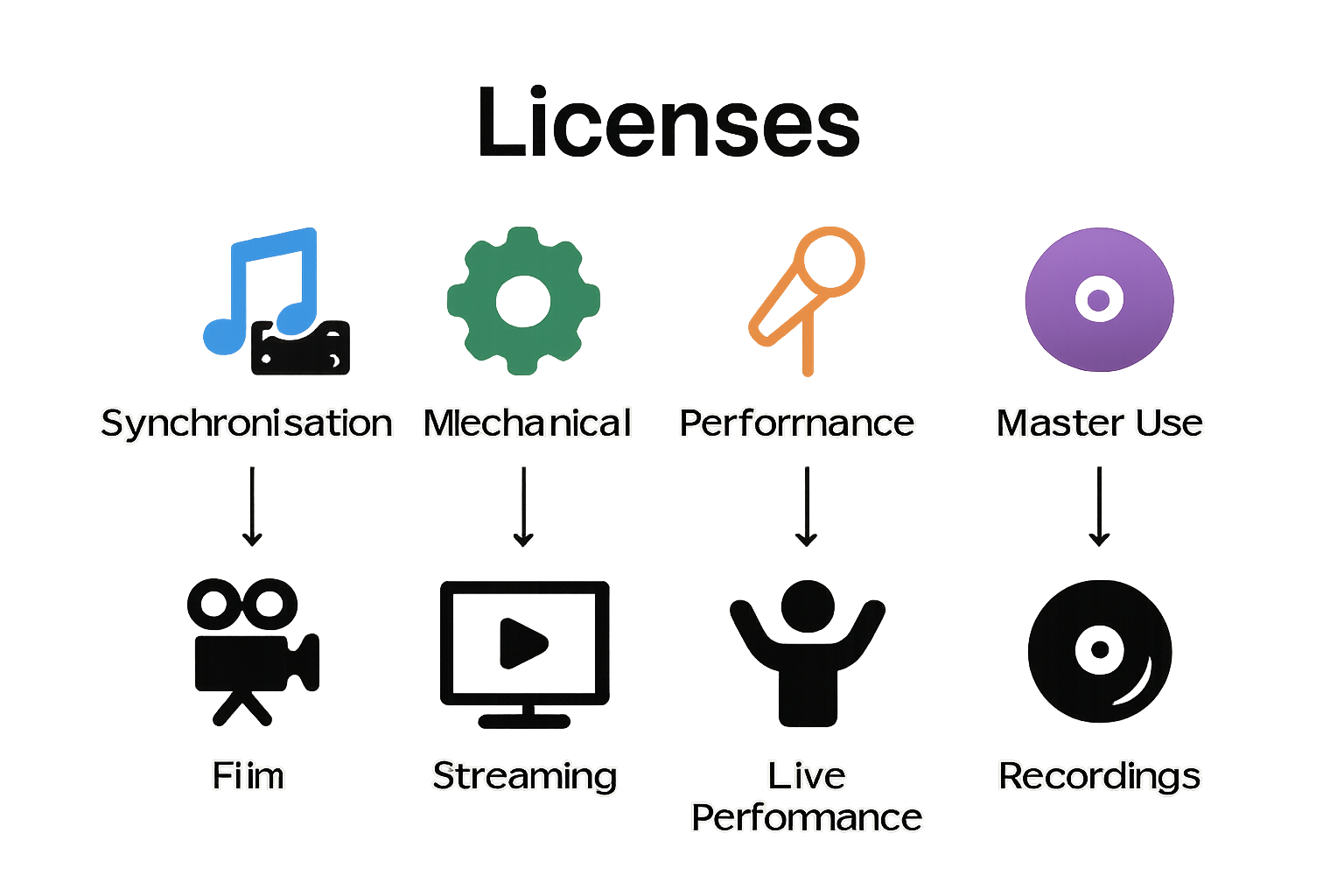
- Synchronisation License: Permits embedding music in visual media like films, adverts, YouTube videos
- Mechanical License: Authorises reproduction and distribution of sound recordings
- Performance License: Covers public performances of musical works
- Master Use License: Grants permission to use a specific recording
Real-World Licensing Scenarios
Explore our guide on music distribution to understand how these licenses connect creators with opportunities. Think of each license like a special key that opens a different door in the music industry. A sync license might get your track into a blockbuster film, while a performance license ensures you’re paid when your music plays in a pub, club, or radio station.
For independent artists, understanding these licenses is like having a secret weapon.
Below is a table summarising the key types of music licences and their typical applications, helping creators quickly identify which licence suits various scenarios.
| Licence Type | Main Purpose | Common Application Example |
|---|---|---|
| Synchronisation Licence | Use music in visual media | Films, television, adverts, YouTube |
| Mechanical Licence | Reproduce and distribute sound recordings | CD/vinyl production, digital stores |
| Performance Licence | Permit public performances | Radio, live gigs, restaurants, pubs |
| Master Use Licence | Use a specific sound recording | Sampling in films, commercials |
Mechanical licenses, for instance, are crucial if someone wants to cover your song or include it on a compilation album. Performance licenses become your financial guardian when your music is played publicly, tracking and collecting royalties from every play.
Whether you’re a bedroom producer or a signed artist, mastering these licensing mechanisms transforms your passion from a hobby into a potential career. It’s not just about protecting your work – it’s about creating sustainable income streams that reward your musical creativity.
Ready to turn your musical dreams into a proper career? Join Music Gateway and start navigating the world of music licensing like a pro!
Real-World Examples of Music Licensing in Action
Let’s dive into the gritty, real-world realm where music licensing transforms from abstract concept to cold, hard cash in a musician’s pocket. Forget theoretical mumbo-jumbo – we’re talking about actual scenarios where clever licensing can turn your musical passion into a proper payday.
Film and Television Licensing
Sync licensing is the rockstar of music monetisation. Imagine your indie track suddenly soundtracking a pivotal scene in a blockbuster film or a critically acclaimed Netflix series. One perfectly placed song can catapult an unknown artist from bedroom producer to industry darling.
Classic sync licensing scenarios include:
- Movie Soundtracks: Transforming a track into a cultural moment
- TV Series Background Music: Creating emotional depth through musical selection
- Adverts: Turning a song into a brand’s sonic identity
Digital Media and Streaming Platforms
Learn more about Spotify promotion to understand how digital platforms intersect with licensing. YouTube, TikTok, and streaming services have revolutionised how musicians can monetise their work. A viral dance challenge or a perfectly curated playlist can generate substantial licensing revenue.
Performance rights organisations are the unsung heroes tracking these digital plays. Every time your track gets streamed, shared, or used as background noise, there’s potential revenue waiting. It’s like having a financial bodyguard constantly watching out for your musical interests.
For independent artists, understanding these real-world licensing applications is like discovering a secret map to musical sustainability. Whether it’s a podcast using your track as an intro, a video game featuring your music, or a regional advert playing your song, each scenario represents a potential revenue stream.
Ready to turn your musical dreams into a proper career? Join Music Gateway and start navigating the world of music licensing like a pro!
Make Music Licensing Work for You with Music Gateway
You have just learned how music licensing protects your creative rights and can earn you proper income. For many independent creators, the real struggle is turning that knowledge into action – finding a way to navigate complex licences and actually get your music into the right hands. The article highlights pain points such as missing out on royalties, confusion over synchronisation, and difficulty growing from hobby to career.
Take charge of your music career today. Discover how Music Gateway makes these industry hurdles simple. Our digital platform gives you access to genuine industry-standard music promotion tools, sync licensing opportunities, and complete guidance on music licensing solutions. Empower yourself to protect your tracks and turn them into real revenue streams. Don’t wait while your musical rights go undervalued – start your journey now and experience how straightforward licensing and growth can be for independent artists on our platform.
Frequently Asked Questions
What is music licensing?
Music licensing is the legal permission granted by a copyright holder allowing someone else to use their musical work under specific conditions, ensuring that artists are compensated and their rights protected.
Why is music licensing important for creators?
Music licensing is vital as it protects artists’ creative rights, generates revenue from musical works, and establishes a legal framework for usage, ensuring musicians are paid for their creativity.
What are the different types of music licenses?
The primary types of music licenses include Synchronisation Licenses (for visual media), Mechanical Licenses (for sound reproduction), Performance Licenses (for public performances), and Master Use Licenses (for specific recordings).
How do royalties work in music licensing?
Royalties are payments made to artists when their music is used. Different licenses generate various royalty structures, including upfront fees and ongoing payments based on how often the music is played publicly.