

Getting your music played on radio still carries serious clout, even in 2025. Over 70 percent of listeners discover new artists through radio, not just streaming playlists. You might think sending a track is enough, but there is a careful strategy behind every song you hear on air. The real secret is that airplay depends just as much on technical polish and backstage networking as it does on the music itself.
Table of Contents
Quick Summary
| Takeaway | Explanation |
| Technical Specifications Are Crucial | Ensure your track meets radio standards, including a length of 3 to 4 minutes and high-quality audio files. Properly mixed and mastered tracks increase your chances of airplay. |
| Craft an Impactful Electronic Press Kit | Your EPK should be a concise, engaging representation of your artistic identity, including a bio, high-resolution photos, and links to your best tracks to capture the attention of busy radio programmers. |
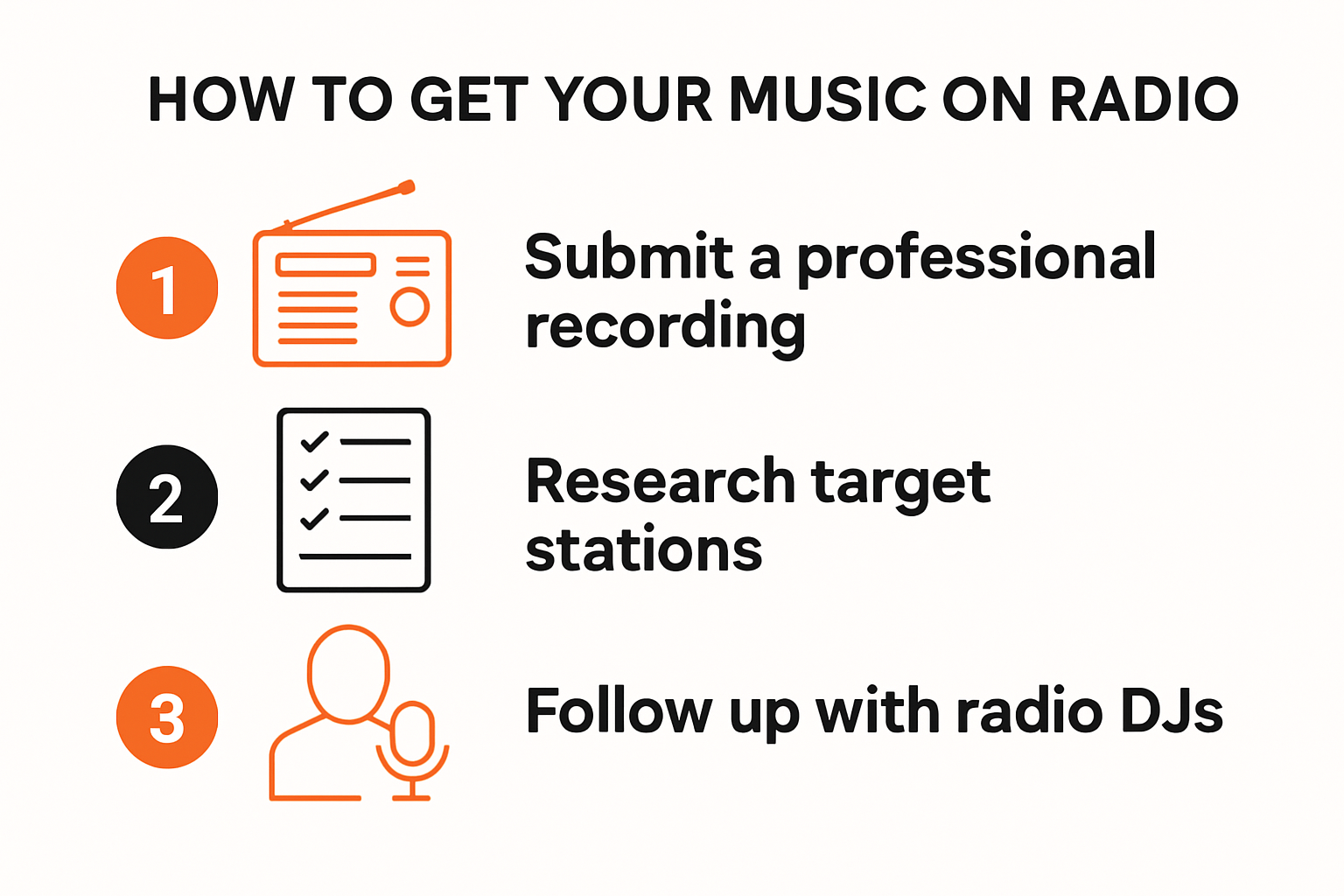
| Targeted Outreach to Radio Stations | Research and identify radio stations that align with your genre and audience. Personalise your submissions by referencing specific shows and demonstrating understanding of their music preferences. |
| Leverage Social Media Post-Airplay | Use digital platforms to amplify your radio play by sharing content and encouraging listeners to stream your track, creating a ripple effect in your music promotion efforts. |
| Build and Maintain Relationships | Engage with DJs and radio personnel after your track is played. Building meaningful connections can lead to future opportunities such as interviews and repeated airplay. |
Understanding Radio Airplay Requirements
Getting your music on radio is more than just sending a track and hoping for the best. It’s a strategic process that requires understanding the complex world of radio broadcasting in 2025. Radio stations receive hundreds of tracks weekly, which means your music needs to stand out like a cheeky Londoner in a crowd of wallflowers.
Technical Specifications Matter
Before you start dreaming of hearing your track blasting through car speakers, you’ll need to nail the technical requirements. Radio stations have specific standards that can make or break your chances of airplay. First up, track length is crucial. Aim for the sweet spot between 3 to 4 minutes – radio programmers have limited time and prefer tracks that fit neatly into their programming schedules. Your audio quality must be impeccable. We’re talking crystal-clear WAV files that sound like they’ve been lovingly mastered by audio wizards, not compressed MP3s that sound like they were recorded in a tin can.

Sound production is your first gatekeeper. Stations want professionally mixed tracks that translate well across different audio systems. This means investing in top-notch recording and mixing. Get professional insights on music production to ensure your track meets industry standards. Think of it like preparing for a job interview – you want to look and sound your absolute best.
Legal and Administrative Groundwork
Radio isn’t just about great music – it’s a legal minefield. Registering with a Performance Rights Organisation (PRO) isn’t optional; it’s essential. These organisations ensure you get paid when your music plays. Organisations like ASCAP and BMI track your airplay and collect royalties. You’ll need to have all your legal ducks in a row: mechanical licenses, publishing rights, and sample clearances if you’ve used any external elements in your track.
Prep a robust Electronic Press Kit (EPK) that tells your story. This isn’t just a random collection of photos and links – it’s your musical passport. Include a concise, engaging bio that captures your unique artistic voice, high-resolution professional photos, and links to your best tracks. Radio programmers are busy people, so make it easy for them to understand who you are and why your music matters.
Understanding Radio Station Preferences
Every radio station has its unique audience and musical identity. Research is key. Some stations specialise in specific genres, while others have broader playlists. Local independent stations might be more open to emerging artists compared to national networks. Create a targeted approach – don’t spray and pray with your submissions.
Network and build relationships. Attend industry events, connect with radio DJs on social media, and show genuine interest in their platforms. Explore our comprehensive music promotion strategies to understand how to effectively reach out to radio stations. Remember, in the music industry, relationships often open doors that talent alone cannot.
Radio airplay in 2025 is a strategic game. It requires technical excellence, legal preparedness, and smart networking. Your music needs to be more than just good – it needs to be irresistible. Are you ready to make some noise?
Ready to take your music to the next level? Join Music Gateway and start your journey towards radio success!
To help you keep track of the key requirements for radio airplay, here’s a checklist table summarising the essentials mentioned above:
| Requirement | Details | Completed |
| Track Length | 3 to 4 minutes (ideal for radio programming) | |
| Audio Quality | Professionally mixed/mastered; crystal-clear WAV files | |
| File Format | WAV preferred; avoid compressed MP3s | |
| Legal Registrations | Register with PROs (e.g., ASCAP, BMI); handle licenses/rights/sample clearances | |
| Electronic Press Kit (EPK) | Concise bio, high-res photos, best tracks, social/press links | |
| Research Station Preferences | Target stations by genre/audience | |
| Networking/Relationships | Attend events, connect with DJs/stations on social media |
Preparing Your Track for Submission
Submitting your track to radio stations isn’t like tossing a dart blindfolded and hoping for a bullseye. It’s a precise art that requires meticulous preparation and strategic thinking. Your music needs to be polished, professional, and packaged in a way that makes radio programmers sit up and take notice.
Digital Submission Essentials
In 2025, digital submissions are the primary method of reaching radio stations. Forget physical CDs – we’re in the era of high-quality digital files and slick electronic press kits. Your audio file needs to be pristine. We’re talking crystal-clear WAV files with impeccable sound quality that showcase your track’s full potential. Aim for a minimum bitrate of 256 kbps, with constant bitrate preferred over variable. Proper metadata is your secret weapon. Ensure every track is perfectly tagged with accurate information: artist name, track title, album, year of release, and genre.
Metadata might sound boring, but it’s your digital business card. Radio programmers receive hundreds of tracks weekly, and a well-tagged file can be the difference between getting noticed and getting lost in the digital shuffle. Learn advanced music tagging techniques to make your submission stand out from the crowd. Think of it like dressing for a job interview – presentation matters.
Crafting the Perfect Electronic Press Kit
Your Electronic Press Kit (EPK) is essentially your musical CV. This isn’t just a random collection of links and photos – it’s a strategic document that tells your artistic story. Create a concise, engaging bio that captures your unique musical identity. Include high-resolution professional photos that reflect your brand, links to your best tracks, and a compelling narrative about your musical journey.
Radio programmers are busy people with limited time. Your EPK needs to be a quick, exciting snapshot of who you are as an artist. Include links to your social media, streaming profiles, and any notable press coverage. Highlight any unique selling points – have you won awards? Played significant venues? Collaborated with interesting artists? These details can set you apart from the hundreds of other submissions.
Genre-Specific Submission Strategies
Every radio station has its own musical personality. A rock station won’t be interested in a smooth jazz track, and a classical music programme won’t play your electronic dance banger. Research is crucial. Study the specific formats and musical preferences of each station you’re targeting. Some stations specialise in local artists, while others have broader national or international playlists.
Tailoring your submission is key. Create a targeted approach that shows you understand the station’s musical identity. Explore our comprehensive radio promotion strategies to refine your submission technique. Network with DJs and programme managers on social media, attend industry events, and build genuine relationships. Remember, in the music industry, connections can often open doors that talent alone cannot.
Preparing your track for radio submission in 2025 is part technical skill, part artistic storytelling, and part strategic networking. Your music needs to be more than just good – it needs to be irresistible. Are you ready to make some noise?
Ready to take your music to the next level? Join Music Gateway and start your journey towards radio success!
To clarify the differences between a strong and weak radio submission, here’s a comparison table based on the essentials described above:
| Aspect | Strong Submission | Weak Submission |
| Audio File | Professionally mixed/mastered WAV, 256 kbps+ | Low-quality, compressed MP3, below 256 kbps |
| Metadata | Fully tagged (artist, track, album, year, genre) | Missing or incorrect metadata |
| EPK Quality | Concise, engaging bio, high-res photos, links included | Disorganised, lacks key info, low-res or missing |
| Submission Targeting | Researched stations, personalised message | Generic, untargeted, impersonal outreach |
| Genre Fit | Tailored to station’s format/preference | Mismatched genre, poorly researched submission |
| Legal Preparedness | All rights, licenses, and registrations in order | Missing PRO, unclear rights/sample issues |
Approaching Radio Stations and DJs

Approaching radio stations and DJs is like navigating a complex social dance. It’s not about bombarding them with your music, but building genuine connections and understanding the intricate world of radio programming. Your strategy needs to be as carefully crafted as your track.
Research and Targeted Outreach
Knowledge is your most powerful weapon when approaching radio stations. Not all stations are created equal. Some specialise in local emerging artists, while others have national or genre-specific playlists. Start by mapping out stations that genuinely align with your musical style. Local and regional stations are often more receptive to independent artists, offering a fantastic launching pad for your music.
Identify key personnel at each station. Music directors, programme managers, and DJs are your primary targets. But here’s the crucial bit: don’t just send a generic email. Personalise your approach. Show that you’ve done your homework by referencing recent shows, understanding their musical preferences, and explaining why your track would resonate with their audience. Learn strategic music networking techniques to elevate your outreach game.
Building Meaningful Relationships
Radio isn’t just about sending tracks – it’s about building relationships. Social media has transformed how artists connect with industry professionals. Follow DJs and radio personalities, engage genuinely with their content, and create meaningful interactions beyond just self-promotion. Comment on their posts, share their content, and demonstrate that you’re part of the musical community, not just another artist demanding airplay.
Attending industry events, local gigs, and radio-related networking sessions can be game-changing. These face-to-face interactions allow you to build rapport that digital communication cannot replicate. When you meet DJs or programme managers, focus on creating a genuine connection. Share your passion, listen to their insights, and be authentically interested in their work.
Submission Etiquette and Follow-Up
Every radio station has unique submission guidelines. Some prefer email, others use specific online platforms. Read and follow these guidelines meticulously. Include a concise, compelling pitch that explains why your track matters. Highlight any unique aspects of your music, recent achievements, or interesting backstories that might capture their attention.
After submission, patience and professional follow-up are key. Wait a reasonable time – typically 1-2 weeks – before sending a polite follow-up email. If you don’t hear back, don’t become a pest. Radio professionals are incredibly busy. Instead, continue building your profile, releasing great music, and creating opportunities that might indirectly attract their attention.
Approaching radio stations in 2025 is an art form that blends strategic communication, genuine relationship-building, and persistent professionalism. Your music needs to be excellent, but your approach needs to be equally compelling. Remember, every play starts with a connection.
Maximising Exposure After Airplay

Congratulations! Your track has finally hit the airwaves. But here’s the thing: getting played is just the beginning of your musical journey. Now it’s time to transform that single radio moment into a sustained wave of momentum that can propel your music career to new heights.
Leveraging Social Media and Digital Platforms
Radio airplay is your golden ticket, but you need to amplify that signal across every digital platform at your disposal. The moment your track gets played, turn into a digital marketing ninja. Screenshot the radio playlist, create Instagram stories, tweet about your radio debut, and share those moments on every social channel. Your fans want to celebrate your victories with you.
Understand the beautiful symbiosis between radio and streaming platforms. When a track gets radio play, it often triggers a ripple effect across digital ecosystems. Listeners who hear your song might immediately search for it on Spotify, Apple Music, or other streaming services. Discover advanced streaming promotion techniques to capitalise on this momentum. Create shareable content that encourages fans to stream, save, and share your track.
Building Relationships and Maintaining Momentum
Radio play isn’t a one-time event – it’s an opportunity to build lasting industry relationships. Reach out to the DJ or station that played your track. Send a genuine thank you message. Share how much their support means to you. These personal connections can lead to future opportunities like interviews, live sessions, or repeated plays.
Network strategically. Connect with other artists who have similar musical styles or have been played on the same stations. Engage with their content, support their work, and create a collaborative ecosystem. Explore comprehensive music networking strategies to expand your professional circle. Remember, the music industry thrives on genuine relationships and mutual support.
Tracking and Analysing Your Radio Impact
Data is your friend in the modern music landscape. Use radio monitoring services to track where and when your music is being played. These services provide detailed reports about your airplay, including geographical reach, time of day, and frequency of plays. This information is gold for understanding your audience and planning future promotional strategies.
Consider creating radio-specific versions of your tracks. Clean edits with radio-friendly lengths and lyrics can increase your chances of repeated plays. Some stations prefer tracks that fit specific time slots or have certain production characteristics. Adapt and evolve your music to meet these requirements.
Maximising exposure after radio airplay is an art form that combines digital savvy, genuine networking, and strategic thinking. Your goal isn’t just a single play – it’s creating a sustainable momentum that builds your musical brand. Every radio moment is an opportunity to connect, grow, and expand your artistic reach.
Ready to take your music career to the next level? Join Music Gateway and unlock a world of professional music opportunities!
Frequently Asked Questions
How can I get my music played on radio in 2025?
To get your music played on radio, ensure it meets the technical specifications like a length of 3 to 4 minutes and high-quality audio files. Prepare a compelling Electronic Press Kit (EPK) and research stations that align with your genre before submitting your track.
What are the essential requirements for radio airplay?
Key requirements for radio airplay include submitting a professionally mixed and mastered track, having all necessary legal registrations with Performance Rights Organizations (PROs), and creating an engaging EPK that captures your artistic identity.
How important is it to network with radio stations and DJs?
Networking is crucial. Building relationships with DJs and radio personnel can lead to future opportunities, such as interviews and repeated airplay. Attend industry events and engage with them on social media to foster these relationships.
What should I do to maximise my exposure after getting airplay?
After your track gets airplay, leverage social media to share your success and encourage your listeners to stream your song. Maintain relationships with the station and DJs, track your airplay impact, and consider creating radio-specific versions of your tracks for increased chances of future play.
Turn Airplay Dreams into Industry Reality with Music Gateway
Navigating the challenges of radio airplay in 2025 can feel overwhelming. The article highlighted how crucial professional production, legal preparation, and strategic networking are for getting your music noticed. Many artists struggle with making their tracks technically perfect, piecing together a standout electronic press kit, and building the right industry connections. These pain points can stall your progress and leave you feeling stuck just as your musical journey should be taking off.
Music Gateway has built solutions specifically to tackle these barriers. Our platform gives you access to expert guidance and tools that streamline every step of your radio submission process. From perfecting your music files to targeting stations and growing your exposure after airplay, we support you with resources that make a measurable difference. Ready to move your music from the demo pile to the radio spotlight? Discover how our music promotion services can accelerate your airplay campaign and open doors in the industry. Take action now on Music Gateway and get your music heard by the right people at the right time.