

Digital music rights sound complicated, but they shape every stream, download and sync deal for creators. Here is something most artists overlook. Each stream on Spotify is worth about £0.003 to £0.005, so a single track with 100,000 plays can put hundreds of pounds in your pocket. Yet knowing how to claim these rights is what separates hobbyists from real professionals.
Table of Contents
- What Are Digital Music Rights?
- Key Types Of Digital Music Rights
- How To License And Protect Your Music
- Royalties And Revenue In The Digital Age
Quick Summary
| Takeaway | Explanation |
|---|---|
| Understand digital music rights | Knowing your rights is crucial for protecting and monetising your music in digital spaces. |
| License your music effectively | Joining Performing Rights Organisations ensures you collect all potential royalties from performances and streams. |
| Register with PROs for royalties | Joining Performing Rights Organizations ensures you collect all potential royalties from performances and streams. |
| Diversify your revenue sources | Explore sync licensing and content monetisation on platforms like YouTube and TikTok to enhance earnings. |
| Maximise digital income through strategy | Strategic use of metadata and tracking versions aids in revenue generation and reach expansion. |
What Are Digital Music Rights?
In the magical digital mixtape of modern music, understanding digital music rights is like having a backstage pass to your artistic success. These rights are the legal superpowers that protect your musical creations in the vast, interconnected digital world.
The Fundamental Framework of Digital Rights
Digital music rights represent the legal protections and permissions that govern how your musical work can be used, shared, and monetised in digital spaces. Imagine these rights as an invisible shield protecting your creative output from unauthorised exploitation. They cover everything from streaming on platforms like Spotify to downloads, digital radio plays, and even synchronisation in digital media.
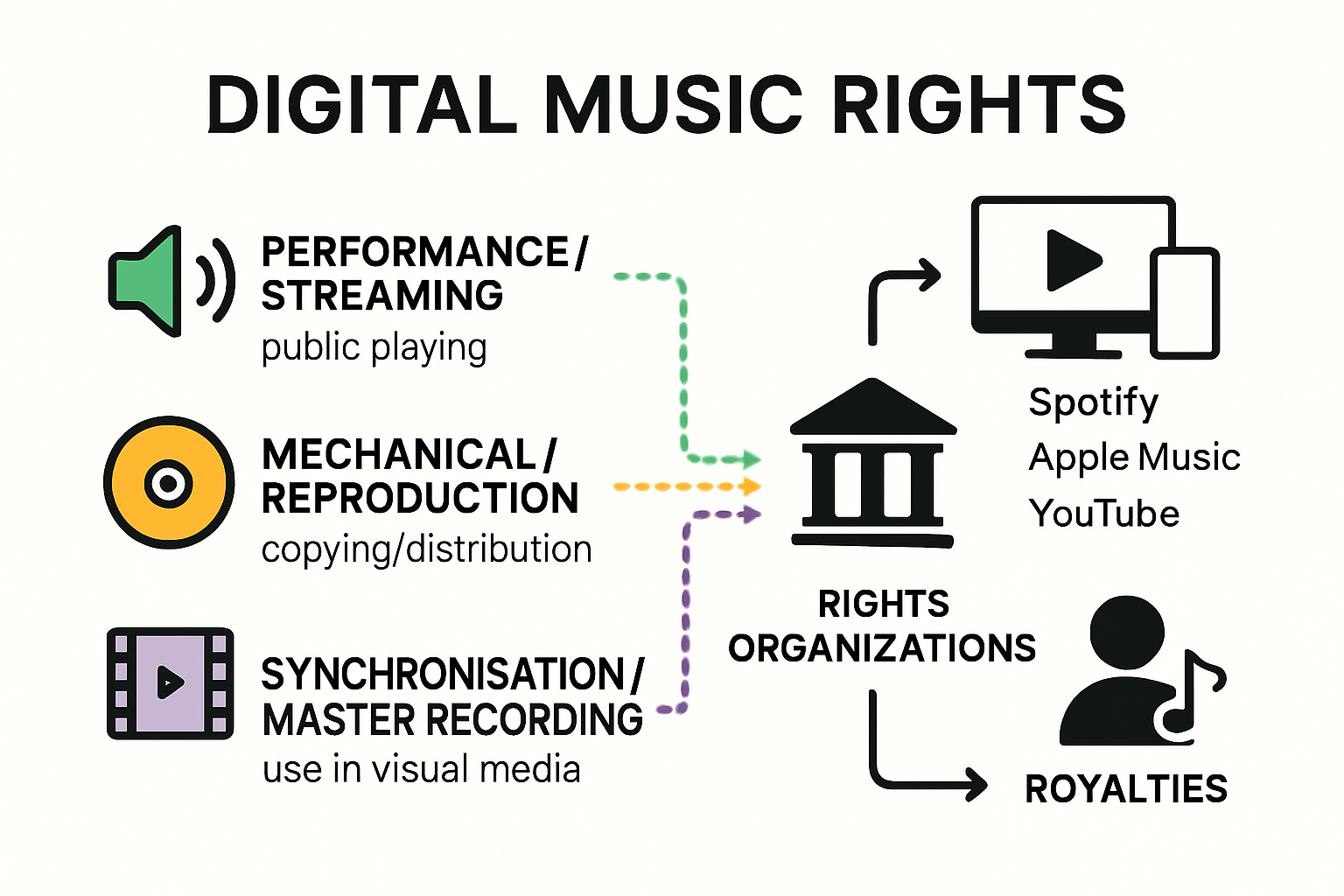
At their core, digital music rights encompass several critical aspects. Reproduction rights allow you to control how your music is copied and distributed digitally. Performance rights ensure you get compensated when your tracks are played publicly online. Mechanical rights govern the reproduction of your musical compositions in digital formats. These aren’t just legal mumbo jumbo – they’re your artistic lifeline in a world where music can be shared globally with a single click.
The Digital Landscape of Music Ownership
The digital realm has transformed how musicians manage their rights. Streaming services, digital downloads, and online platforms have created complex ecosystems where protecting your intellectual property requires strategic knowledge. Learn more about navigating music licensing to understand the intricate dance of digital music rights.
Independent artists now have unprecedented opportunities to control and monetise their music. You’re no longer reliant on traditional record labels to distribute your tracks. Digital rights allow you to directly manage your musical catalogue, track your plays, and ensure you’re fairly compensated for your creative work.
Understanding digital music rights isn’t just about legal protection – it’s about empowerment. It’s about ensuring that every stream, download, and digital play translates into recognition and revenue for your artistic talent. Whether you’re a bedroom producer or an emerging artist, these rights are your digital passport to a fair and transparent music industry.
Key Types of Digital Music Rights
When it comes to digital music rights, you’ve got more layers than a seriously complex onion. Each type of right represents a unique pathway for protecting and monetising your musical genius. Think of these rights as different passports that allow your music to travel through the wild digital landscape.
Performance and Streaming Rights
Performance rights are the rock stars of digital music rights. Whenever your track gets played on a streaming platform, digital radio, or online music service, these rights ensure you get paid. Explore our comprehensive guide to music licensing terms to understand the nitty-gritty of how these rights work.
Streaming platforms like Spotify, Apple Music, and YouTube generate millions of plays daily. Performance rights mean that every single stream potentially generates revenue for you. Performing Rights Organisations (PROs) like PRS in the UK track these plays and collect royalties on your behalf. It’s like having a digital bouncer making sure you get paid for your musical brilliance.
Mechanical and Reproduction Rights
Mechanical rights are all about reproduction. These rights cover how your musical compositions can be copied, distributed, and reproduced in digital formats. When someone downloads your track, creates a cover version, or samples your work, mechanical rights come into play.
In the digital world, mechanical rights have become increasingly complex. Digital downloads, streaming platforms, and online music stores all require specific mechanical licensing. These rights ensure that songwriters and composers are compensated when their work is mechanically reproduced. Whether it’s a digital download or a track being used in a podcast, mechanical rights protect your creative output.
Synchronisation and Master Recording Rights

Sync rights are the magic that happens when your music meets visual media. Want your track in a Netflix show, YouTube video, or video game? Synchronisation rights are your golden ticket. These rights allow visual content creators to use your music alongside their visual work, and yes, they pay you for the privilege.
Master recording rights are equally crucial. These rights relate to the actual sound recording of your music. While publishing rights cover the composition, master recording rights protect the specific recording. This means if someone wants to use your exact recording in a commercial or film, they need to negotiate with you.
The digital music rights landscape might seem like a labyrinth, but it’s your roadmap to fair compensation. Understanding these rights transforms you from a passive creator to an active manager of your musical career. Each stream, download, and sync is an opportunity to get paid and recognised.
To help you see the differences between the main types of digital music rights, here’s a comparison table outlining their key features and what they protect:
| Type of Right | What It Protects | When It’s Used | Who Benefits |
|---|---|---|---|
| Performance Rights | Public performance and streaming of music | Streaming, radio, online platforms | Songwriters, publishers |
| Mechanical (Reproduction) Rights | Reproduction and distribution of compositions | Downloads, covers, sampling | Songwriters, composers |
| Synchronisation Rights | Use of music in visual media | Films, TV, adverts, video games | Songwriters, publishers |
| Master Recording Rights | Specific sound recording | Use of exact recording in commercials, films | Recording owners, artists |
How to License and Protect Your Music
Protecting your musical masterpiece isn’t just about throwing up digital barriers – it’s about strategically navigating the complex world of music licensing like a savvy artistic ninja. Think of licensing as your musical suit of armour, defending your creative work while simultaneously opening doors to potential revenue streams.
Understanding Licensing Basics
Licensing is the legal mechanism that transforms your musical creation from a personal passion into a monetisable asset. Learn the insider details of music licensing and you’ll unlock a world of opportunities. Mechanical licenses allow others to reproduce your composition, while synchronisation licenses permit your music to be used in visual media like films, adverts, or video games.
The key is understanding different licensing types. A mechanical license enables covers or reproductions of your song, ensuring you receive royalties when someone records their version. Sync licenses are your ticket to having your music featured in media productions, potentially earning significant revenue from a single placement. Independent artists who master these licensing strategies can transform their music from a hobby into a professional career.
Registering Your Musical Works
Registration is your first line of defence in protecting digital music rights. Copyright registration provides legal proof of ownership and creates a public record of your creative work. Different organisations handle various aspects of music rights – Performing Rights Organizations (PROs) like PRS in the UK track performance royalties, while organisations like the Mechanical Licensing Collective manage mechanical royalty collections.
Digital platforms have made registration more accessible than ever. You can now register compositions online, track your plays, and monitor how your music is being used across global streaming platforms. This digital tracking means you’re no longer relying on chance or goodwill to get paid – you have concrete mechanisms to ensure fair compensation.
Protecting Your Music in the Digital Ecosystem
In the wild west of digital music, proactive protection is paramount. Watermarking your tracks, using digital fingerprinting technologies, and maintaining meticulous records of your musical works can prevent unauthorised use. Creative Commons licenses offer flexible frameworks for sharing your music while retaining specific usage rights.
Consider working with music licensing platforms that can help distribute and protect your work. These services act like digital guardians, monitoring where and how your music is used, ensuring you receive appropriate credit and compensation. They transform the complex world of music rights from an overwhelming challenge into a manageable, potentially lucrative opportunity.

Remember, licensing isn’t just legal paperwork – it’s your pathway to professional recognition. Every stream, sync, and reproduction is a potential revenue stream waiting to be unlocked. Your music has value, and licensing ensures you’re fairly compensated for your artistic brilliance.
Ready to take control of your musical destiny? Join Music Gateway and start your journey towards comprehensive music rights management.
Royalties and Revenue in the Digital Age
Welcome to the digital music economy, where your creativity can translate into cold, hard cash – if you know how to play the game. Gone are the days when musicians relied solely on album sales and live performances. Today’s musical landscape is a complex ecosystem of streaming, sync deals, and digital monetisation strategies that can turn your passion into a sustainable career.
Understanding Streaming Royalties
Streaming platforms have revolutionised how musicians earn money, but the economics can feel like solving a Rubik’s cube blindfolded. Learn more about music industry fundamentals to navigate this intricate world. Streaming royalties are typically divided into two primary categories: recording royalties and publishing royalties. Recording royalties go to the rights holders of the sound recording (usually the record label or independent artist), while publishing royalties are paid to the songwriters and composers.
Every stream might seem small – we’re talking fractions of a penny – but these can add up. A track with thousands of streams can generate meaningful income. Platforms like Spotify pay approximately £0.003 to £0.005 per stream, which means you’ll need around 250 streams to earn a single pound. Sounds minimal? Imagine a track getting 100,000 streams. Suddenly, those pennies start looking like pounds.
Here’s a quick table summarising the potential earnings from streaming, using figures mentioned in the article for Spotify as an example:
| Number of Streams | Approximate Earnings (GBP) | Notes |
|---|---|---|
| 250 | £1 | Typical number of streams for £1 |
| 10,000 | £30–£50 | Based on £0.003–£0.005 per stream |
| 100,000 | £300–£500 | Substantial for independent artists |
Estimates based on Spotify’s payout range of £0.003–£0.005 per stream.
Diversifying Your Revenue Streams
Smart musicians don’t put all their eggs in one basket. Digital music rights offer multiple revenue channels beyond streaming. Sync licensing – where your music is used in films, adverts, TV shows, or video games – can be incredibly lucrative. A single sync placement could earn you more than months of streaming revenue.
YouTube monetisation offers another interesting revenue stream. Content creators using your music can generate income through ad revenue sharing. Platforms like TikTok have also become significant income sources, with viral trends potentially catapulting your track to global recognition. Performance rights from radio plays, online broadcasts, and public venues add another layer to your potential earnings.
Maximising Your Digital Music Income
To truly capitalise on digital music rights, you need a strategic approach. Register with Performing Rights Organizations to ensure you’re collecting all available royalties. Use digital distribution platforms that offer comprehensive tracking and reporting. Metadata is crucial – ensure your tracks are correctly tagged with all necessary information to maximise discoverability and royalty collection.
Consider creating multiple versions of your tracks – radio edits, instrumental versions, remixes. Each version represents a potential additional revenue opportunity. Collaborate with other artists to expand your reach and create cross-promotional opportunities that can boost your streams and sync potential.
The digital age hasn’t just changed how music is consumed – it’s transformed how musicians can earn. Your music is no longer confined to physical sales or local gigs. With the right strategy, your creativity can reach global audiences and generate sustainable income.
Ready to unlock your musical potential? Join Music Gateway and start turning your musical passion into a professional career.
Frequently Asked Questions
What are digital music rights?
Digital music rights are the legal protections and permissions that dictate how your musical work can be used, shared, and monetised in digital spaces. They encompass reproduction rights, performance rights, mechanical rights, and more.
How can I protect my music in the digital space?
To protect your music, you should register your works with copyright offices and Performing Rights Organizations (PROs). Additionally, using watermarking and digital fingerprinting technologies can help prevent unauthorised use of your music.
What are the different types of digital music rights?
The main types of digital music rights include performance rights (for streaming and public plays), mechanical rights (for reproduction and distribution), synchronisation rights (for use in visual media), and master recording rights (specific to sound recordings).
How do streaming royalties work?
Streaming royalties are earnings generated from plays on platforms like Spotify and Apple Music. They are divided into recording royalties (for sound recording rights holders) and publishing royalties (for songwriters), typically earning between £0.003 and £0.005 per stream.
Unlock Your Digital Music Rights with Music Gateway
You have just learned how crucial it is to claim, protect and monetise your digital music rights. Yet with the complexities around streaming royalties, sync licensing and registration, many independent artists feel lost and unsupported. Without the right tools and guidance, valuable income from streaming and sync opportunities can slip through your fingers.
Music Gateway exists to bridge this gap. Imagine taking your hard-earned knowledge from understanding performance rights and mechanical royalties and directly applying it through industry-standard solutions built for you. Let us handle the details while you focus on your creativity. Discover tailored support for music promotion, expert help with sync licensing and step-by-step resources for growing your digital revenue. Take the next step and ensure no stream or opportunity passes you by. Now is the time to turn your rights into real-world results. Ready for your music journey? Visit Music Gateway and start transforming your music career today.