

Mastering is often called the finishing touch that takes a song from good to unforgettable and it can make or break how music sounds on any device. Many think this step is only about making tracks louder or throwing in some last-minute effects. Yet proper mastering makes the difference between an amateur recording and the polished sound you hear on top radio hits and streaming charts. The real shock is that mastering is not a magic fix for bad recordings but a meticulous art that reveals the true power of the music beneath.
Table of Contents
- Defining Mastering: The Final Step In Audio Production
- The Importance Of Mastering: Why It Matters For Artists
- The Mastering Process: Key Components Explained
- Mastering And Sound Quality: How It Enhances Music
- Common Myths About Mastering: Clarifying Misconceptions
Quick Summary
| Takeaway | Explanation |
|---|---|
| Mastering enhances sound quality | It refines recordings by balancing frequencies and dynamics, creating a professional sound. |
| Professional mastering is essential for artists | It transforms tracks into competitive submissions, improving chances on streaming platforms and playlists. |
| Myth: Mastering fixes bad mixes | Mastering cannot salvage poorly mixed tracks; a high-quality mix is necessary for effective mastering. |
| Mastering boosts emotional impact | Precise technical adjustments enhance listeners’ emotional connection to the music. |
| Invest in professional mastering | Quality mastering is a strategic investment that elevates your musical career, improving your sound and marketability. |
Defining Mastering: The Final Step in Audio Production

Mastering represents the ultimate sonic polish and refinement in music production, transforming a good recording into a professional, radio-ready track. Think of it as the musical equivalent of a bespoke suit tailoring – taking something solid and elevating it to extraordinary.
What Exactly is Mastering?
At its core, mastering is the final technical and creative process applied to a mixed track before distribution. It involves critical adjustments that enhance the overall sound quality, ensuring consistency and optimal playback across multiple sound systems and platforms. Imagine your track as a raw diamond – mastering is the precise cutting and polishing that reveals its true brilliance.
Key aspects of mastering include:
- Volume Balancing: Adjusting overall track loudness to industry standards
- Stereo Width Optimization: Enhancing spatial characteristics of the sound
- Frequency Equalization: Fine-tuning the tonal balance across different frequency ranges
Why Mastering Matters
Professional mastering can make the difference between a track that sounds amateurish and one that sounds like a chart-topping hit. It’s not just about making music louder, but creating a cohesive, vibrant sonic experience.
Read our comprehensive guide on mixing and mastering to understand the nuanced art behind this critical production stage.
Musicians who invest in proper mastering gain a competitive edge, ensuring their music sounds polished and professional across streaming platforms, radio, and physical media. The right mastering can help your track stand out in a crowded musical landscape, giving listeners that magical “wow” moment that keeps them coming back for more.
The Importance of Mastering: Why It Matters for Artists
For independent musicians navigating the competitive music landscape, mastering isn’t just a technical step – it’s your secret weapon for sonic supremacy. Professional mastering transforms a decent track into a compelling, industry-standard recording that captures listeners’ attention and stands toe-to-toe with chart-topping releases.
Professional Sound Quality Matters
In an era where streaming platforms and digital distribution have democratised music release, sound quality is the primary differentiator between amateur and professional productions. Mastering ensures your music sounds consistent, polished, and professional across multiple listening environments – from smartphone speakers to high-end studio systems.
Key benefits of professional mastering include:
- Achieving optimal volume levels that meet industry streaming standards
- Creating a cohesive sonic experience across entire albums or EPs
- Improving clarity, depth, and emotional impact of your musical performance
Competitive Edge in Music Distribution
Mastering provides musicians with a critical competitive advantage. When music supervisors, playlist curators, and radio promotion teams receive submissions, professionally mastered tracks immediately signal technical competence and artistic commitment.
With streaming platforms becoming increasingly sophisticated in audio quality assessment, a well-mastered track can significantly increase your chances of playlist inclusion and listener engagement. Think of mastering as your music’s professional headshot – it’s the first impression that opens doors to potential opportunities.
Ultimately, investing in quality mastering isn’t an expense – it’s a strategic investment in your musical career, transforming raw talent into a polished, marketable product that demands attention in a crowded musical marketplace.
The Mastering Process: Key Components Explained

Mastering is a sophisticated audio engineering art that transforms individual musical elements into a cohesive, polished sonic experience. Far from being a simple volume adjustment, the mastering process involves intricate technical manipulations that elevate a recording from good to extraordinary.
Essential Technical Elements
The mastering process comprises several critical technical components that work harmoniously to refine sound quality.
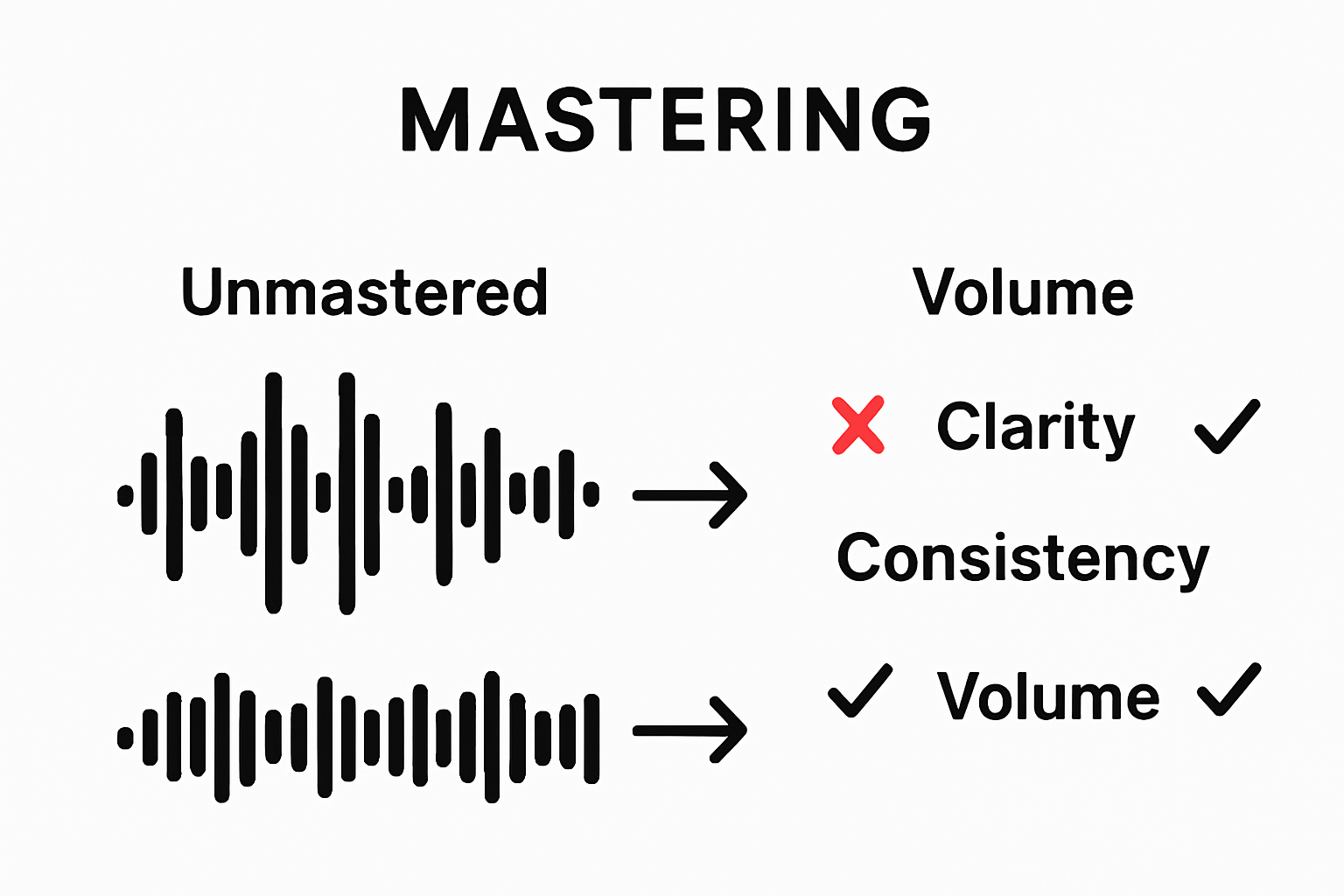 Audio engineers carefully apply precise adjustments to create a balanced, professional-sounding track that translates beautifully across different listening platforms.
Key technical elements include:
- Equalization (EQ): Fine-tuning frequency balance to enhance clarity and remove sonic imperfections
- Compression: Controlling dynamic range and creating consistent volume levels
- Stereo Enhancement: Optimizing spatial characteristics and width of the sound
Precision Tools and Techniques
Modern mastering relies on sophisticated digital tools that allow unprecedented sonic manipulation. Professional audio engineers use specialised software to make microscopic adjustments that dramatically improve overall sound quality. Explore our comprehensive guide on music distribution to understand how these refined tracks reach global audiences.
The goal isn’t just technical perfection, but preserving the emotional essence and artistic intent of the original recording. Each adjustment is carefully considered, ensuring that technical refinement never overshadows the music’s core creative expression.
By applying these nuanced techniques, mastering transforms raw recordings into professional-grade tracks that can compete on global streaming platforms, radio stations, and live performances. It’s the final, crucial polish that turns a good recording into an exceptional musical experience.
Mastering and Sound Quality: How It Enhances Music
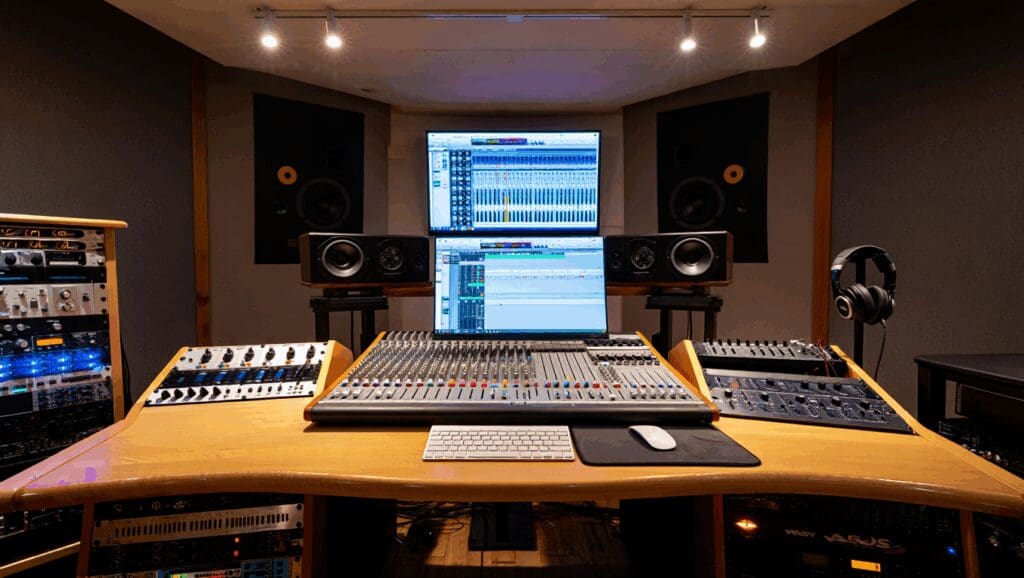
Sound quality isn’t just a technical checkbox – it’s the emotional conduit that transforms music from mere noise into a profound auditory experience. Mastering represents the critical final stage where raw musical potential is sculpted into a pristine, emotionally resonant sonic landscape that connects deeply with listeners.
The Science of Sonic Clarity
Mastering operates at the microscopic intersection of art and engineering, where minute adjustments can dramatically alter a track’s perceived quality. Professional mastering doesn’t just increase volume – it meticulously balances frequencies, manages dynamic range, and creates a sense of spatial depth that makes recordings sound professional and immersive.
Key sonic improvements achieved through mastering include:
- Frequency Balance: Ensuring no single frequency range overpowers or gets lost
- Dynamic Range Control: Creating consistent volume without losing musical nuance
- Stereo Image Enhancement: Expanding the perceived width and depth of the sound
Creating Emotional Impact Through Technical Precision
Every professional musician understands that technical quality directly influences emotional reception. A poorly mastered track can sound muddy, compressed, or lifeless, whereas a expertly mastered recording captures subtle musical interactions with breathtaking clarity. Check out our insights on Spotify LUFS standards to understand how professional mastering meets modern streaming requirements.
Mastering is ultimately about honoring the musician’s original artistic vision. By applying sophisticated audio processing techniques, mastering engineers ensure that every instrumental texture, vocal nuance, and emotional subtlety is presented with stunning precision – transforming good recordings into extraordinary musical experiences that resonate powerfully with audiences.
Common Myths About Mastering: Clarifying Misconceptions
In the music production world, mastering is shrouded in mystery and misconceptions that can seriously derail an artist’s sonic potential. Understanding these myths is crucial for musicians seeking to produce professional-quality recordings that truly shine.
Debunking Popular Misconceptions
Many musicians approach mastering with unrealistic expectations, believing it’s a magical fix-all solution for subpar recordings. The harsh reality is that mastering cannot transform a fundamentally flawed mix into a masterpiece. It’s a refinement process, not a miracle worker.
Widespread myths about mastering include:
- Myth: Mastering Can Fix a Bad Mix: Professional mastering requires a well-balanced, high-quality mix as its foundation
- Myth: Louder Always Means Better: Excessive volume compression destroys musical dynamics and listener engagement
- Myth: Anyone Can Master Their Own Music: Professional mastering requires specialized skills and trained ears
The Reality of Professional Audio Mastering
True mastering is a nuanced art that requires years of technical expertise and finely tuned listening skills. It’s not about simply cranking up the volume or applying generic effects. Learn more about professional music distribution to understand how mastering impacts your track’s commercial potential.
Professional mastering engineers spend decades developing their craft, understanding how minute adjustments can dramatically transform a recording’s emotional impact. They work with precision tools and extraordinary sensitivity, ensuring that every frequency, dynamic shift, and spatial characteristic serves the music’s core artistic vision.
By dispelling these myths, musicians can approach mastering with realistic expectations – seeing it as a collaborative refinement process that elevates good recordings into extraordinary sonic experiences.
Below is a table comparing common mastering myths with the realities, helping clarify misconceptions for musicians considering this final production stage.
| Myth | Reality |
|---|---|
| Mastering can fix a bad mix | Mastering cannot repair flawed mixes; it requires a strong mix as its foundation |
| Louder always means better | Over-compression for loudness harms musical dynamics and listener enjoyment |
| Anyone can master their music | Professional mastering demands specialised skills and experienced ears |
Ready to Turn Your Mastered Tracks Into Industry Success?
After learning how crucial mastering is for elevating your music’s quality and listener impact, you might feel the pressure of standing out amongst a sea of professional releases. The reality is, no matter how good your song sounds, without the right promotion and strategic visibility, even expertly mastered tracks risk being overlooked. Many independent artists hit a wall when it comes to getting their music in front of the right audience and industry professionals. This gap often stands between raw talent and breakthrough recognition.
Imagine pairing your polished, radio-ready songs with powerful music promotion tools. Music Gateway helps you bridge the final step by making sure your mastered tracks do not get lost on streaming platforms or social feeds. Our music promotion services are purpose-built to amplify your sound, maximise playlist placement, and connect you directly with fans and industry gatekeepers. Do not let your hard work go unheard. Start your journey now and give your professionally mastered music the visibility it deserves. Visit Music Gateway today and see how far your finished tracks can really go.
Frequently Asked Questions
What is the purpose of mastering in music production?
Mastering is the final technical and creative process applied to a mixed track before distribution. It enhances overall sound quality, ensuring consistency and optimal playback across various sound systems and platforms.
How does mastering improve the quality of a track?
Mastering enhances sound quality by adjusting volume levels, optimizing stereo width, and fine-tuning frequency equalization. These changes create a polished, cohesive sonic experience that translates well across different listening environments.
Why is professional mastering important for independent musicians?
Professional mastering can significantly elevate the perceived quality of a recording, helping it stand out in a competitive music landscape. It ensures that tracks sound polished and competitive, increasing chances of playlist inclusion and listener engagement.
Can mastering fix a poorly mixed track?
No, mastering cannot fix a bad mix. It is a refinement process that requires a well-balanced, high-quality mix as its foundation to produce the desired professional sound.