
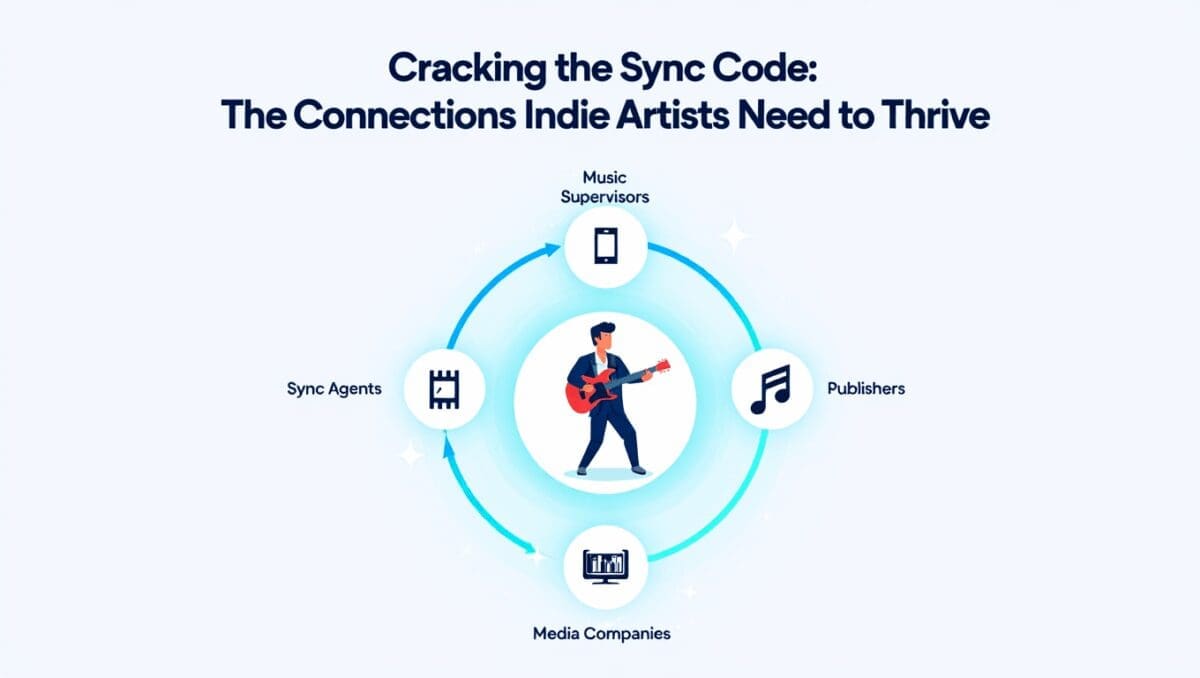

The sync licensing industry is experiencing unprecedented growth, with global revenues estimated between $600-650 million for 2025. For independent artists without sync agents watching from the sidelines, this represents both the opportunity of a lifetime and a frustrating reminder of how the music industry still operates: it’s not just what you know, but who you know.
The numbers tell an incredible story. Sync revenue saw a remarkable 29.9% increase to $178 million in just the first six months of 2022, representing “an uncharacteristically large gain” and outpacing other music industry sectors. Meanwhile, sync royalties skyrocketed nearly 25% in 2022 for a total of $382.5 million, with experts noting that sync licenses “should overtake both CD and download revenue by 2024”. This isn’t just growth, it’s a fundamental shift in how artists can monetise their music.
The Content Explosion Driving Demand
What’s fueling this boom? Simply put, we’re living in the golden age of content creation. The streaming wars between Netflix, HBO Max, Disney+, Peacock, Paramount+, and Hulu have caused a boom in original content with shows like Stranger Things, Euphoria, The Bear, and hundreds more, with music emerging as a winner. Every piece of visual content needs a soundtrack, from blockbuster series to social media campaigns.
Beyond traditional TV and film, sync opportunities are expanding into gaming, virtual worlds, and brand content. Video game adaptations are creating new opportunities, such as Amazon’s “Fallout” adaptation, opening significant sync opportunities for 1940s and 1950s music. The demand for authentic, distinctive music that connects emotionally with audiences has never been higher.
The Hard Truth About Getting Placements
Here’s where reality hits hard for independent artists: the vast majority of sync opportunities depend on established relationships. Sync agents have “the relationships with all the music supervisors” and typically operate as “one stops,” meaning they represent indie artists, clear all rights to the music, and can offer it completely cleared to music supervisors.
Think about it from a music supervisor’s perspective. They’re working under tight deadlines, often with significant budgets at stake. If the music supervisor can’t be “10000% sure that the song they are placing in the episode won’t get the network SUED, they won’t place it” because supervisors could lose their jobs. This creates a natural tendency to work with trusted partners who have proven track records.
The competitive landscape makes this even more challenging. The market has seen “a significant increase in independent artists seeking sync opportunities, making the landscape highly competitive” requiring not only high-quality music but also strategic pitching. Your demo email is competing with thousands of others, often from artists who already have industry advocates working on their behalf.
Why Professional Representation Changes Everything
This is where a sync agent becomes an invaluable partner rather than an unnecessary middleman. “Music supervisors trust sync agencies. They know that the samples are clear. They know that the splits are determined” making established relationships crucial for placement success. When a trusted sync representative pitches your music, it carries weight that a cold email simply cannot match.
Professional representation offers several critical advantages:
Established Networks: Independent artists who lack industry connections or struggle to build relationships with music supervisors should “consider signing with a sync rep or agency” because “A reputable sync rep has access to production houses, music supervisors, and directors”.
Streamlined Process: The best sync companies “pre-clear the majority of their catalogue for ‘one-stop’ licensing, representing all the rights holders” and make their catalogues “accessible to a wide network of top music supervisors”. This eliminates the complex negotiations that can kill deals before they start.
Industry Expertise: Sync agencies understand the nuances of licensing deals, from negotiating fair fees to ensuring proper rights clearance. They know which supervisors are working on which projects and can time submissions strategically.
The Career-Defining Potential
When sync placements work, they can be transformational. Success stories show transformative impacts, such as Sia’s “Breathe Me” gaining “significant exposure with over 1.2 million U.S. sales” after an HBO feature, and Baby Queen’s inclusion in Netflix’s “Heartstopper” resulting in “a 1134% discovery increase and 1.5 million new listeners”. These aren’t just financial wins – they’re career-changing moments that can launch artists into entirely new orbits of success.
The right placement doesn’t just pay bills; it opens doors. Streaming numbers spike, social media followers multiply, and suddenly you’re on the radar of other industry professionals. One well-placed sync can create a domino effect of opportunities that would have taken years to achieve through traditional promotion alone.
Technology Meets Relationships

The industry is evolving rapidly, with many sync licensing companies adopting AI tools for faster, more precise placements, with AI-powered music search systems helping catalogue owners streamline their music discovery and licensing processes. However, technology isn’t replacing relationships – it’s enhancing them. The most successful sync agencies combine cutting-edge tools with deep industry connections.
The industry is seeing “more direct-to-brand deals, innovative payment structures, and expanded use of gaming and virtual worlds as revenue sources”. This evolution creates more opportunities but also more complexity, making professional guidance even more valuable.
Making the Right Choice
For independent artists serious about sync licensing, the question isn’t whether to seek representation from a sync agent – it’s finding the right partner who understands your music and has the connections to place it effectively. The sync licensing boom isn’t slowing down, but the window for getting positioned properly within this ecosystem is narrowing as competition intensifies.
The artists winning in sync licensing aren’t necessarily the most talented – they’re the ones who’ve positioned themselves strategically within the industry’s relationship network. In a market worth hundreds of millions and growing, that strategic positioning could be the difference between making rent and making a career.
Ready to tap into the sync licensing boom?Join Music Gateway and connect with industry professionals who can help get your music placed in TV, film, and brand campaigns. Don’t let another opportunity pass by – your next sync placement could be the one that changes everything.