


Getting your music placed in TV, films, or ad campaigns can feel like an impossible quest. Music supervisors in some sectors receive hundreds of submissions every single week, rejecting the vast majority without ever listening beyond the first few seconds. You might think it all boils down to raw talent or expensive equipment. But actually, precision targeting and a killer presentation beat pure ability every single time.
Table of Contents
- Step 1: Identify Your Target Opportunities
- Step 2: Develop Professional Quality Music
- Step 3: Build Your Music Portfolio
- Step 4: Network With Industry Professionals
- Step 5: Submit Your Music For Placement
- Step 6: Follow Up And Track Your Progress
Quick Summary
| Key Point | Explanation |
|---|---|
| 1. Identify your target opportunities | Research different sectors for music placements like film, TV, and gaming based on your style. |
| 2. Develop professional quality music | Focus on recording, mixing, and mastering to ensure your tracks sound polished and competitive. |
| 3. Build a diverse music portfolio | Curate a selection of your best work, showcasing various styles and formats to attract industry interest. |
| 4. Network with industry professionals | Engage genuinely with contacts online and at events to build meaningful relationships that can advance your career. |
| 5. Track submissions and follow up strategically | Organise your submissions, set follow-up timelines, and analyse responses to improve future efforts. |
Step 1: Identify Your Target Opportunities

Alright, music mavens, let’s cut to the chase. Identifying your target opportunities is like being a musical detective, hunting down the perfect platforms that’ll make your tracks sing. Music placements aren’t just about luck – they’re about strategic targeting and understanding where your specific sound fits best.
First things first, you’ll want to map out the landscape of potential music placement opportunities. This means diving deep into different sectors that might be hungry for your sonic creations. Film and television sync licensing, streaming platform playlists, advertising campaigns, video game soundtracks, and podcast backgrounds are all potential goldmines for artists looking to get their music heard.
To start this journey, grab a digital notepad and begin researching platforms that align with your musical genre and style. Music Promotion resources can help you understand the nuanced world of music placement. Streaming platforms like Spotify have editorial playlists that are always searching for fresh tracks. Television and film production companies constantly need background music. Indie game developers are often on the hunt for unique soundscapes. Each sector has its own quirks and submission processes.
Pro tip: Don’t just scatter your music everywhere. Be laser-focused in your approach. If you’re creating lo-fi electronic beats, targeting a country music sync licensing company won’t yield results. Research thoroughly. Follow music supervisors on social media. Join online communities. Network with professionals who can provide insider insights into specific placement opportunities.
Your verification checklist for this step should include:
- A comprehensive list of potential music placement platforms
- Clear understanding of each platform’s submission guidelines
- Identified contacts or submission portals for each opportunity
Remember, identifying target opportunities is about precision, patience, and persistent research. Your musical journey starts here – so map it out meticulously.
Step 2: Develop Professional Quality Music

Let’s get brutally honest – your music needs to sound like a professional banger, not a pot noodle dinner recorded on your gran’s old cassette player. Professional quality is the price of admission in today’s hyper-competitive music landscape. Music supervisors and playlist curators can smell an amateur recording from a mile away, and they’ll ghost you faster than a Tinder date.
To craft that pristine sound, you’ll need to focus on three critical elements: recording, mixing, and mastering. Start with a solid recording environment. If you’re working from a home studio, invest in acoustic treatment that transforms your bedroom from an echo chamber into a sonic sanctuary. Proper microphones, audio interfaces, and minimizing background noise are your first line of defence against amateur-sounding tracks. Learn the intricacies of music production to understand the technical nuances that separate professional from pedestrian.
Mixing is where the magic happens. This isn’t about drowning your track in effects, but creating a balanced, clear soundscape where every instrument breathes and has its own space. Each element should complement the others without competing. Pay attention to EQ, compression, and stereo imaging. If you’re not confident in your mixing skills, consider collaborating with a professional mixing engineer who can elevate your track from good to bloody brilliant.
Mastering is the final polish that makes your track radio-ready. This process ensures consistency across different playback systems and platforms. While professional mastering can be expensive, there are now affordable online services and plugins that can help independent artists achieve a polished sound.
Your verification checklist for professional music quality includes:
- Clean, noise-free recording with balanced levels
- Professionally mixed track with clear separation of instruments
- Mastered track that sounds consistent across different speakers
- Feedback from at least three objective listeners who aren’t your mates or family
Remember, developing professional quality music isn’t about having the most expensive gear – it’s about understanding your craft and presenting your art in the best possible light.
Below is a checklist table to help you verify your music is professionally produced and ready for placement.
| Verification Item | Criteria | Purpose |
|---|---|---|
| Clean recording | Noise-free, balanced levels | Ensures audio quality meets industry standards |
| Professionally mixed track | Clear instrument separation, proper EQ | Provides a polished, competitive sound |
| Mastered track | Consistency across playback systems | Suitable for broadcast and streaming platforms |
| Objective feedback | Listened by 3+ non-family/friends | Confirms quality and appeal to external listeners |
Step 3: Build Your Music Portfolio
Your music portfolio is basically your sonic CV – a professional snapshot that either opens doors or slams them shut in your face. Think of it as your musical business card, but way more complex than just dropping a few tracks onto a USB stick. A killer portfolio is your secret weapon in the cutthroat world of music placements.
Start by curating a collection of your absolute best work. This isn’t about quantity, it’s about quality that makes industry professionals sit up and take notice. Create a compelling electronic press kit that showcases your versatility, technical prowess, and unique sonic signature. Include high-quality recordings that represent different moods, styles, and potential placement scenarios. A music supervisor looking for a melancholic indie track needs to know you can deliver exactly that.
Diversity is key. Your portfolio should demonstrate your range like a musical chameleon. If you’ve got tracks that could work in film, television, advertising, or video games, highlight them strategically. Include not just finished songs, but also instrumental versions, stems, and alternative mixes. Many placement opportunities require specific audio formats, so being prepared is half the battle.
Technical presentation matters as much as the music itself. Ensure your audio files are professionally recorded, mixed, and mastered. Use high-quality WAV or AIFF formats at standard industry sample rates. Create a clean, navigable digital folder structure that makes it brain-dead simple for music supervisors to access and understand your work.
Your verification checklist for building a stellar music portfolio includes:
- Minimum of 5-10 high-quality, diverse track recordings
- Professional metadata for each track (genre, mood, potential uses)
- Clean, organized digital file structure
- Multiple file formats available (full mix, instrumental, stems)
- Short, compelling artist biography
Remember, your portfolio is a living document. Regularly update it, remove older tracks that no longer represent your current sound, and always be refining your musical narrative.
Here is a checklist table to help ensure your music portfolio is comprehensive and industry-ready.
| Portfolio Component | Description | Importance |
|---|---|---|
| 5-10 high-quality, diverse tracks | Wide range of moods and styles | Appeals to various placement opportunities |
| Professional metadata | Includes genre, mood, use case | Assists music supervisors in categorising tracks |
| Organised digital files | Neat folder structure | Makes tracks easy to access and review |
| Multiple file formats | Full mix, stems, instrumentals | Meets specific platform and supervisor requirements |
| Short, compelling biography | Brief artist introduction | Personalises your submission and builds interest |
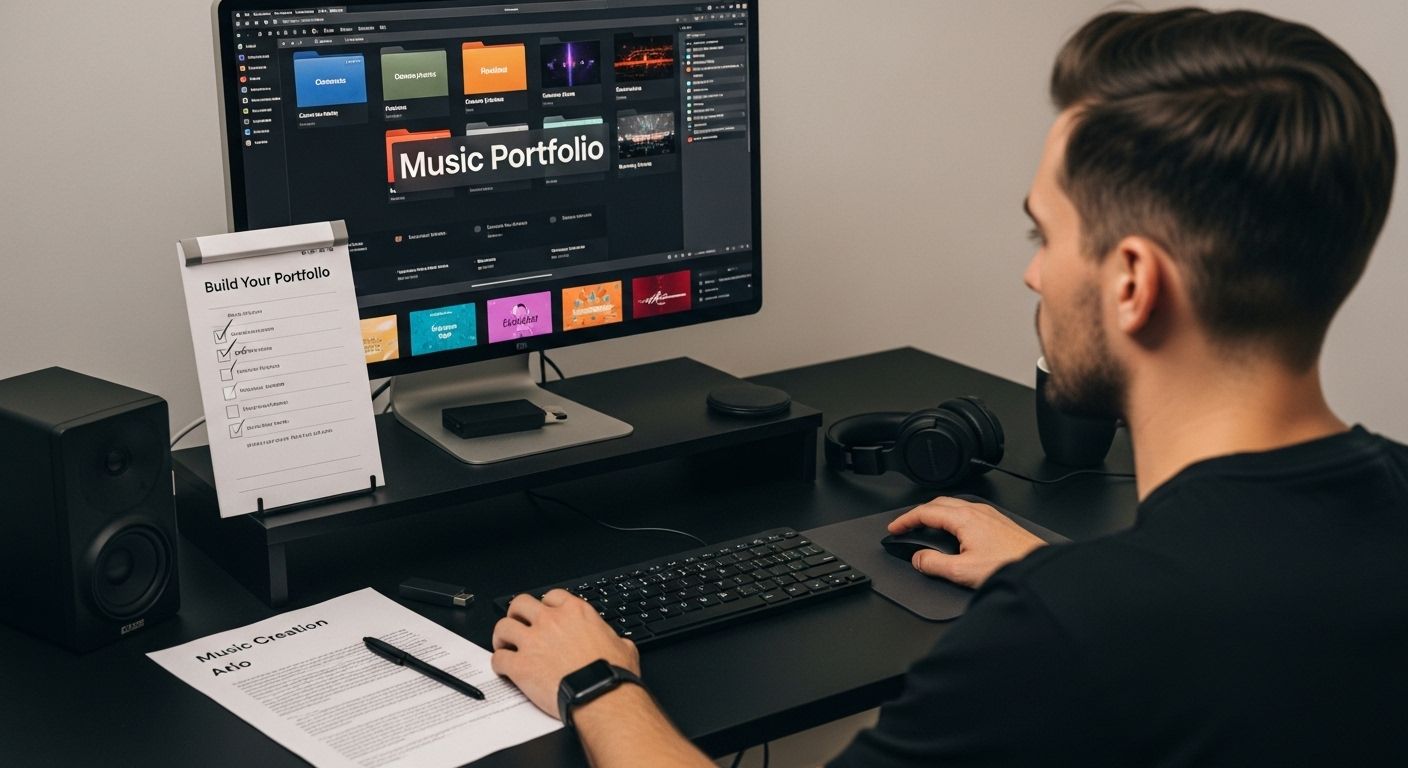
Step 4: Network with Industry Professionals
Networking in the music industry isn’t just about schmoozing – it’s about building genuine relationships that can transform your musical career from a solo gig to a professional journey. Connections are the currency of the music world, and your ability to navigate these social landscapes can be more important than your actual talent. Brutal? Absolutely. True? One hundred percent.
Start by making yourself visible in the right circles. Social media platforms aren’t just for posting selfies – they’re powerful networking tools. Discover how professionals leverage LinkedIn to create meaningful industry connections. Follow music supervisors, sync licensing companies, and playlist curators. Engage authentically with their content – comment thoughtfully, share insights, and demonstrate your industry knowledge without being a desperate wannabe.
Attending industry events is crucial. Music conferences, workshops, and local showcases are your hunting grounds for potential collaborators and gatekeepers. These aren’t just networking opportunities – they’re your chance to make real, human connections. Prepare a concise, engaging elevator pitch about your musical style and goals. Practice it until it sounds natural, not rehearsed. Bring business cards, but more importantly, bring genuine curiosity about other people’s work.
Online communities are equally powerful. Join professional forums, Discord servers, and Reddit groups dedicated to music placement. Participate actively, offer valuable insights, and build a reputation as a knowledgeable, supportive member of the community. Remember, networking is a two-way street – it’s not just about what others can do for you, but what value you can provide.
Your networking verification checklist includes:
- Minimum of 3 new meaningful professional connections per month
- Active engagement in at least 2 online music industry communities
- Attended or participated in one industry event or webinar
- Updated and professional social media profiles across platforms
- Maintained a spreadsheet tracking your professional contacts
Networking is a marathon, not a sprint. Build relationships slowly, authentically, and with genuine respect for the professionals in your field.
Step 5: Submit Your Music for Placement
Submitting your music for placement is like navigating a musical minefield – one wrong step and your track gets lost in the endless digital abyss. Precision and professionalism are your best mates in this high-stakes game. You’ve crafted your portfolio, networked like a pro, and now it’s time to strategically launch your sonic missiles into the industry landscape.
Learn the intricacies of releasing music before diving into submissions. Each placement opportunity has its unique submission guidelines, and treating them like a one-size-fits-all approach is a rookie mistake. Research each platform meticulously. For sync licensing, this means understanding whether they want MP3s, WAV files, or specific stem configurations. For streaming playlists, you’ll need high-quality masters that sound crisp on multiple devices.
Organize your submission process like a military operation. Create a detailed tracking spreadsheet that documents every submission – platform name, contact details, submission date, track submitted, and follow-up dates. This isn’t just admin work; it’s your strategic battle plan. Many music supervisors and playlist curators receive hundreds of submissions weekly, so standing out requires a combination of exceptional music and impeccable presentation.
Tailor your submissions precisely. If you’re targeting a film music supervisor looking for atmospheric indie tracks, don’t blast them with your high-energy dance number. Craft personalized pitch emails that demonstrate you’ve done your homework. Briefly explain why your track fits their specific needs, include a professional, concise bio, and make it brain-dead simple for them to listen to your music.
Your submission verification checklist includes:
- Customized submission for each unique placement opportunity
- Professional, error-free communication
- High-quality audio files matching specific platform requirements
- Comprehensive submission tracking document
- Follow-up strategy for each submission
Remember, music placement is a numbers game. Rejection isn’t failure – it’s just part of the journey. Keep submitting, keep improving, and stay persistent.
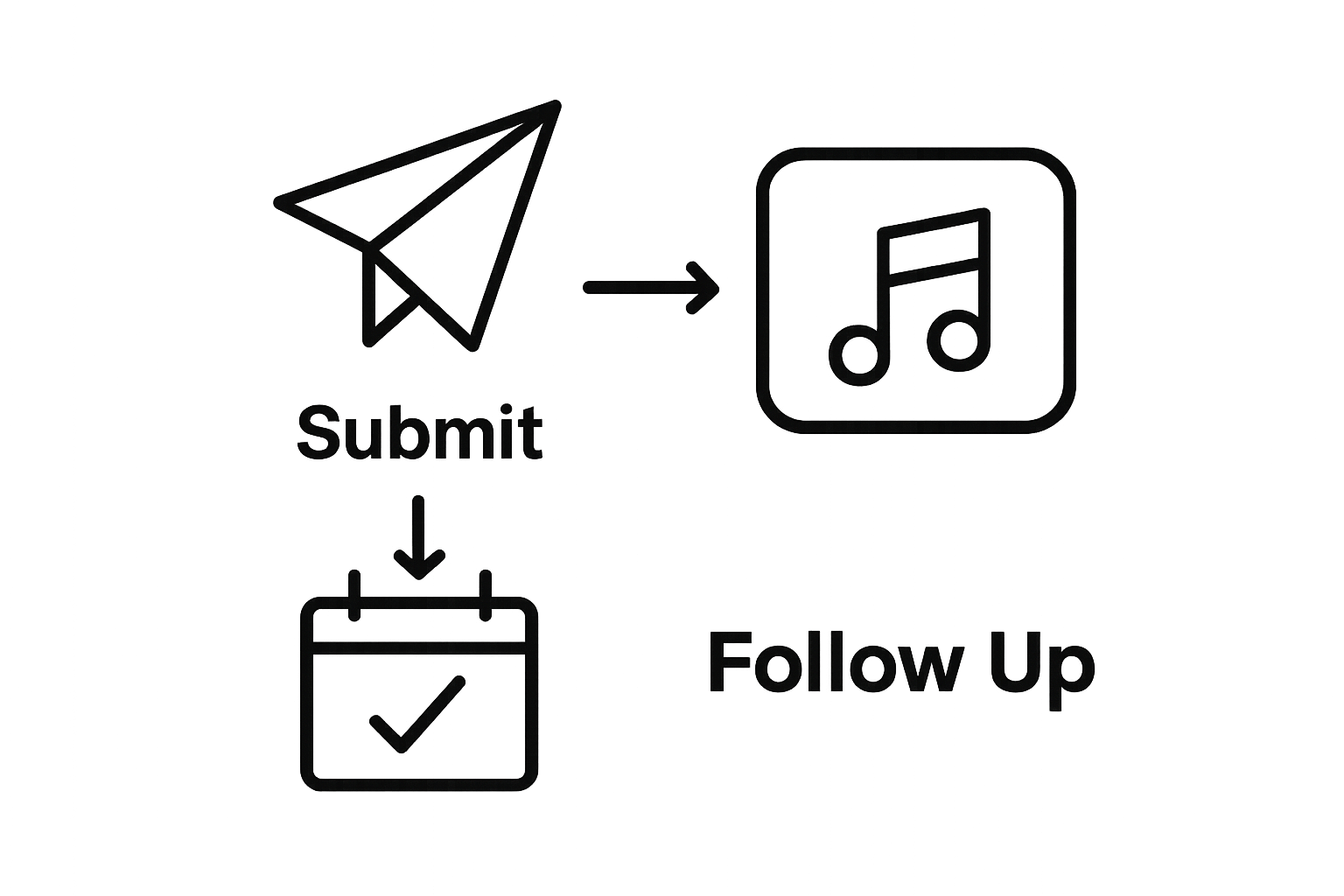
Step 6: Follow Up and Track Your Progress
Following up on your music placements is like being a detective in your own musical thriller – except the mystery is whether your tracks will actually get picked up. Persistence is your secret weapon, but there’s a razor-thin line between professional follow-up and being that desperate musician who won’t take a hint.
Explore strategic music marketing techniques to complement your follow-up approach. Create a systematic tracking method that’s more organised than your mate’s record collection. Develop a spreadsheet that chronicles every submission, including dates, contacts, tracks sent, and current status. This isn’t just bureaucratic nonsense – it’s your roadmap to understanding which strategies work and which are about as useful as a chocolate teapot.
Timeline is everything in follow-ups. Most music supervisors and playlist curators receive hundreds of submissions weekly, so your follow-up needs to be strategic and professional. Wait approximately two to three weeks after your initial submission before sending a polite, concise follow-up email. Your message should briefly remind them of your previous submission, express continued interest, and offer additional information if needed. Avoid sounding needy – think of it as a gentle nudge, not a desperate plea.
Track not just your submissions, but your learning curves. Every rejection or non-response is valuable data. Analyze patterns in your submissions. Are certain genres more successful? Do specific platforms respond better to certain track lengths or styles? This analytical approach transforms rejection from a soul-crushing experience into a strategic learning opportunity.
Your follow-up and tracking verification checklist includes:
- Comprehensive submission tracking spreadsheet
- Defined follow-up timeline for each submission
- Documented insights from submission responses
- Regular review and adjustment of submission strategy
- Professional, non-intrusive communication approach
Remember, music placement is a marathon, not a sprint. Your persistence, combined with continuous improvement, will eventually crack the code. Stay patient, stay professional, and keep pushing forward.
Take the Uncertainty Out of Music Placements with Music Gateway
Struggling to find the right connections or feeling overwhelmed by the endless submission guidelines? This guide shows exactly how challenging it is to break through the industry noise and secure music placements. Independent artists like you face an exhausting cycle of hunting for opportunities, ensuring professional quality, crafting a solid music portfolio and networking just to get your tracks considered. But even after following every step, the complex world of sync licensing and playlist submissions can leave you feeling stuck or invisible.
Now is the moment to simplify everything. With Music Gateway, you tap into a purpose-built hub designed to make industry-standard tools accessible to all. Streamline your journey with trusted resources for music promotion, expert guidance on how to create an EPK, and seamless submission options for licensing opportunities. Ready to see your music placed and heard by a global audience? Explore your next steps with Music Gateway and start building your breakthrough today.
Frequently Asked Questions
How do I identify opportunities for music placements?
Identifying opportunities involves researching various sectors such as film and television, streaming platforms, advertising, video games, and podcasts. Create a list of potential platforms that align with your genre and understand their submission guidelines.
What steps should I take to ensure my music is of professional quality?
Focus on three key elements: recording in a clean environment, mixing to create a balanced soundscape, and mastering for consistency across playback systems. If necessary, consider collaborating with professionals to elevate your sound further.
What should I include in my music portfolio?
Your portfolio should feature a curated collection of your best work, demonstrating diversity in mood and style. Include high-quality recordings, instrumental versions, stems, and professional metadata for each track to make it accessible for music supervisors.
How do I effectively follow up on my music submissions?
Create a tracking system documenting your submissions and follow up about two to three weeks after your initial submission. Your follow-up email should remind them of your prior submission, express your continued interest, and offer additional information if necessary.