


Sync licensing is quietly reshaping how music finds its audience. Last year alone, sync deals generated over £300 million for UK musicians. Now here’s the surprise. Most streaming platforms pay artists less than a penny per play. This turns everything on its head because one well-chosen sync placement can earn more than years’ worth of streams, all with a single signature.
Table of Contents
- What Is Sync Licensing? Defining The Concept
- Why Sync Licensing Matters In The Music Industry
- How Sync Licensing Works: The Process Explained
- Key Concepts In Sync Licensing: Rights And Agreements
- Real-World Applications Of Sync Licensing In Media
Quick Summary
| Takeaway | Explanation |
|---|---|
| Sync licensing connects musicians with visual media. | It allows music to be used in films, ads, games, and videos, creating new audiences. |
| Significant income from sync placements. | Successful licenses can provide thousands of pounds in upfront fees, far exceeding traditional streaming earnings. |
| Understand copyright ownership for licensing. | Musicians must grasp the differences between musical composition and sound recording rights to secure proper permissions. |
| Negotiate terms for sync licensing deals. | Successful placements depend on strategic discussions around usage rights, compensation, and terms of agreement. |
| Leverage sync opportunities for career growth. | A well-placed track can boost visibility, attract fans, and create new collaboration possibilities. |
What is Sync Licensing? Defining the Concept

Sync licensing represents the magical bridge connecting musicians with visual media creators, allowing your music to find new life and audiences beyond traditional listening platforms. At its core, sync licensing is a legal agreement that permits the use of a musical composition alongside visual content, whether that’s in films, television shows, advertisements, video games, or online videos.
The Anatomy of a Sync License
Think of sync licensing as a creative collaboration where two artistic worlds collide. When a filmmaker or content creator wants to use your track, they must obtain permission through a synchronization license from the copyright holder of the musical composition. This isn’t just about playing a song in the background – it’s about creating a symbiotic relationship where music elevates visual storytelling.
Key elements of a sync license typically include:
- Licensing Fee: The upfront payment for using the musical composition
- Duration of Use: How long the music can be used in the visual content
- Geographical Restrictions: Where the content can be distributed
- Media Platforms: Specific channels where the music can be played
Why Sync Licensing Matters for Musicians
Sync licensing isn’t just another revenue stream – it’s potentially a game-changing opportunity for artists. Learn more about our sync services can transform how you approach music monetization. A single sync placement can expose your music to millions of listeners, generate significant income, and potentially launch your career into entirely new territories.
For independent musicians struggling to break through the noise, sync licensing represents a strategic pathway to visibility. Unlike streaming platforms where artists earn fractions of pennies, a successful sync placement can net thousands of pounds, providing both financial reward and unprecedented exposure.
Why Sync Licensing Matters in the Music Industry
Sync licensing isn’t merely a financial transaction – it’s a strategic pathway for musicians to amplify their reach, generate sustainable income, and transform their artistic potential. In an era where streaming platforms offer minimal returns, sync licensing emerges as a powerful alternative for artists seeking meaningful monetary compensation and widespread exposure.
Financial Opportunities Beyond Traditional Streaming
Traditional music consumption models have left many independent artists struggling to make a living. Sync licensing presents a lucrative alternative, offering substantial one-time payments that can eclipse years of streaming revenue. A single successful placement in a television show, advertisement, or film can generate thousands of pounds, providing musicians with critical financial breathing room.
Key financial advantages of sync licensing include:
- Upfront Licensing Fees: Immediate payment for music usage
- Potential Recurring Royalties: Additional income from continued content distribution
- Performance Royalties: Additional earnings from public broadcasts
- Global Exposure: Reaching audiences far beyond traditional music platforms
Building Career Momentum Through Strategic Placements
Explore our music distribution services to understand how strategic sync placements can accelerate your music career. Every sync license represents more than monetary compensation – it’s an opportunity to introduce your music to new audiences, gain credibility, and potentially attract record label attention.
For emerging artists, a well-placed sync can be transformative. Imagine your track featured in a popular Netflix series or a global advertising campaign. Such exposure can instantly elevate your profile, attracting fans, industry professionals, and potential collaboration opportunities that would take years to cultivate through traditional promotional methods.

Moreover, sync licensing democratizes music discovery. Unlike the algorithmic randomness of streaming platforms, sync placements offer curated, contextual introduction of your music to engaged audiences who are actively consuming visual content.
How Sync Licensing Works: The Process Explained
Sync licensing operates through a complex yet structured ecosystem where multiple parties collaborate to legally and financially manage musical compositions within visual media. Understanding this intricate process is crucial for musicians seeking to navigate the world of music licensing effectively.
To clarify the roles and legal aspects of sync licensing, the following table summarises the key parties involved and their respective responsibilities within the process.
| Party | Role in Sync Licensing |
|---|---|
| Songwriters | Create the original musical composition |
| Music Publishers | Manage and represent songwriters’ interests |
| Record Labels | Own and control the specific sound recordings |
| Content Creators | Seek permission to use music in films, adverts, games, or other media |
| Sync Licensing Agencies | Negotiate terms and facilitate the legal and financial arrangements |
Rights and Permissions
At the heart of sync licensing are two fundamental copyrights: the musical composition copyright (owned by songwriters and publishers) and the sound recording copyright (owned by recording artists and record labels). When a content creator wants to use a song, they must secure permissions from both copyright holders, ensuring legal clearance for the desired usage.
Key parties involved in the sync licensing process include:
- Songwriters: Original creators of the musical composition
- Music Publishers: Represent and manage songwriters’ interests
- Record Labels: Owners of specific sound recordings
- Content Creators: Filmmakers, advertisers, game developers seeking music
- Sync Licensing Agencies: Facilitate negotiations and licensing
Negotiating the Sync License
Learn more about our music licensing services to understand the nuanced negotiation process. When a potential sync opportunity emerges, multiple factors determine the licensing fee and terms. These include the song’s popularity, the prominence of music in the visual content, geographical distribution, media platforms, and duration of use.
The negotiation typically involves detailed discussions about usage rights, compensation structures, and potential recurring royalties. Some sync placements might offer a flat fee, while others provide ongoing payments based on content performance and distribution.
Understanding the intricacies of sync licensing requires patience, strategic networking, and a comprehensive grasp of copyright law. For independent musicians, partnering with experienced sync licensing professionals can dramatically increase the likelihood of successful placements and fair compensation.
Key Concepts in Sync Licensing: Rights and Agreements

Sync licensing represents a sophisticated legal framework where musical creativity intersects with complex intellectual property rights. Understanding these rights is fundamental for musicians navigating the intricate landscape of music placement and compensation.
Fundamental Copyright Ownership
Copyright ownership forms the bedrock of sync licensing, creating a legal foundation that protects artists’ intellectual property. In sync licensing, two primary copyrights exist: the musical composition copyright and the sound recording copyright. These distinct rights require separate permissions, adding layers of complexity to the licensing process.
To help demystify the different copyright terms and permissions essential in sync licensing, the table below outlines the core types and their explanations.
| Type of Right/Licence | What It Covers |
|---|---|
| Musical Composition Copyright | The underlying melody, lyrics, and musical arrangement |
| Sound Recording Copyright | The specific recorded performance of the song |
| Master Use Licence | Permission to use the actual sound recording |
| Synchronisation Licence | Permission to sync music with visual content |
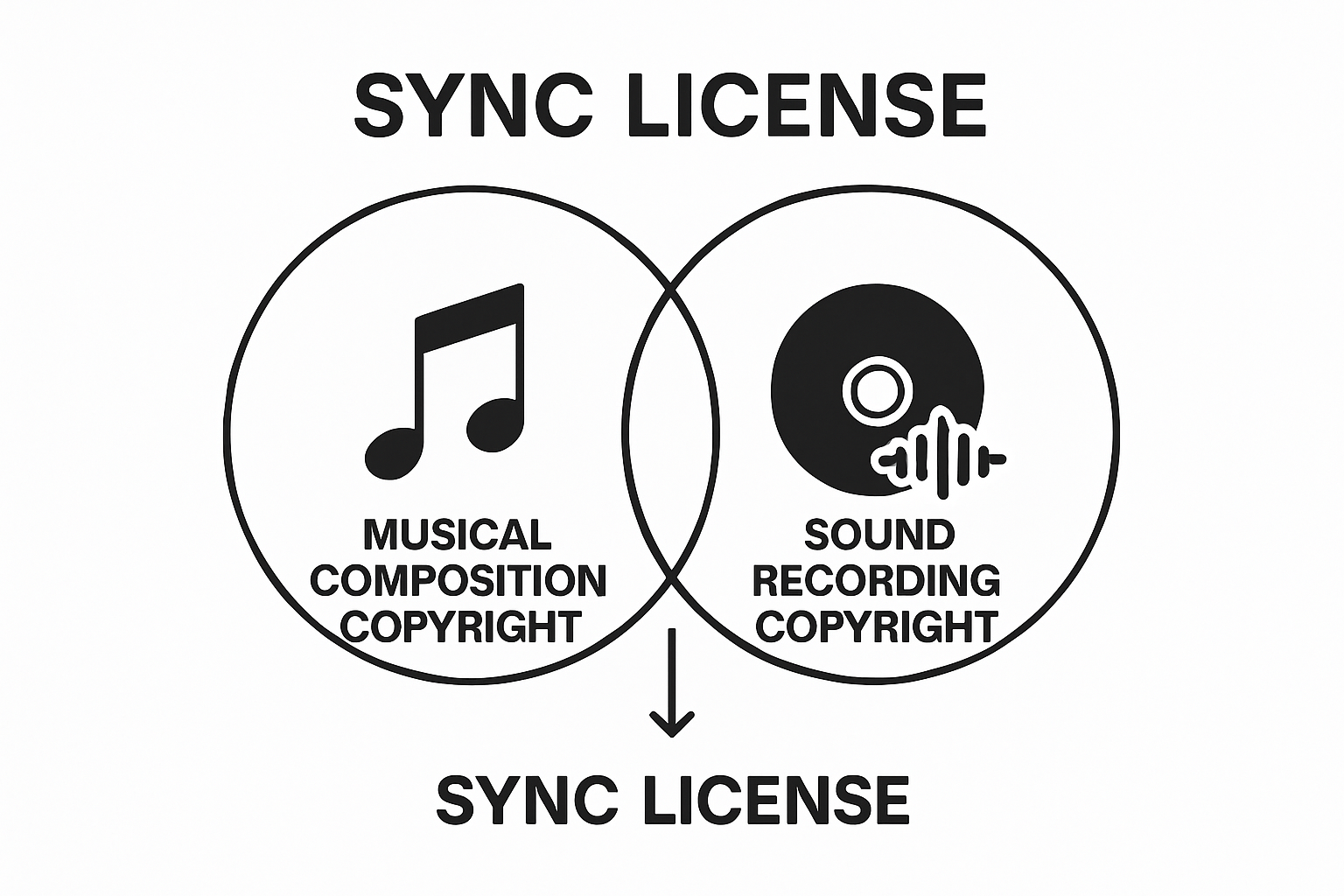
Critical aspects of copyright in sync licensing include:
- Musical Composition Copyright: Covers the song’s underlying melody, lyrics, and musical arrangement
- Sound Recording Copyright: Protects the specific recorded performance of a musical work
- Master Use License: Permission to use the actual sound recording
- Synchronization License: Permission to synchronize music with visual media
Negotiating Licensing Agreements
Explore our comprehensive copyright guide to understand the nuanced world of music rights. Licensing agreements are intricate contracts that define the precise terms of music usage, including duration, geographical restrictions, and financial compensation.
Effective sync licensing agreements must address multiple critical elements. These include specifying the exact context of music usage, determining whether the license is exclusive or non-exclusive, establishing clear financial terms, and defining the scope of permitted distribution. For independent artists, understanding these details can mean the difference between a fair deal and potential exploitation.
Navigating sync licensing requires a strategic approach, combining legal acumen with creative negotiation. Musicians must be prepared to protect their intellectual property while remaining flexible enough to seize meaningful opportunities in an ever-evolving media landscape.
Real-World Applications of Sync Licensing in Media
Sync licensing transforms abstract musical compositions into powerful storytelling tools, bridging the gap between auditory and visual experiences across multiple media platforms. From blockbuster films to intimate television dramas, sync licensing enables musicians to extend their artistic reach far beyond traditional music consumption channels.
Film and Television Sync Opportunities
Television and cinema represent the most prestigious sync licensing arenas, where carefully selected music can elevate narrative emotional landscapes. A strategically placed song can define a character’s inner world, punctuate a dramatic moment, or create an unforgettable scene transition. Successful sync placements in popular series or films can catapult an unknown artist into global recognition almost overnight.
Significant media sync licensing platforms include:
- Hollywood Feature Films: High-profile placements with substantial financial rewards
- Netflix Original Series: Growing platform for diverse musical selections
- Independent Cinema: Opportunities for emerging artists
- Network Television Shows: Regular sync licensing opportunities
Advertising and Digital Media Sync
Discover opportunities in music licensing across various media landscapes. Commercial advertising represents another lucrative sync licensing avenue, where brands seek music that captures specific emotional tones and consumer demographics. A compelling 30-second advertisement sync can generate substantial revenue and expose an artist’s work to millions of potential listeners.
Digital platforms like YouTube, streaming services, and online content creators have exponentially expanded sync licensing opportunities. Video game soundtracks, podcast intros, and corporate promotional videos now represent dynamic markets where musicians can monetize their creative work through strategic sync placements.
Turn Sync Licensing Insights into New Career Opportunities
Understanding sync licensing is a vital step for any emerging musician navigating today’s competitive industry. The challenges outlined in this article – mastering complex legal concepts, securing fair financial rewards, and reaching new audiences – can feel overwhelming without reliable guidance. Many independent artists struggle to move from theory to practice, especially when seeking real placements that transform creative work into measurable growth.
Music Gateway makes these ambitions achievable. We offer a streamlined path to get your music featured in film, television, adverts, and digital media without you having to worry about complicated licensing agreements or gatekeepers. Discover how our music promotion solutions can help you take your sync licensing knowledge further by matching your tracks with top opportunities and amplifying your reach. Now is the perfect moment to elevate your journey – join our platform at Music Gateway, explore proven strategies for music licensing, and take the next step toward wider recognition. Your music deserves an audience. Start your journey today.
Frequently Asked Questions
What is sync licensing in music?
Sync licensing is a legal agreement that allows the use of a musical composition in conjunction with visual media, such as films, TV shows, advertisements, and video games.
How do musicians benefit from sync licensing?
Musicians can gain significant financial rewards from sync licensing, with upfront fees that often exceed streaming income. Additionally, sync placements can provide exposure to new audiences, boosting an artist’s career.
What are the key elements included in a sync license?
A sync license typically includes the licensing fee, duration of use, geographical restrictions, and the specific media platforms where the music can be played.
What parties are involved in the sync licensing process?
The key parties involved in the sync licensing process are songwriters, music publishers, record labels, content creators, and sync licensing agencies, all of whom collaborate to negotiate terms and permissions.