


Music managers are often overlooked, yet they are the driving force behind most major breakthroughs in the industry. Some of music’s biggest stars owe their success to the sharp instincts and hustle of these behind-the-scenes leaders. And it turns out that managers handle far more than just phone calls and gig bookings – they often negotiate contracts worth six or even seven figures. While many picture a manager as just an organiser, their true influence runs far deeper. Their ability to navigate business deals and shape entire careers quietly decides who thrives and who fades away.
Table of Contents
- Defining A Music Manager: Roles And Responsibilities
- The Importance Of A Music Manager In An Artist’s Career
- How Music Managers Work: The Process Behind Their Role
- Key Concepts: Navigating Contracts, Promotion, And Relationships
Quick Summary
| Takeaway | Explanation |
|---|---|
| Music managers bridge creativity and business | They transform artistic talent into sustainable careers through strategic guidance and negotiation. |
| Strategic career planning is essential | Comprehensive career mapping helps highlight an artist’s strengths and market position for informed decisions. |
| Effective promotion requires multi-channel strategies | Craft narratives that resonate with audiences, leveraging digital platforms and social media for visibility. |
| Managers protect artists’ rights and interests | They oversee contract negotiations to ensure financial and intellectual property rights are safeguarded. |
| Trust between artists and managers is crucial | A supportive relationship enables open communication and aligned goals for creative success. |
Defining a Music Manager: Roles and Responsibilities
Music managers are the unsung heroes behind successful artists, working tirelessly to transform raw musical talent into a professional career. They function as strategic partners, career architects, and business navigators who do far more than just book gigs and manage schedules.
The Strategic Career Architect
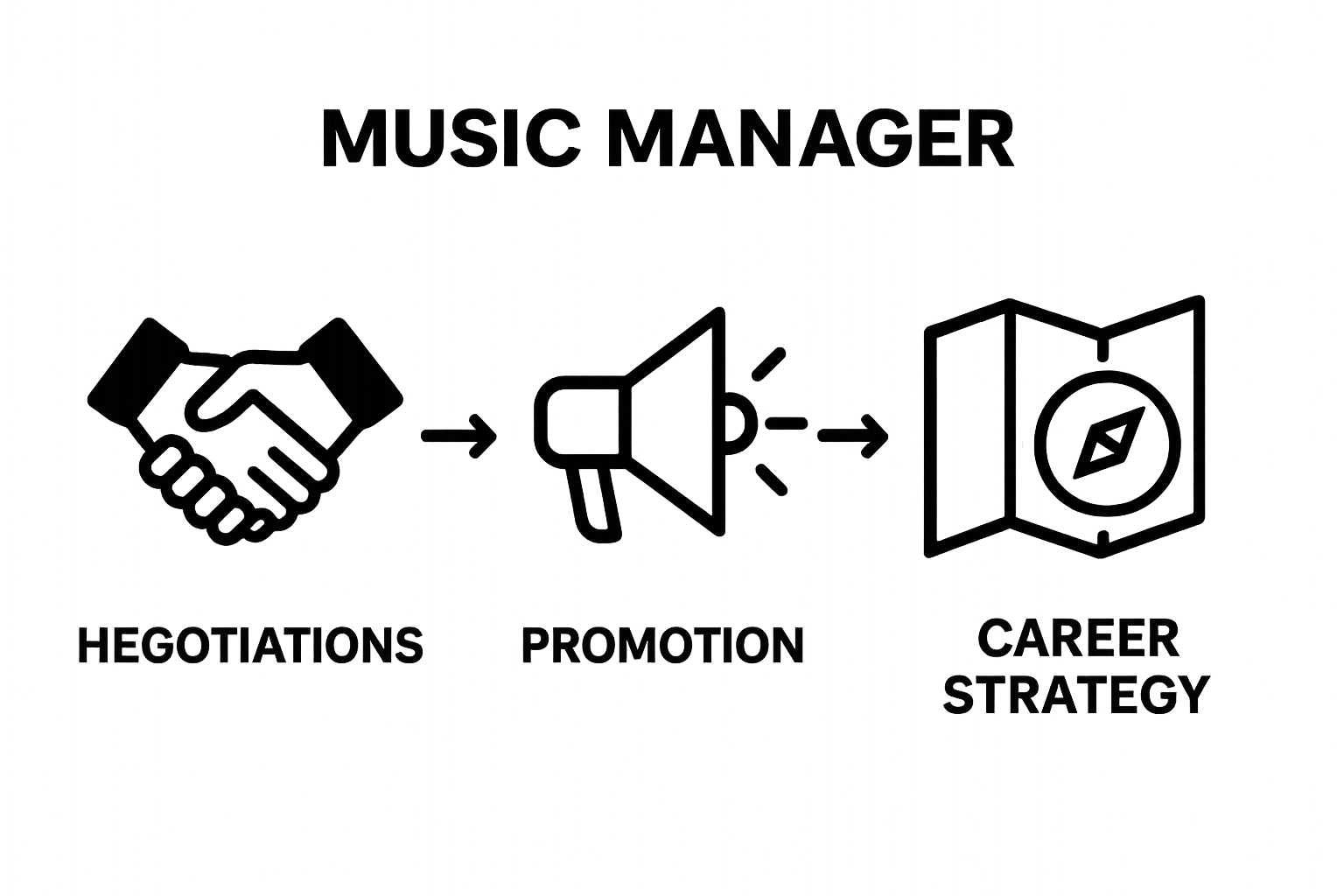
A music manager acts as the critical bridge between an artist’s creative vision and the complex music industry machinery. Their role encompasses far more than most musicians initially understand. These professionals become the artist’s primary business representative, handling everything from contract negotiations and financial planning to brand development and strategic career mapping.
Key responsibilities include:
- Securing performance opportunities and negotiating performance contracts
- Managing the artist’s public image and brand positioning
- Coordinating with record labels, booking agents, and publicity teams
- Developing long term career strategies
- Protecting the artist’s financial and creative interests
Business and Creative Navigation
Unlike many misconceptions, a music manager isn’t just an administrative assistant. They are sophisticated strategists who understand both the artistic and commercial dimensions of the music world. They help artists make informed decisions about record deals, understand industry insights regarding A&R opportunities, and craft narratives that resonate with audiences and industry professionals.
Successful music managers possess a unique blend of skills: part talent scout, part financial advisor, part marketing expert, and part creative confidant. They must simultaneously understand musical trends, digital marketing strategies, financial management, and the nuanced psychology of artist development.
The relationship between an artist and their manager is deeply personal and requires immense trust. A great manager doesn’t just manage tasks they nurture careers, transform potential into success, and create pathways where none seemed possible. They are the quiet powerhouses who turn musical dreams into sustainable, thriving careers.
Whether you’re an emerging artist or a seasoned performer, understanding the profound impact of a skilled music manager can be the difference between struggling in obscurity and achieving breakthrough success.
Below is a table summarising the key responsibilities and skills required of a successful music manager, clarifying their multifaceted role beyond administration.
| Key Responsibility | Description |
|---|---|
| Securing Opportunities | Sources and negotiates live performances, collaborations and deals |
| Managing Public Image & Branding | Shapes the artist’s brand and public persona |
| Contract Negotiation | Handles recording, publishing and performance contracts |
| Career Strategy Development | Plans long-term career trajectories and growth opportunities |
| Financial and Creative Interests | Safeguards earnings, rights and artistic freedom |
| Relationship & Network Management | Maintains industry contacts with labels, agents and press |
| Marketing Expertise | Leads multi-channel promotional strategies for maximum visibility |
| Emotional and Professional Support | Provides mentorship, stability and counsel |
The Importance of a Music Manager in an Artist’s Career

In the competitive landscape of the music industry, a skilled music manager serves as more than just an administrative support system. They are the critical catalyst that transforms raw musical potential into a sustainable, successful career.
Bridging Creative Talent and Business Opportunity
Artists are inherently creative individuals, typically focused on crafting exceptional music. However, translating that creativity into commercial success requires a unique set of business skills that many musicians do not possess. This is precisely where a music manager becomes indispensable.
A music manager provides essential support by:
- Identifying and pursuing strategic career opportunities
- Negotiating contracts and financial agreements
- Creating professional networks within the industry
- Developing comprehensive career development strategies
- Protecting the artist’s intellectual and creative rights
Strategic Career Navigation
The music industry is complex, with numerous potential pitfalls for emerging artists. Managers act as experienced navigators, helping musicians avoid common mistakes and make informed decisions. They understand the intricate dynamics of record labels, publishing companies, and digital platforms.
Moreover, managers are instrumental in developing effective marketing strategies that amplify an artist’s reach. They leverage their industry connections, understanding of digital platforms, and strategic insights to create compelling narratives that resonate with audiences and industry professionals.
A great manager does more than manage logistics they become a trusted advisor, mentor, and strategic partner. They provide emotional support during challenging periods, offer objective perspectives on artistic decisions, and help artists maintain focus on their primary goal: creating exceptional music.
While not every artist requires a manager immediately, professional representation becomes crucial as a musician’s career gains momentum. The right manager can transform a promising musical talent into a sustainable, thriving career by providing strategic guidance, industry expertise, and unwavering support.

How Music Managers Work: The Process Behind Their Role
Managing a musical artist requires a sophisticated blend of strategic planning, relationship building, and tactical execution. Music managers operate like career architects, meticulously constructing pathways for artists to transform their creative potential into sustainable professional success.
Strategic Career Planning
The foundational work of a music manager involves comprehensive career mapping. This goes beyond simple scheduling and involves deep strategic analysis of an artist’s unique strengths, market positioning, and potential growth trajectories.
Key elements of their strategic approach include:
- Conducting thorough market research on genre trends
- Analyzing the artist’s current audience demographics
- Identifying potential collaboration and performance opportunities
- Creating long term career development roadmaps
- Assessing financial viability of different career strategies
Operational Management and Industry Navigation
Successful music managers become expert translators between artistic vision and industry realities. They understand the complex ecosystem of record labels, streaming platforms, publishing companies, and digital marketing channels. Their role involves constant negotiation and relationship management.
Managers actively work to explore professional music internship opportunities that can expand an artist’s network and provide critical industry exposure. They leverage their professional connections to create pathways that might otherwise remain inaccessible to emerging talents.
Their operational responsibilities encompass everything from contract negotiations and financial planning to brand development and public relations management. A skilled manager anticipates industry shifts, protects the artist’s creative and financial interests, and provides objective guidance during critical career moments.
Ultimately, music managers are more than administrators they are strategic partners who transform musical talent into sustainable, thriving careers. Their nuanced understanding of both the creative and commercial dimensions of the music industry makes them indispensable allies for artists seeking meaningful professional growth.
Key Concepts: Navigating Contracts, Promotion, and Relationships
The music industry operates on complex dynamics of relationships, legal agreements, and strategic promotional efforts. Music managers must masterfully navigate these interconnected elements to drive an artist’s career forward effectively.
Understanding Music Industry Contracts
Contracts represent the foundational legal framework that defines professional relationships and protects all parties involved. For musicians, these documents are critical instruments that outline performance expectations, revenue sharing, intellectual property rights, and potential collaboration terms.
Key contract considerations include:
This table outlines essential contract considerations a music manager must evaluate, highlighting the legal complexities involved in protecting an artist’s interests.
| Contract Aspect | Explanation |
|---|---|
| Financial Arrangements | Specifies payment terms, advances and revenue splits |
| Performance & Delivery Obligations | Defines the artist’s and stakeholders’ commitments |
| Intellectual Property Ownership | Clarifies rights over master recordings and compositions |
| Termination & Renegotiation | Details conditions for ending or amending the agreement |
| Revenue Sharing Structure | Outlines how earnings are distributed amongst parties |
- Clear delineation of financial arrangements
- Performance and delivery obligations
- Intellectual property ownership clauses
- Termination and renegotiation conditions
- Detailed revenue sharing structures
Strategic Promotional Approaches
Effective promotion goes far beyond simply broadcasting an artist’s music. Modern music managers must craft nuanced, multi-channel promotional strategies that create meaningful audience connections. Learn more about comprehensive music marketing techniques that can transform an artist’s visibility and engagement.
Managers leverage digital platforms, social media, playlist submissions, and strategic networking to create compelling narratives around an artist’s brand. They understand that promotion is about storytelling creating emotional resonance that transforms casual listeners into dedicated fans.
Relationships remain the music industry’s most valuable currency. Successful managers build and maintain intricate networks spanning record labels, streaming platforms, media outlets, and potential collaborators. These connections become critical pathways for artist development, providing opportunities that would otherwise remain inaccessible.
Ultimately, mastering these key concepts requires a delicate balance of legal acumen, marketing creativity, and genuine relationship building. A skilled music manager transforms these complex elements into a cohesive strategy that propels artists towards sustainable success.
Transform Your Creative Potential into Professional Success with Music Gateway
Feeling overwhelmed by the complex journey from raw talent to a thriving music career? Many artists struggle to bridge the gap between their creative vision and the business opportunities highlighted in this article. Negotiating contracts, building a public image, and mastering music promotion can feel impossible without expert support. Music Gateway understands your pain points and has developed solutions that empower you to take control of your artistic destiny.
Explore our comprehensive music promotion services designed for independent and emerging artists. Unlock access to tools for playlist submissions, digital advertising, YouTube promotion, and more—all tailored to help you navigate industry challenges just like a dedicated music manager would. Take the next step towards sustainable success and professional recognition. Visit Music Gateway now and start building the career you deserve.
Frequently Asked Questions
What are the main responsibilities of a music manager?
Music managers primarily handle tasks such as securing performance opportunities, negotiating contracts, managing an artist’s public image, and developing long-term career strategies. They act as strategic partners, guiding artists through both the creative and business aspects of their careers.
How does a music manager help in an artist’s career development?
A music manager provides essential support by identifying career opportunities, negotiating deals, creating professional networks, and developing comprehensive strategies for an artist’s growth. They help navigate the complexities of the music industry to ensure the artist’s success.
Why is it important for an artist to have a music manager?
Having a music manager is crucial as they offer industry expertise, strategic guidance, and valuable connections. They protect the artist’s creative rights and financial interests while providing emotional support and mentorship throughout the artist’s career.
What skills should one look for in a good music manager?
An effective music manager should have a blend of skills, including talent scouting, financial management, marketing expertise, and an understanding of the music industry’s dynamics. They should also possess strong negotiation abilities and be able to build and maintain relationships within the industry.