


Pitching your music to industry professionals can seem like searching for a needle in a haystack. Surprise, though. Personalised pitches are proven to outperform hundreds of generic submissions every single time. Most musicians think it’s about reaching as many people as possible, but in reality, the magic lies in precision matchmaking and clever research that put your tracks in exactly the right hands.
Table of Contents
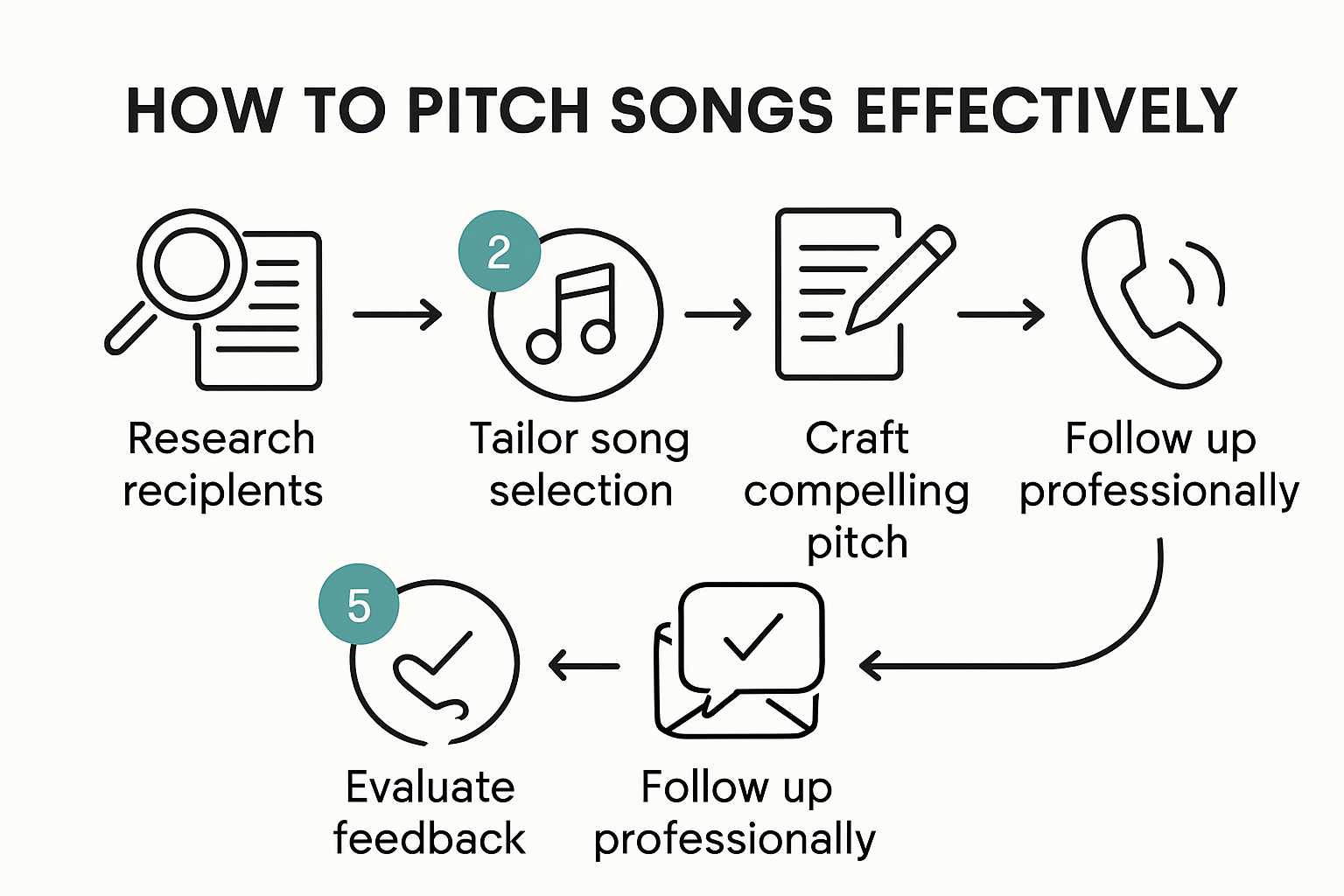
- Step 1: Research Potential Recipients
- Step 2: Tailor Your Song Selection
- Step 3: Craft A Compelling Pitch
- Step 4: Use Appropriate Channels For Submission
- Step 5: Follow Up Professionally
- Step 6: Evaluate Feedback And Adjust Strategy
Quick Summary
| Key Point | Explanation |
|---|---|
| 1. Research target recipients carefully | Identify music supervisors, record labels, and playlist curators who align with your genre and style to enhance your chances of success. |
| 2. Tailor song selection to fit needs | Choose tracks that match the recipient’s specific requirements and showcase your unique artistic voice while meeting professional standards. |
| 3. Craft a unique, compelling pitch | Create an engaging narrative that highlights your song’s unique qualities, ensuring it resonates with the recipient’s artistic preferences. |
| 4. Use the right submission channels | Select appropriate digital platforms and adhere to industry protocols, enhancing the chance of your music being heard by the right people. |
| 5. Follow up professionally after submission | Wait a week before following up, maintaining a polite tone while adding new information to reinforce your interest and relevance. |
Step 1: Research Potential Recipients

Successfully pitching songs begins with precision targeting. Before you start blasting your musical masterpiece into the universe, you need a strategic approach to finding the right ears.
Think of music pitching like a ninja-level matchmaking service. You’re not just sending your track anywhere – you’re looking for the perfect musical soulmate who will understand and champion your sound. This means diving deep into understanding who might genuinely be interested in your particular sonic creation.
Start by mapping out potential recipients based on genre, style, and industry connections. Music supervisors for film and television, record label A&R representatives, playlist curators, and independent music publishers are your primary targets. Each category requires a slightly different approach.
For television and film opportunities, research production companies and studios that align with your musical style. Independent film festivals and streaming platforms often have more flexible music selection processes compared to major Hollywood studios. Look for recent projects that have music similar to your track’s emotional landscape or sonic texture.
Digital platforms like Spotify Promotion can provide incredible insights into playlist curators who might be interested in your specific genre. Spotify’s editorial playlists and independent curator networks represent a goldmine for emerging artists willing to do thorough research.
Key resources for your research journey include:
- Professional music industry databases
- LinkedIn professional networks
- Specialised music submission platforms
- Podcast and radio station music director contact lists
- Music supervision professional forums
Remember, quality trumps quantity. Sending ten meticulously researched, perfectly targeted pitches will always outperform hundreds of generic, scattered submissions. Your goal is making meaningful connections, not just collecting email addresses.
Successful research means you can answer these critical questions: Who would genuinely appreciate my music? Where does my sound naturally fit? What specific opportunities match my artistic vision? When you can confidently answer these, you’re ready for the next step in your song pitching adventure.
Step 2: Tailor Your Song Selection

Song selection isn’t just about picking your favourite track – it’s a strategic art form that can make or break your pitch. Think of your song as a custom suit, tailored precisely to fit the recipient’s specific requirements and musical aesthetic.
Your research from the previous step now transforms into targeted song curation. You’re not throwing musical spaghetti at the wall to see what sticks – you’re crafting a precision musical missile designed to hit its exact intended target.
For record labels and artist management teams, study their existing roster. What sonic characteristics define their artists? Are they looking for radio-friendly pop anthems or underground indie gems? Your selected track needs to feel like a natural extension of their current musical ecosystem.
Playlist curators have different requirements. They’re hunting for tracks that create a specific mood or maintain a consistent vibe within their curated collection. If you’re pitching to a chilled electronic playlist, your death metal track isn’t going to cut it. Learn more about song arrangement techniques to understand how structural elements can increase your track’s compatibility.
Consider your song’s technical specifications as well. Ensure your track meets professional audio standards – clean mix, balanced frequencies, and professional mastering. Rough demos might showcase potential, but industry professionals expect polished productions.
Key verification criteria for your tailored song selection include:
- Matches the recipient’s musical style and aesthetic
- Meets technical audio production standards
- Demonstrates unique artistic value
- Aligns with current market trends
- Feels authentic to your artistic vision
Remember, tailoring isn’t about completely changing your sound – it’s about presenting your authentic musical voice in a way that resonates with your target audience. Your goal is finding that magical intersection between your artistic integrity and the recipient’s musical preferences.
Successful song selection means you’ve transformed your track from a generic musical offering into a bespoke pitch that feels like it was created specifically for this opportunity. When done right, it’s the difference between being background noise and becoming an unforgettable musical moment.
To help you verify your chosen track before pitching, here is a checklist summarising the key criteria your song should meet for tailored selection:
| Criteria | Description |
|---|---|
| Recipient’s Musical Style & Aesthetic | Matches the genre and mood the recipient typically works with |
| Technical Audio Standards | Clean mix, balanced frequencies, and professional mastering |
| Unique Artistic Value | Demonstrates something distinctive about your sound |
| Alignment with Market Trends | Feels current and fits what is currently successful in the market |
| Authenticity to Artistic Vision | Remains true to your own sound and artistry |
Refer to this checklist each time you tailor your song selection to ensure your pitch stands out for all the right reasons.
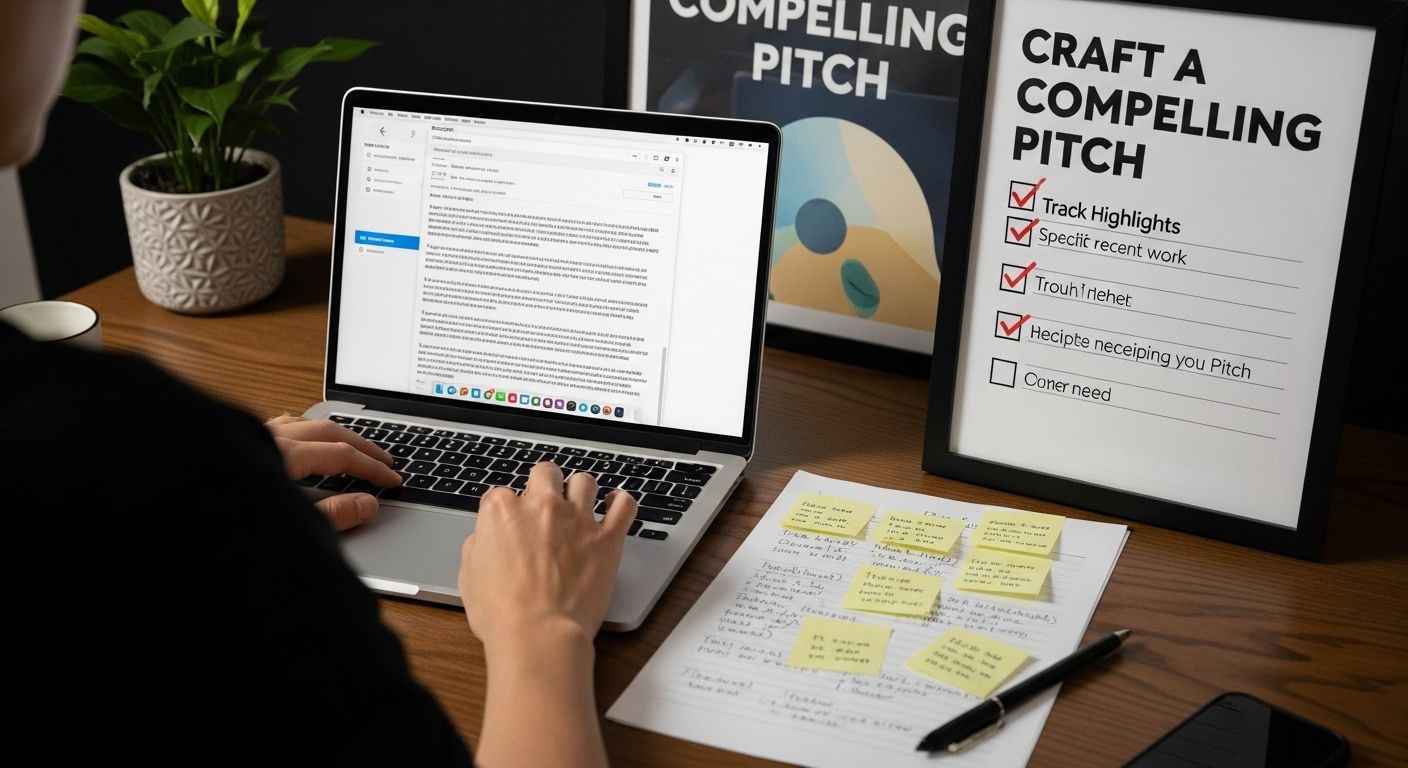
Step 3: Craft a Compelling Pitch
Crafting a pitch isn’t just sending an email – it’s creating a musical narrative that transforms your track from background noise into an irresistible opportunity. Think of your pitch as a musical elevator speech with the power to captivate industry professionals in mere seconds.
Your pitch must strike a delicate balance between professional communication and genuine artistic passion. Start with a concise, punchy introduction that immediately highlights what makes your song unique. Avoid generic statements like “I think this song is amazing” – instead, provide specific context that demonstrates why your track stands out.
Structure matters immensely. Your pitch should flow like a well-arranged song, with a clear beginning, middle, and end. Open with a brief, compelling description of the track’s origin or inspiration. Explain how it fits the recipient’s specific needs – whether that’s a playlist mood, a film’s emotional landscape, or an artist’s sonic signature.
Technical details are crucial, but shouldn’t overwhelm. Include essential information like track length, genre, key musical influences, and any notable production credits. Explore professional music distribution strategies to understand how presentation can elevate your pitch’s perceived value.
Personalisation is your secret weapon. Research shows that customised pitches receive significantly higher response rates. Demonstrate you’ve done your homework by referencing the recipient’s previous work or explaining precisely why your song aligns with their specific requirements.
Key elements of a killer pitch include:
- Crystal clear track description
- Specific relevance to the recipient
- Professional yet passionate tone
- Succinct musical context
- Demonstrable understanding of industry needs
Avoid common rookie mistakes like overselling your track or including lengthy personal histories. Industry professionals receive hundreds of pitches weekly – your goal is to be memorable, not exhaustive.
A successful pitch creates an emotional connection while remaining professionally crisp. It should make the recipient lean forward, curious to hear more. When you’ve crafted a pitch that feels like a musical invitation rather than a cold transaction, you’re on the right track.
Step 4: Use Appropriate Channels for Submission
Submission channels are the critical arteries connecting your musical creation to potential opportunities. Think of them as precision pathways, each requiring a specific approach and understanding of industry protocols.
Digital platforms have revolutionised music submissions, offering artists multiple routes to reach industry professionals. Spotify Promotion represents one sophisticated channel where algorithmic playlists and curator networks can amplify your track’s visibility.
For film and television opportunities, professional music supervision platforms are your primary conduit. These specialised services connect songwriters directly with music supervisors seeking specific sonic landscapes. Unlike generic email submissions, these platforms provide structured submission processes that increase your chances of meaningful engagement.
Social media and professional networking sites like LinkedIn offer alternative submission strategies. Many music industry professionals use these platforms to discover emerging talent. Craft a professional profile that showcases your musical portfolio, making it easy for potential collaborators to explore your work.
Email remains a classic submission channel, but precision is paramount. Always follow specific submission guidelines provided by record labels, publishers, or playlist curators. Generic mass emails are the quickest route to the digital trash bin.
Key submission channel considerations include:
- Platform-specific submission requirements
- Professional formatting and presentation
- Adherence to individual submission guidelines
- Clear rights and licensing information
- Professional contact information
Understand that each channel has unique etiquette. A pitch that works brilliantly on a music licensing platform might fall flat on a record label’s direct submission portal. Flexibility and platform awareness are your greatest assets.
Direct artist-to-artist or artist-to-label connections through industry events, conferences, and networking sessions can also provide unexpected submission opportunities. Personal interactions often transcend traditional digital submission channels.
Successful channel navigation means your submission reaches the right ears through the most appropriate route. When industry professionals find your track easily and professionally presented, you’ve already won half the battle before they’ve even pressed play.
Below is a comparison of common music pitch submission channels alongside their advantages and key considerations. Use this table to choose the most effective method for your specific opportunity:
| Submission Channel | Key Advantages | Considerations |
|---|---|---|
| Professional Platforms | Structured, targeted, increases engagement | Usually require memberships or fees |
| Direct, traditional, can be personalised | Must follow individual guidelines strictly | |
| Social/Professional Media | Easier networking, portfolio visibility | Needs a professional online presence |
| Industry Events/Networking | Builds relationships, direct person-to-person | Opportunistic, not always accessible |
Selecting the appropriate channel increases your chances of connecting your music with the right industry professional.
Step 5: Follow Up Professionally
Follow-up is the subtle art of maintaining momentum without becoming a persistent nuisance. Think of it like a delicate dance – you want to demonstrate genuine interest while respecting professional boundaries.
Timing is everything in your follow-up strategy. Wait approximately one week after your initial submission before reaching out. This window allows recipients sufficient time to review your material without feeling pressured. Your follow-up communication should be concise, polite, and add fresh value to the original pitch.
Music Marketing professionals understand that follow-up is about building relationships, not just securing an immediate response. Craft a message that reminds the recipient of your previous communication while offering something new – perhaps additional context about your track’s potential or a recent achievement that enhances your artistic credibility.
Personalisation remains critical. Reference specific details from your original pitch to demonstrate you’re not sending a generic template. Explain why you believe your track remains relevant to their current needs. Your tone should balance professional courtesy with genuine enthusiasm.
Digital communication offers multiple follow-up channels. Email remains the primary method, but LinkedIn messages or professional networking platforms can provide alternative contact routes. Always prioritise the communication method initially used in your original submission.
Key follow-up principles include:
- Wait 7-10 days between initial pitch and follow-up
- Maintain a friendly, professional tone
- Provide additional contextual information
- Demonstrate continued interest without desperation
- Respect recipient’s time and communication preferences
Understand that silence isn’t always rejection. Industry professionals receive hundreds of submissions weekly. Your follow-up might be the gentle reminder that transforms a potential opportunity into a genuine connection.
Successful follow-up means walking a fine line between persistent and pushy. You’re aiming to keep your musical opportunity alive without becoming an unwelcome digital stalker. When done correctly, your follow-up becomes a professional nudge that keeps your artistic potential front of mind.
Step 6: Evaluate Feedback and Adjust Strategy
Feedback isn’t a personal attack – it’s a roadmap to musical evolution. Treating each critique as a valuable navigation tool can transform your songwriting and pitching approach from good to extraordinary.
When feedback arrives, resist the urge to become defensive. Professional musicians understand that criticism is the crucible where artistic diamonds are refined. Approach each comment with surgical precision – separate emotional reaction from objective assessment.
Music PR experts understand that constructive feedback provides insights beyond surface-level commentary. Look for patterns in the responses. If multiple industry professionals highlight similar concerns about your track’s structure, arrangement, or production, that’s not coincidence – it’s a signpost pointing towards meaningful improvement.
Classify feedback into actionable categories. Technical critiques about mix quality or production can be addressed through professional studio work. Structural feedback might require reimagining your song’s arrangement. Thematic comments could inspire lyrical refinement.
Don’t just collect feedback – create a systematic approach to implementing changes. Develop a feedback tracking system where you document each critique, assess its validity, and outline potential modifications. This transforms random comments into a strategic improvement roadmap.
Key feedback evaluation principles include:
- Remain objective and emotionally detached
- Identify recurring themes in critique
- Prioritise feedback from industry professionals
- Create a structured improvement plan
- Be willing to experiment and adapt
Remember that feedback is a dialogue, not a definitive judgment. Some suggestions will resonate immediately, while others might require time to process. Trust your artistic instinct while remaining open to professional guidance.
Successful feedback evaluation means viewing each critique as an opportunity rather than an obstacle. When you can transform critical comments into actionable musical improvements, you’re not just adjusting a song – you’re elevating your entire artistic trajectory. Your ability to listen, learn, and adapt becomes your most powerful instrument.
Unlock Your Song’s Potential with Expert Support
Struggling to get your music in front of the right people, or feel your carefully crafted pitches just get lost in the queue? You are not alone. Independent and emerging artists often face barriers like unclear submission processes, lack of industry connections, and uncertainty about how to refine their approach after rejection. The step-by-step advice you have just read—researching the right recipients, tailoring your music, perfecting your pitch, following submission rules, and evaluating feedback—can move you closer to your goals, but finding the right platform is crucial to truly stand out.
Take the next step towards transforming your pitching strategy by tapping into the resources designed exactly for issues like playlist submissions, artist growth, and professional music promotion. At Music Gateway, you can simplify every part of the journey, from music distribution to marketing your music. Ready to deliver a pitch with maximum impact? Visit Music Gateway and start building real industry connections today. Opportunity waits for no one—seize it now.
Frequently Asked Questions
How do I research potential recipients for my song pitches?
Start by mapping out potential recipients based on genre, style, and industry connections. Target music supervisors for film and television, A&R representatives, playlist curators, and independent publishers. Use resources like music industry databases and LinkedIn to find the right contacts.
What should I consider when selecting songs to pitch?
Choose songs that fit the recipient’s existing roster or curated playlists. Ensure the track meets technical audio standards and demonstrates unique artistic value. Your chosen song should align with current market trends while still reflecting your authentic sound.
How can I craft a compelling pitch for my song?
Create a clear, concise narrative highlighting what makes your song unique. Include essential details like track length, genre, and specific relevance to the recipient’s needs. Personalise your pitch by referencing the recipient’s previous work to demonstrate your understanding of their requirements.
What are the best practices for following up after submitting a song pitch?
Wait approximately one week before following up to give the recipient time to review. Keep your follow-up brief and professional, adding new context about your track or recent achievements. Personalise your message to reflect details from your original pitch, showing genuine interest without being pushy.