
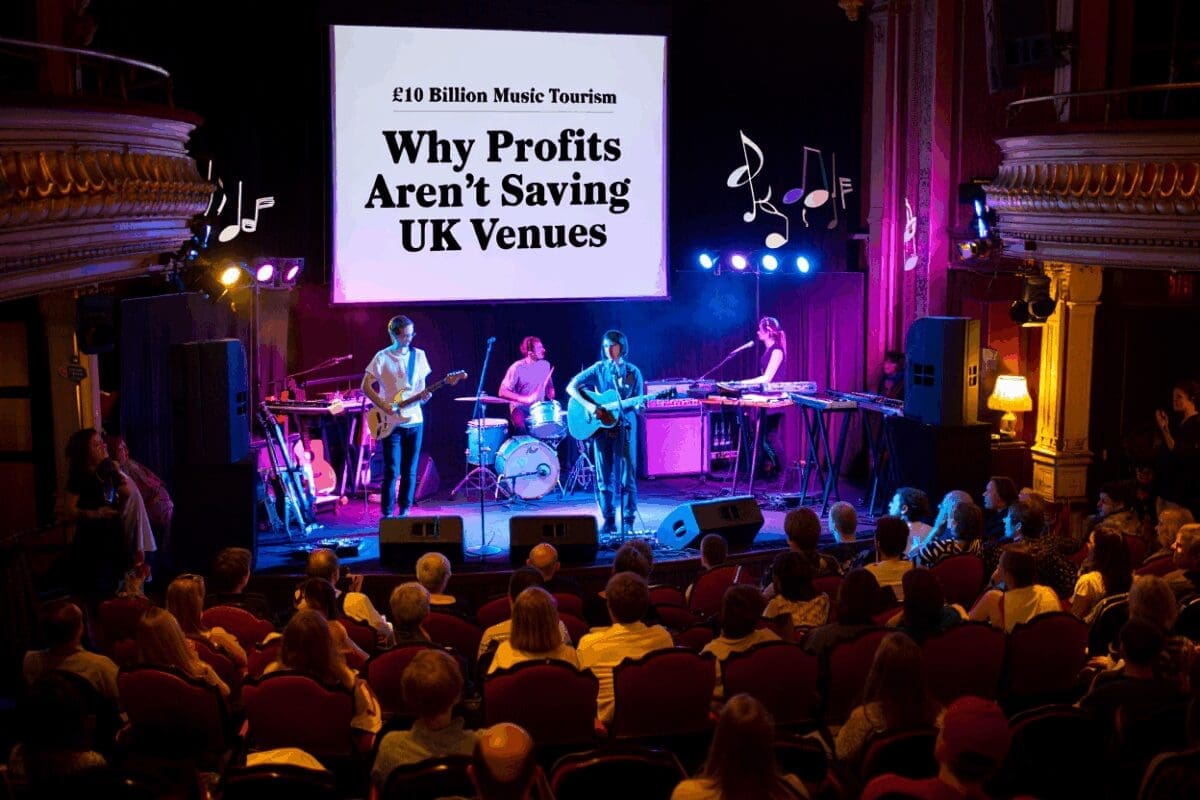

While the UK music industry celebrates record-breaking tourism figures of £10 billion in 2024, a staggering 26% increase from the previous year, a devastating crisis is unfolding at the grassroots level. Despite unprecedented success from major touring acts like Taylor Swift and booming festival attendance, grassroots music venues are closing at an alarming rate of two per week, with 125 venues shuttering in 2023 alone.
This paradox exposes a fundamental flaw in how music industry profits are distributed, revealing a system where corporate giants capture massive tourism revenues while the venues that develop tomorrow’s stadium acts struggle to survive.
The Tourism Boom That’s Leaving Venues Behind
The £10 billion figure represents more than just impressive statistics – it demonstrates the UK’s position as a global music destination. With 23.5 million music tourists attending everything from intimate gigs to massive festivals, the economic impact extends far beyond ticket sales. The spending breaks down into £5.1 billion in direct expenditure and £4.9 billion in indirect economic activity, supporting approximately 72,000 full-time equivalent jobs.
However, this windfall flows primarily to large-scale infrastructure: major venues, arena operators, ticketing companies, hotels, and transport providers. The beneficiaries are corporate entities with the scale and resources to capture tourism premiums, while grassroots venues, operating on razor-thin margins of just 0.48%, remain systematically excluded from this prosperity.
For emerging artists navigating this challenging landscape, effective Music Promotion strategies become crucial for breaking through the noise and reaching audiences across all venue tiers.
Corporate Concentration vs. Grassroots Survival
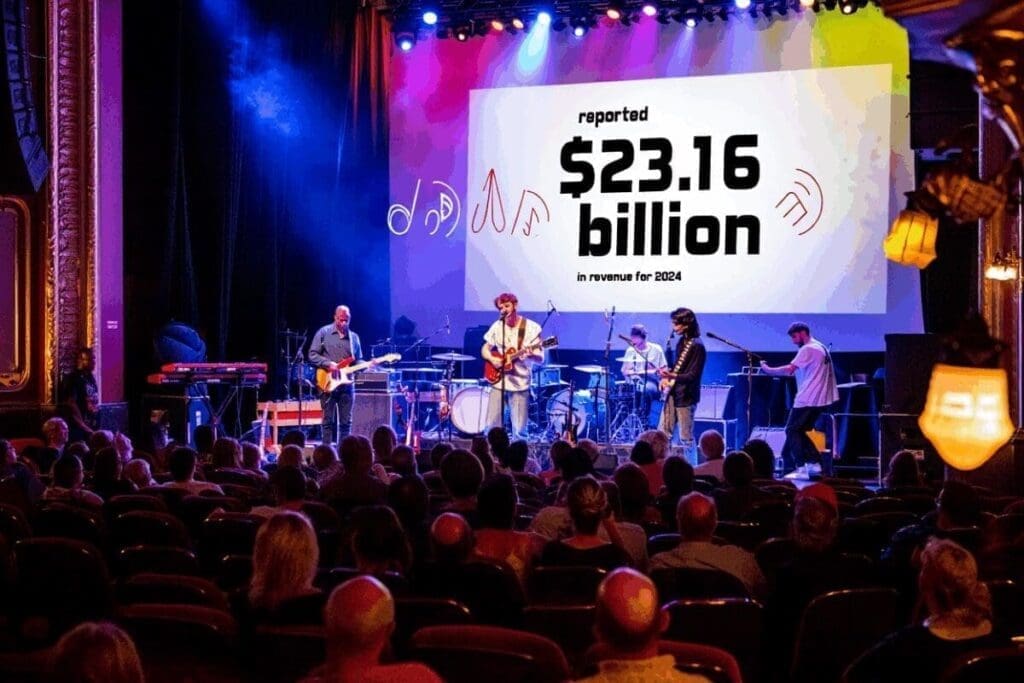
The scale of corporate profit concentration is breathtaking. Live Nation Entertainment, which dominates the live music ecosystem, reported $23.16 billion in revenue for 2024, with its ticketing division alone generating 50% of the company’s profits from just 13% of revenue. This demonstrates how market monopolisation enables disproportionate value capture at the expense of smaller players.
Meanwhile, major record labels maintain healthy margins: Universal Music Group achieved a 22.2% EBITDA margin on €11.83 billion revenue, while Sony Music posted 18.6% operating margins on $10.92 billion revenue. These corporations benefit from both tourism booms and streaming revenues, with platforms like Spotify retaining 30% of all streaming income.
In this environment, artists need comprehensive Music Marketing approaches that can compete across multiple platforms and venue types to build sustainable careers.
The Hidden Subsidy Grassroots Venues Provide
Perhaps most shocking is the revelation that grassroots venues effectively subsidise the entire music industry. Music Venue Trust data shows these venues provided a £162 million subsidy in 2024 – up 45% from £79 million in 2022 – by operating live music events at a loss while supporting emerging artist development.
The average grassroots venue loses £198,956 annually when considering only live music-related income versus expenditure. Yet these venues hosted 162,000 live music events and 1.5 million artist performances in 2024, generating £526 million in economic activity while retaining virtually no profit.
This creates a perverse system where venues that cannot afford to operate continue doing so, effectively funding the “research and development” that creates the artists who eventually fill stadiums and generate billions. For artists emerging from this ecosystem, strategic Spotify Promotion can help translate grassroots support into streaming success that supports their venue network.
The Closure Crisis Accelerates
Over 35% of grassroots venues have closed in the past 20 years, with financial unviability now the primary cause rather than development pressure. The 125 venues that closed in 2023 represented 30,000 lost performances and 4,000 eliminated jobs, while remaining venues face rent increases averaging 37.5% and energy costs that have increased 440%.
The closure rate reveals an ecosystem under extreme pressure. The average tour circuit has collapsed from 22 dates across 28 locations in 1994 to just 11 dates across 12 locations in 2024, with secondary cities like Bath, Bedford, Cambridge, and Hull dropped entirely from touring routes.
This infrastructure collapse makes professional Radio Promotion even more critical for artists trying to reach audiences in markets where live venues no longer exist.
International Models Show Another Way
The UK’s crisis isn’t inevitable. Canada’s FACTOR model combines government funding with industry partnerships, with the Canada Music Fund investing $301 million during the pandemic while recognising music infrastructure as essential economic infrastructure. South Korea treats music as a strategic industry with massive government investment, achieving $361.8 million in music exports to Japan alone in 2022.
These international examples demonstrate that with proper policy frameworks, the benefits of music tourism can be distributed more equitably across the ecosystem rather than concentrated in corporate hands.
The Tourism Premium Extraction Machine
Major festivals achieve profit margins of 10-25%, with mega-festivals reaching 38% margins by capturing tourism premiums through dynamic pricing and economies of scale. Live Nation’s “flywheel” strategy uses its ticketing monopoly to generate nearly pure profit, then cross-subsidises venue acquisition and artist management to create vertical integration.
This allows corporations to capture value at multiple points while grassroots venues remain locked out of the tourism economy they help create. In this environment, artists need sophisticated Music PR strategies to build the profile necessary to access higher-tier venues and tourism-generating opportunities.
Reform or Collapse
The UK’s recent voluntary ticket levy proposal, requiring large venues to contribute to grassroots support by March 2025 or face mandatory legislation, represents a crucial first step. Early adopters like Coldplay (donating 10% of ticket revenues) and Sam Fender (£1 per ticket) demonstrate industry recognition of the problem, though voluntary measures remain insufficient.
Without systematic reform through levy systems, government support, and industry restructuring, the UK risks losing the grassroots foundation that made its £10 billion tourism success possible. The venues that developed acts like The Cure, Radiohead, Oasis, and Ed Sheeran are systematically closing while corporate beneficiaries capture ever-greater profit margins.
For artists building careers in this challenging environment, comprehensive Music Distribution strategies become essential for reaching audiences across all platforms and supporting the venues that support them.
The Path Forward
The £10 billion music tourism boom should represent an unprecedented opportunity for the entire ecosystem, not just corporate interests. The solution requires recognising that grassroots venues provide essential infrastructure that generates long-term economic value far beyond their immediate commercial returns.
Research shows that every £10 spent on grassroots venue tickets generates £17 for local economies, yet these venues cannot capture the tourism premiums their artist development makes possible. Without immediate action, the UK’s music ecosystem will hollow out from below while corporate profits soar above, ultimately undermining the very foundation that generates those record-breaking tourism figures.
The choice is clear: reform the system to support the entire ecosystem, or watch the UK’s cultural export success collapse under the weight of its inequality.
Ready to build your music career in this challenging landscape? Join thousands of artists, venues, and industry professionals who are using Music Gateway to connect, collaborate, and succeed together. Sign up today and become part of a community working to support the entire music ecosystem.