


Landing your music on television is the dream for many independent artists & can massively elevate your music career. The power of a well-placed track can introduce your sound to millions, and, breathtakingly, UK PRS members received over £35 million each year in broadcast royalties alone.
It might seem like only industry insiders ever get a look in, but fresh, unsigned talent actually lands sync deals all the time. The real challenge is less about fame and more about knowing how to sidestep the licensing maze and speak music supervisors’ language.
Table of Contents
- Understanding TV Music Licensing Basics
- Steps To Prepare Your Tracks For TV Placement
- How To Connect With Music Supervisors And Libraries
- Tips To Maximise Your Chances Of TV Sync Success
Quick Summary
| Takeaway | Explanation |
|---|---|
| Understand sync licensing basics | Familiarise yourself with sync licenses for legal use of your music in TV shows. |
| Prepare high-quality recordings | Ensure professional mixing and multiple versions of tracks to meet varied needs of music supervisors. |
| Build a comprehensive metadata system | Organise documentation of your track’s rights, including songwriters, owners, and licensing terms. |
| Network strategically with supervisors | Attend events and create genuine connections to increase placement opportunities for your music. |
| Stay informed on market trends | Research current music styles used in TV to align your creations with industry demands. |
Understanding TV Music Licensing Basics
Getting your music on television isn’t just about having a killer track. It’s a complex dance of legal permissions, strategic networking, and understanding the intricate world of music licensing. Before you start dreaming about hearing your song during a prime-time drama, you’ll need to grasp the fundamentals of how TV music licensing actually works.
The Legal Foundation of Music Licensing

At its core, music licensing is essentially a legal permission slip that allows your music to be used in visual media. When a TV show wants to feature your track, they can’t just play it without proper authorisation. This means you’ll need to navigate the world of synchronization (sync) licenses – the golden ticket that permits your music to be synchronized with visual content.
Sync licensing isn’t just about getting paid (though that’s definitely a bonus). It’s about understanding the rights you’re granting. Typically, a sync license covers the right to use your musical composition in a specific audiovisual context. This could mean anything from a background track in a scene to a pivotal moment that defines an entire episode’s emotional landscape.
For independent artists, this process can seem like negotiating your way through a labyrinthine legal maze. You’ll need to consider who actually owns the rights to your music. If you’re a solo artist who wrote and recorded everything, you’re in luck. But if you’ve collaborated with other musicians or used samples, you’ll need to ensure everyone who has a stake in the track agrees to the licensing.
Navigating Royalty Structures
Understanding royalties is crucial in the TV music licensing world. When your music gets placed, you’re typically looking at two types of royalties: synchronization royalties (paid for the right to sync your music with visual content) and performance royalties (paid when your music is broadcast).
Independent artists often find this realm intimidating, but here’s a pro tip: learn the intricacies of music licensing before diving in. Performance rights organizations like PRS in the UK can help track and collect these royalties, ensuring you’re compensated for your creative work.
Building Your Licensing Strategy
Successful TV music placement isn’t just about having great music – it’s about strategic positioning. Music supervisors are constantly searching for unique tracks that can elevate a scene’s emotional impact. This means your music needs to be not just good, but versatile and professionally prepared.
Recording high-quality, cleanly mixed tracks with clear licensing potential is your first step. Ensure you have instrumental versions of your tracks (many TV placements prefer these for flexibility, also for Video Games), and keep your metadata organised. Music supervisors appreciate artists who make their job easy.
Remember, getting your music on TV isn’t an overnight process. It requires patience, networking, and a professional approach. Consider working with music licensing platforms that can help connect you with opportunities and simplify the complex world of sync licensing.
While the journey might seem daunting, countless independent artists have successfully navigated this path. Your unique sound could be exactly what a TV show is looking for – you just need to understand the rules of the game and play them smartly.
Steps to Prepare Your Tracks for TV Placement

Transforming your musical creations from bedroom recordings to potential TV soundtrack material requires strategic preparation and professional polish. Music supervisors are hunting for tracks that not only sound exceptional but also offer technical versatility and legal clarity.
Technical Preparation of Your Music
Quality is non-negotiable when it comes to TV placements. Your recordings must be pristine professional productions that can seamlessly integrate into various visual narratives. This means investing in high-quality recording techniques and understanding what music supervisors truly want.
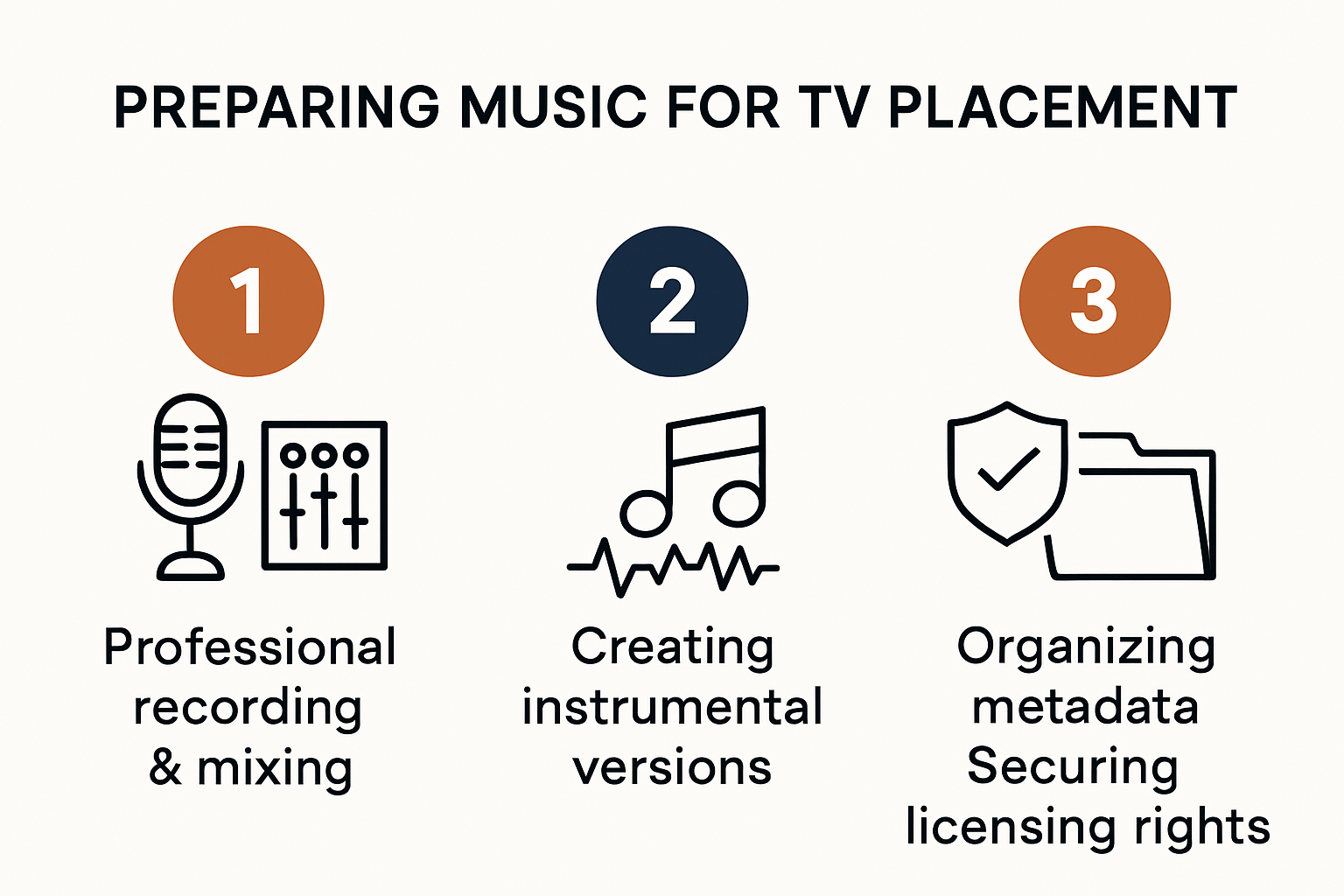
First, ensure your tracks are professionally mixed and mastered. Muddy recordings or amateur productions will be instantly dismissed. Each instrument should be crisp and clear, with balanced frequencies that translate well across different sound systems. Consider working with a professional sound engineer who understands broadcast-level audio standards.
Create multiple versions of each track. Music supervisors often require instrumental versions, which allow them flexibility in scene placement. Having a clean instrumental track, a version with backing vocals, and your standard recording gives supervisors more creative options. This approach dramatically increases your chances of placement.
Metadata and Licensing Readiness
Behind every successful TV music placement lies impeccable documentation. Your tracks need comprehensive metadata that tells their entire story. This includes detailed information about songwriters, copyright owners, publishing details, and performance rights.
Organize your metadata meticulously. Include accurate track titles, composer names, publishing information, and contact details. Ensure you have clear documentation proving you own 100% of the track’s rights or have permission from all collaborators. Music supervisors want seamless, uncomplicated licensing processes.
Prepare your music distribution and licensing documentation thoroughly. Having professional, organized paperwork demonstrates you’re a serious, reliable artist who understands the industry’s complexities.
Strategic Track Selection and Emotional Storytelling
Not every track is suitable for TV placement. Music supervisors seek songs that can emotionally underscore a scene’s narrative. Your music needs to tell a story without words, complementing visual storytelling.
Analyze your catalogue critically. Which tracks have cinematic qualities? Which ones build tension, suggest romance, or evoke specific emotional landscapes? Music for TV isn’t just about sound – it’s about creating an invisible emotional thread that connects viewers to the scene.
Consider creating a dedicated showcase reel of your most versatile tracks. This curated collection should demonstrate your range and ability to support different narrative moods. Include genre diversity, emotional depth, and high-production value.
Remember, TV music placement is a competitive arena. Your preparation isn’t just about recording great music – it’s about presenting yourself as a professional, reliable musical collaborator. Every detail matters, from your track’s sonic quality to your communication style.
To help you efficiently prepare your tracks for successful TV placement, here’s a clear summary of the essential technical and documentation steps discussed above:
| Step | What To Do | Why It’s Important |
|---|---|---|
| Professional recording | Record tracks with high production standards | Ensures your music meets broadcast quality requirements |
| Mixing and mastering | Engage a professional for clean, balanced mixes | Prevents instant dismissal by music supervisors |
| Create multiple versions | Prepare instrumental, backing vocal, and standard versions | Offers supervisors flexibility for scene placement |
| Detailed metadata | Document songwriter, ownership, and publishing information | Simplifies licensing and rights clearing |
| Rights verification | Confirm permissions from all collaborators or rightsholders | Avoids legal complications and licensing delays |
| Organise paperwork | Prepare clear, accessible licensing and distribution documents | Demonstrates professionalism and reliability |
While the journey might seem complex, countless independent artists have successfully navigated this path. With strategic preparation, professional recordings, and a clear understanding of what music supervisors seek, you’re positioning yourself for potential breakthrough opportunities. Join Music Gateway to start connecting with industry professionals who can help amplify your musical journey.
How to Connect with Music Supervisors and Libraries
Connecting with music supervisors and libraries is like navigating a complex social dance where professionalism, persistence, and strategic networking are your most valuable partners. Understanding how to approach these gatekeepers can transform your music from a passionate project to a potential TV soundtrack.
Building Your Professional Network
Networking isn’t just about sending random emails. It’s about creating genuine connections within the music supervision ecosystem. Start by researching music supervisors who work in genres and styles similar to your music. Follow their work, understand the shows and productions they’ve been involved with, and develop a targeted approach.
Attend industry conferences, music festivals, and music sync licensing events. These gatherings aren’t just about collecting business cards – they’re opportunities to build meaningful relationships. Music supervisors are more likely to consider tracks from artists they’ve met personally and respect professionally.

Create a professional online presence that showcases your work. Your website, social media, and professional profiles should tell a cohesive story about your musical journey. Ensure your branding is consistent and your musical portfolio is easily accessible. Learn how to get proper permissions to protect your work during these interactions.
Leveraging Music Libraries and Platforms
Music libraries are the unsung heroes of sync licensing. These platforms act as intermediaries between independent artists and music supervisors, providing a curated marketplace for musical content. Research reputable libraries that specialise in your genre and have strong connections with TV production companies.
When submitting to music libraries, treat it like a job application. Your submission should be meticulously prepared. This means high-quality audio files, comprehensive metadata, multiple track versions (instrumental, with vocals), and clear licensing information. Music libraries receive thousands of submissions, so standing out requires professionalism and precision.
Consider diversifying your approach. Don’t rely on a single library or submission method. Submit to multiple platforms, create relationships with different music supervisors, and be open to various opportunities. Some libraries specialise in specific genres, kinds of music and media, so research thoroughly.
Here’s a quick comparison to help you understand the typical roles of music supervisors and music libraries in the TV placement process:
| Feature | Music Supervisors | Music Libraries |
|---|---|---|
| Role | Selects and licenses music for specific projects | Curates catalogues for supervisors/producers |
| How to Connect | Direct networking, events, targeted pitching | Formal submissions, platform registrations |
| Decision-making | Chooses music for individual scenes/shows | Presents options based on requests or briefs |
| Relationship-building | Essential for ongoing opportunities | Important, but often more transactional |
| Submission requirements | Custom pitches, clear rights/metadata | High-quality files, complete metadata, multiple versions |
Crafting Your Pitch and Maintaining Relationships
Your pitch is your musical calling card. When reaching out to music supervisors or libraries, be concise, professional, and specific in your approach. Explain why your music might be a good fit for their current projects. Demonstrate that you understand their work and have done your homework.
Personalisation is key. Generic, mass-produced emails will be instantly deleted. Reference specific shows, mention how your music could enhance particular scenes, and show genuine interest in their work. Think of it as a musical matchmaking process where you’re demonstrating the unique value your tracks can bring.
Maintain relationships even when you don’t immediately succeed. Send occasional updates about new music, congratulate supervisors on successful projects, and stay connected. The music industry thrives on relationships, and today’s polite interaction could be tomorrow’s placement opportunity.
Remember, getting your music on TV is a marathon, not a sprint. Rejection is part of the journey. Each ‘no’ is an opportunity to refine your approach, improve your craft, and get closer to your goal. Stay patient, persistent, and passionate.
Join Music Gateway to access a network of industry professionals and expand your music’s potential. Your unique sound could be just one connection away from television success.
Tips to Maximise Your Chances of TV Sync Success
Navigating the competitive world of TV sync licensing requires more than just talent – it demands strategic thinking, professional preparation, and a nuanced understanding of how music supervisors select tracks. Success isn’t about luck; it’s about creating opportunities through meticulous planning and artistic versatility.
Creating the Right Musical Portfolio
Your musical portfolio is your professional calling card in the sync licensing world. It’s not enough to have great music – you need a diverse, strategically curated collection that demonstrates your adaptability and emotional range. Think of your portfolio as a musical Swiss Army knife, ready to tackle various narrative challenges.
Develop tracks that can convey multiple emotional landscapes. A single song should be capable of underscoring a heartbreak scene, a triumphant moment, or a tense confrontation. This means creating music with dynamic emotional textures that can shift and complement various visual narratives. Instrumental versions are absolutely crucial – they provide music supervisors with maximum flexibility.
Invest in high-quality production that meets professional broadcast standards. Every track should sound like it could seamlessly integrate into a primetime television show. This means pristine mixing, balanced frequencies, and a clean, professional sound that translates across different audio systems.
Understanding Genre and Market Trends
Successful sync licensing isn’t about following trends – it’s about understanding them and finding your unique space within the musical landscape. Research the types of music currently being used in television productions across different genres. What emotional qualities are music supervisors seeking? Which musical styles are gaining traction?
Stay current with television production trends. Binge-watch shows in various genres, paying close attention to their musical choices. Notice how different scenes use music to enhance storytelling. Are there specific sonic qualities or emotional tones that seem to be in demand? This research will help you craft music that’s not just good, but strategically aligned with current industry needs.
Consider creating music that bridges genres or offers unexpected emotional combinations. A track that can surprise and intrigue a music supervisor might be more memorable than something perfectly predictable. Learn more about getting your music featured in TV and film to refine your approach and understand industry nuances.
Building a Professional Approach
Professionalism is your secret weapon in sync licensing. This means more than just creating great music – it’s about how you present and position yourself in the industry. Develop a comprehensive metadata system for your tracks. Each song should come with clear, detailed information about ownership, licensing terms, and contact details.
Be prepared for quick turnarounds. Music supervisors often work under tight deadlines, so having multiple versions of your tracks ready (full version, instrumental, stems) can make you stand out. Create a professional electronic press kit that showcases your musical range, includes high-quality track samples, and demonstrates your understanding of sync licensing.
Network consistently and build genuine relationships. Attend industry events, engage with music supervision communities online, and approach every interaction as an opportunity to learn and grow. Remember that sync licensing is as much about relationships as it is about the music itself.
Rejection is part of the journey. Not every track will find a home, and that’s perfectly normal. Use each submission as a learning experience. Ask for feedback when possible, refine your approach, and maintain a persistent yet patient attitude.
Join Music Gateway and transform your musical aspirations into tangible opportunities. Your unique sound is waiting to find its perfect visual narrative.
Frequently Asked Questions
What is music licensing for television?
Music licensing for television involves granting legal permission for your music to be used in visual media, such as TV shows or commercials, typically through a sync license.
How do I prepare my music for TV placement?
To prepare your music for TV placement, ensure you have high-quality recordings, create multiple versions of each track, and organise comprehensive metadata about songwriters, ownership, and rights.
How can I connect with music supervisors?
Connecting with music supervisors can be achieved by attending industry events, building a professional network, and reaching out with personalised pitches that demonstrate your understanding of their projects.
What are the different types of royalties I can earn from TV placements?
From TV placements, you can earn synchronization royalties for the right to use your music and performance royalties when your music is broadcasted, typically collected by performance rights organisations.
Accelerate Your Path to TV Music Placement with Music Gateway
Are you ready to break past the obstacles that keep independent artists from getting their music on television? This guide has shown how complicated sync licensing, technical requirements and building the right connections can be. Many artists feel locked out by industry barriers and tangled in paperwork when they try to seize sync opportunities. But what if you could spend more time crafting music and less time navigating red tape?
With Music Gateway, you gain access to a platform designed to remove the friction from TV track submissions, music promotion and sync licensing. Our hub lets you upload, manage and promote your music with confidence while connecting to a network of supervisors and real projects. From expert support on metadata and rights management to practical opportunities for TV placements, we make professional pathways accessible. Whether your goal is to expand your reach or see your track featured in a major scene, you do not have to navigate this competitive world alone.
Take your next step by exploring music promotion solutions for TV and beyond. Let us help you turn your hard work into genuine opportunities and deliver your sound to millions. Join now and see just how far your music can go.
Recommended
- How To Pitch A TV Show | Pitch TV Series | Мusic Gateway
- Music Marketing Techniques | Мusic Gateway
- How To Release Music Independently | Music Gateway
- How to Advertise Your Music | Мusic Gateway
- Understanding Music Industry Gatekeepers: A Guide for Artists
- How to Pitch Songs Effectively for Maximum Impact
- What is a Music Supervisor? Understanding Their Role